10 Euphoric Drawing Art Therapy Prompts For Racing Thoughts

Article / 28 October 2023

Sometimes our days can become a little too overwhelming. But that’s okay. Not everything needs to be solved right now. Our thoughts can run wild when we have so may things to worry about or do but it’s important to take a few moments for some deep breaths, then slowly walk our minds through our most important feelings and tasks. What can really help in these moments is to take 5-15 minutes for ourselves and do a few art therapy exercises, as it helps pulls us out of mountains of thoughts into the present moment while sparking our creativity.

I’ve listed 10 drawing-based art therapy prompts anyone can do, that will help improve your overall focus, mood, slow down racing thoughts, and put some positive creativity into your schedule.

Now grab your favorite drawing tool, something to draw on (paper, a journal, sketchbook, or even a tablet), and let’s get creative!

10 Soothing Drawing Art Therapy Prompts for Racing Thoughts, Anxiety, & Stress Relief

1. Colorful Designs and Patterns

For our first art therapy prompts, let’s get colorful!

If you have any, take your most colorful drawing or painting materials.

It can be anything from highlighters to markers, colored pencils, pens, watercolors and anything else you have lying around that you find colorful and exciting to look at.
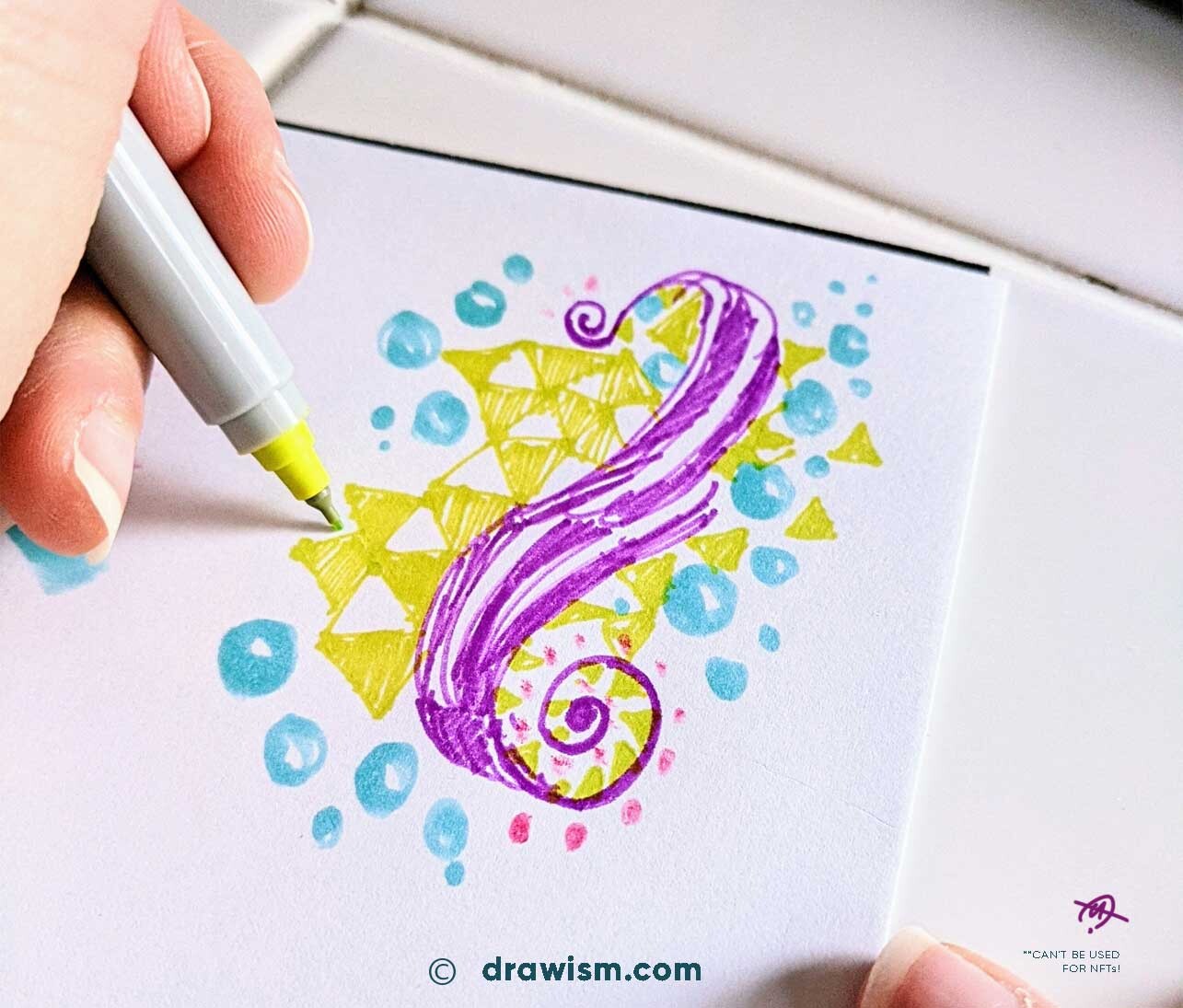
With your drawing supplies ready, draw random different shapes like circles, squares, swirly loops, or anything else that you find interesting to draw. Keep repeating shapes and simple designs until you’ve filled up most of the page or drawing area.

The final result doesn’t need to look like anything nor be anywhere near perfect. Just try to make it as colorful as you can, using your favorite colors.

Try to fill up as much of the page as possible, trying to leave very little white space. This forces you to take advantage of the page real estate you have and become loose and gestural with your art.

This allows for a lot of happy accidents to happen.

A great technique in art therapy is to draw over areas or objects that have already been drawn. This is a fantastic art therapy exercise because it breaks up boundaries and expectations of having your drawings be perfect and apart from each other.

Instead, redrawing over areas allows you to think in multiple layers and opens up the door for some extremely interesting final drawings that maybe you weren’t expecting to make.

Remember: try to keep it as simple as possible.

You can try using a different combination of colors as you do this.

Tip: You can use the designs as a color reference sheet. Try googling simple patterns and designs that you like, and try drawing those for this exercise.


2. Fun Food

Another fun art therapy drawing is to draw one of your favorite foods.

I love eating donuts, ramen, cheese, and sweets. I enjoy drawing foods like these because they’re so tasty but also really fun to look at. Those are my usual go-tos when I need something to boost my mood or for an instant art idea.

What’s your favorite food or a food that you find really interesting to look at?

Make a quick list of 1-5 things that you loooove to eat.

Once you got your list, pick 1-2 of those foods and draw them. They don’t need to be detailed, just something that looks kinda like it.

Color them in to make your art therapy drawing even more scrumptious. You can even use your favorite colors for a more personalized look.

*Positive personalization is one of the many techniques in art therapy that can help you associate your feelings with something less negative because it uses positive/neutral object associations with a calming and relaxing experience. So that next time you think of that object or engage in an activity, you’ll more likely associate that with a positive experience.

To take these art therapy prompts a bit further, you can try thinking of 1-3 reasons for each food item of why you like each one. With that list of reasons, do your best to draw out each reason for why you like that food item. Again, try to focus on more of the idea, not detail.


3. Draw Yourself on an Island with Your Favorite Things

This is definitely one of the more imaginative art therapy prompts.

Find a quiet place or put on your favorite music. Then, take a couple of deeps breaths.

Close your eyes for a few minutes.

Now, imagine you’re on an island by yourself.

Imagine the calm ocean water, a gentle breeze against the side of your face, and the feeling of the sun on your back. Relaxing, right?

Draw an island, it can be as big or as small as you like with as little or as many palm trees as you want but make sure there’s room on the island to draw other things.

Then, make a small list of 5-7 of your favorite things, people, food, etc.

Now, draw those objects on the island. These will be things and/or people you feel you can’t live without or that play a big part in your daily life.

Feel free to color it in if you’d like.

How do you feel afterwards?

These are fantastic art therapy exercises for gratefulness.

4. Art Therapy Drawing From Memory

Make a list of at least 3 things that you’re grateful for.

Then, draw them. Try your best to not use any references of photos. Use your memory instead and draw your objects out the best you can.


When you use your memory, you’re allowing yourself to slow down your thinking and breathing, allowing you to slow down your mind and stop racing thoughts.

Try making your drawings big and start off with only a line drawing or sketch. Don’t color or shade your drawings inside.

Instead, after you are done drawing each thing, write why you are grateful for each, inside each sketch.

This is a great art therapy exercise because not only is it a gratefulness, grounding exercise but the finished drawings can be used for art journal therapy, or you can hang the finished drawing on your wall as a reminder of things that make you happy.

If you’re looking to draw more quick and simple doodles, check out these 15 Relaxing Random Doodles to Draw When You’re Bored, to further help ground yourself.

5. Quick Watercolor Gradient Art Therapy Exercises

Take your paint brush and wet it so that when it touches the watercolors, the paints become paintable/usable but not too watery. Getting the right consistency can be tough at first so don’t stress too much about this on your first few tries.

Pick any color you’d like & try to get a good amount of paint on the brush.

Then, from one side of the paper to the other, slowly drag your paint brush in a single line across the paper.

As you drag your brush, the amount of paint being transferred should decrease the longer your line is, creating a monochromatic gradient from dark (where you started) to light.

The final result should be a simple one color gradient from heavy paint to a very light version of the color.

If you can’t get a perfect gradient, say your line still has a lot of paint on it, just keep drawing more horizontal lines without refilling your brush until the paint runs out.

6. Continuous Art Therapy Drawing

Another one of my favorite art therapy prompts is continuous drawing.

Continuous drawing is when you draw without ever lifting up your pencil from the paper!

Sounds simple enough, right?

Instead of lifting up your pencil, continuous drawing forces you to stay in the present moment while constantly moving your writing tool and going with the flow.

Just draw with one continuous line all over the page.

Try doing this for at least 5 minutes and try your best to not make anything recognizable. Go with the flow of your hand and arm movements and try gliding your hand all across the page, doing your best to reach every corner and edge.

Doing this expends any pent up physical energy and stress, allowing you to feel more relaxed after the exercise.

What’s great about these continuous drawing techniques in art therapy, is that you’re somewhat out of control. You’re just going with the flow of your hand movements and letting an image happen, not forcing one out.

7. Transferring Emotions Techniques in Art Therapy

Take a moment to sit down and think about how you’re feeling.

Are you stressed, frustrated, or maybe indifferent? Or maybe you’re feeling motivated and optimistic? Do your best to be the most honest with yourself when answering this question. There’s no wrong answers here.

Listen to your body and your thoughts. How do you feel? Are your thoughts racing or is your mind calm?

After answering these questions, try your best to draw your emotions.


They can be a simple emoji face of how you’re feeling or something a bit more abstract, like scribbles, lines, or random shapes. It doesn’t have to be complicated, just as simple and easy as you want.

For this type of art therapy drawing, it might be helpful to draw using colors that best represent the emotion you’re feeling. For example, if you’re frustrated or upset, try drawing with red or a warm color. If you’re feeling calm or relaxed, try using a type of blue.

Using these types of colors are all subjective to you, so use the ones you think fit the best for you when drawing out your emotions.

You can even try drawing things that you associate with your emotions if you don’t know how to transfer your emotions onto paper. For example, if you’re feeling happy, you can try drawing the sun with some flowers or if you’re feeling a bit down, maybe a rainy day will work instead for these art therapy exercises.

If you want to expressive yourself further with art therapy, check out these 10 Super Simple Expressive Art Therapy Activities to Try Now!

8. Drawing Your Mood Throughout the Day

Some techniques in art therapy help you understand yourself better by drawing out your mood.

I love these art therapy prompts because not only are they very simple but they’re a great way to keep track of how you’re feeling throughout the day, especially if you’re keeping a self care journal and /or want to learn about why you feel a certain way.

First, draw 3 circles in a line on a piece of paper and space them out a bit so they’re not touching each other. They can be as big as you’d like but try not to make them too small since we’ll be drawing inside them.

Second, above each circle, write “Morning” atop your first circle, “Afternoon” atop the second, & “Evening /Night” on top of the third circle. These will be when you check in and draw your mood throughout the day.
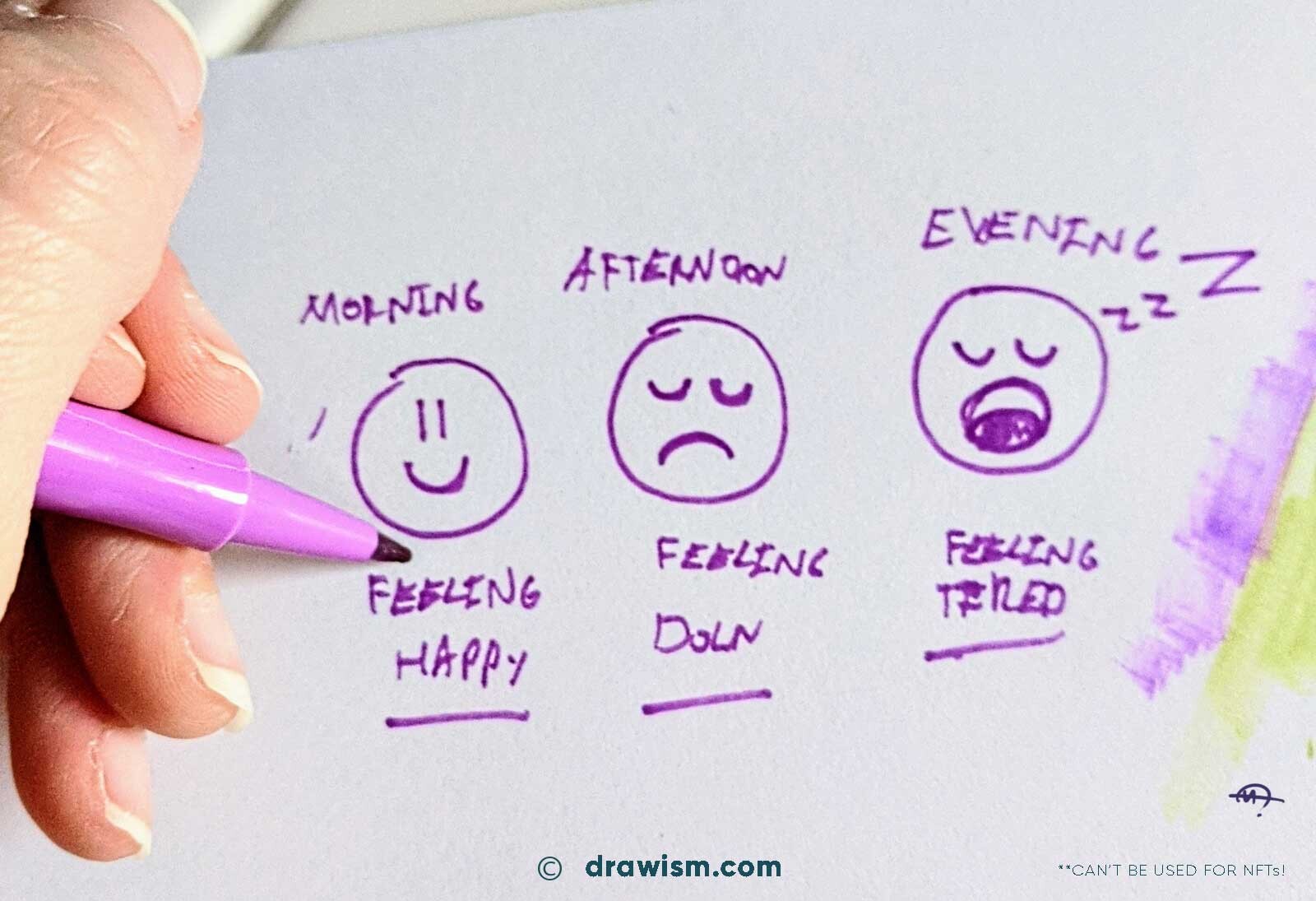


Feel free to write the date somewhere on the page, if you’d like to keep track of your mood for a particular day.

Then, throughout those time of the day, check in and draw how you’re feeling. It can be a simple smiley face with 2 eyes and a mouth, or something a bit more detailed if you’d like.

Make sure to do your best to convey your mood.

If you’re not great at drawing expressions or faces, no worries! Draw something that represents that feeling instead, like in number 7’s art therapy exercises.

You can even write down your mood under each circle to make them easier to identify.

For an even more thorough art therapy drawing, you can write or draw a max. of 3 reasons why you’re feeling that way. This is a fantastic exercise to get your thoughts onto paper and get into some mindfulness.

9. Fast Scribbling and/or Shading

What is an art therapy activity without a bit of quick sketching and scribbling?

All you need to do is take your writing tool and just start making scribbles or randomly shading in areas on the paper / page.

You can go as fast or as slow as you’d like but try your best to cover a large area in a small amount of time.

You can even press as hard or light as you’d like. Just make sure to have an extra sheet of paper or something underneath your page so no marks will show up on your table or drawing surface.

15 minutes is usually a great place to start but try not to go over 20-30min. for these art therapy exercises since it can be a bit more physically demanding, the longer you do it at once.

What’s great about art therapy prompts with quick scribbling and mark making is that not only is this a mindfulness technique that brings you out of your thoughts into the present but it is also a fantastic way to expend any pent up energy or stress especially if you’re feeling a bit tense.

You can try thinking of this as a stress reliever or a way to transfer any negativity into a safe physical and productive outlet.

10. Gratefulness Sketching

Gratefulness sketching techniques in art therapy can really help ground you and help you focus on the simple, happier things that are going on in your life.

To start off, make a small list on your piece of paper of 1-3 things that you’re grateful for.

It can literally be anything from the food you had to eat today to the people in your life that you’re thankful for.

No thing is too small to be grateful for.

Then, draw those things from your list.

Take as much or as little time as you’d like and of course, they don’t need to be perfect.

Feel free to color in your art therapy drawing if you’d like.

This is a great exercise to get you out of your thoughts because you’re taking a moment to stop and think about the things you feel are going well in your life or that provide some sort of positive experience for you.

It’s a wonderful reminder to ground yourself and get into a more positive, maybe even optimistic mindset.

Next time you need a little pick-me-up or just a bit bored, feel free to bookmark this page, choose your favorite art therapy prompts, and start drawing!

What is an Art Therapy Activity?

An art therapy activity is an art-based exercise that is used to provide mental and physical relief from daily life or mental obstacles such as stress, anxiety, and other emotions and /or thoughts that may be overwhelming.

An art therapy activity can be anything from drawing out your emotions to painting something calmly or just letting your hands and mind go with the flow with what you’re creating and doesn’t particularly need to look like anything nor have to be complicated.

If anything, art therapy activities are meant to slow down your thoughts and bring you into the present. Think of it as an artistic mindfulness and grounding exercise.

They can include anything from painting and sculpting art therapy exercises to art therapy drawing and art therapy prompts that can put in a more positive mindset.

Whatever type of art you like to make, there’s sure to be an art therapy activity for it!

How You Can Use These Art Therapy Prompts & Your Art Therapy Drawings As Positive Inspiration for Yourself and Others

  1. Use Your Drawings as Your Smartphone Wallpaper
  2. Print it out your art therapy drawing on a 4×6″ piece of cardstock or postcard paper and send it to someone important to you
  3. Frame it as a reminder that you are amazing and are doing your best in the moment you created the drawing.
  4. Use it as a background for an inspirational quote – Write a quote or statement that best represents how you feel after the art therapy exercise.

Other Helpful Art Therapy and Resources for Total Relaxation and Self Care:

Other Self Care Tips

Which art therapy prompt are you most excited to try out? Feel free to leave your thoughts in the comments below!

The article 10 Euphoric Art Therapy Prompts for Racing Thoughts originally appeared on Drawism.com first.
Report

6 Essential Figure Drawing Poses for Art Reference for Dynamic Character Designs

Article / 14 October 2023

Poses for art reference are essential for building your anatomical library and creating unforgettable character designs that resonate with your viewers. In this article, we’ll take a look into the types of art reference poses for character designs that will make your characters stand out and bring them to life. Each pose featured in this article has art reference photos with my personal notes, to help you understand how and why each stance can make your character designs. After all, would you rather draw a character that’s stiff or one that’s dynamic and full of personality?

Why Are Poses for Art Reference So Important?


The right poses for art reference can really make your characters and figure drawings look dynamic, emotional, and breath-taking instead of blocky and stiff. When thinking of poses for art reference, we usually imagine images of figure models posing or art reference photos. Photos for art reference are fantastic because they’re based in reality and great for achieving realism. But some of the most memorable art is when an artist creates gesture in their work with accentuation and exaggeration.

Gesture and motion sometimes tend to get lost in our art when we always reference from reality. I personally find that artist interpretations of poses for art reference really help me grasp emotion and gesture. They help me bring life into my own drawings and give a sense motion that I sometimes can’t get from art reference photos of figures. Do you learn better from art reference photos or from how an artist interpret people and objects in their own way? I’m hoping that these poses for art reference do the same for you.

Types of Art Reference Photos for Character Designs

Choosing the right art reference photos are incredibly important. Why? Because you’re using that pic as inspiration and as a guideline. If you have a bad reference photo, you’re art will most likely be that same quality. So, having high standards in what photos for art reference you use will reflect in your art.

1. Photographs of Figure Models

These are just pictures/ photographs of (sometimes nude) figure models posing against plain backgrounds. For examples of what these look like, Line of Action has great professionally lit figure photography.

Pros of using photos for art reference:

  • Great lighting, dynamic poses, and good description of anatomy
  • Realistic and based in reality

Cons:

  • Easy to get lost in detail
  • Photo quality and lighting may be bad
  • Hard to accentuate features and exaggerate muscular forms and anatomy
  • Drawings can end up looking stiff and static (no-movement) very easily

2. Drawings and Sketches by Professional Artists

These types of art reference photos are drawings and sketches of figure models drawn by professional artists and animators, not photography of the models themselves. You might not see dramatic lighting or even a background, just the sketch of the figure model an artist drew. The image below is an example of using professional drawings and sketches as pose reference for character designs. For more great examples of this, check out Quickposes, a site with many types of drawing photos for art reference.


Pros of using drawings and sketches by professional artists as art reference photos:

  • Easy to focus on anatomy, form, and gesture
  • Won’t get caught up in fine details
  • Easy to understand exaggerations of forms and anatomical features
  • Gets your character designs and drawings to look more stylized and unique

Cons:

  • You could be plagiarizing another artist’s work if you draw the exact same pose and style without giving credit to the artist if you post your art online
  • Art reference photos may not have realistic lighting or lighting at all
  • Some artwork photos for art reference may have very little to no anatomical detail or the anatomy may be incorrect
  • Some drawings and sketches may be hard for you to understand or visually interpret, depending on the artist’s style

Depending on the style you want to draw in, one type of art reference is better than the other. Keep this in mind when creating your characters or drawing people from life. Now let’s move on to the poses for art reference!

6 Essential Figure Poses for Art Reference for Stunning Character Designs

Now, before we go further, I will say these art reference photos might be a little different than what you might be thinking. These are not photos but pages of my sketchbook where I made stick figure poses from imagination. I didn’t directly use references for these, as I mostly imagined them and pulled some aspects from memory.

Why Stick Figures?

For me, I find it easiest to understand the basics of character design poses without getting caught up in the details, by breaking the human figure down to it’s most basic shapes and forms. When I started drawing characters, I’d get so focused on clothing and making the hair and face look perfect, that the rest of the figure looked very stiff. Does this ever happen to you?

When you’re not distracted by things like anatomy and lighting, it’s much easier to understand body movement and position.

  • Easier to understand position of appendages and how they move.
  • Much easier to see the “line of action” – the main line of gesture or movement of a figure that gives an overall impression.
  • Starting with simple forms is less intimidating and more importantly less time-consuming!

I use circles as joints because those are the main pivot points for action and movement, as seen below with the first pose.


1. 3/4 Beauty Shot or “The Pose”

This is an essential pose for character design because it’s easy to execute while showing a hint of perspective with the left leg slightly bent. Showing just a tiny bit of perspective in your characters shows off your ability to create visual depth and make it more interesting to look at.

A beauty shot is an image of a figure or object that is between a profile view and a side view, showing slight perspective.

If you were to draw a very good profile or side view of a character, no matter how good it looks, it will never be as interesting to look at vs. a slight 3/4 view. Why? Because there’s much more information to your character in a 3/4 view than just a side view. Also, a slight 3/4 view describes so much more of a character’s form and design giving it 3-dimensions rather than a flat 2D drawing.

2. Shy or “The Slouch”

Like the art reference photos above, this next pose is a more traditional 3/4 view where you can see more of the left side of the body.


Say you want to draw a shy character and show off that emotion. How would you do it?

Well, shy people are closed off with their body and more huddled, not open. So their arms and legs are closer to their body. Not outstretched like they want to give a hug or say hi to someone.

  • Create a curved line of action as the main line of movement for the figure. It sets up the pose to be hunched.
  • Draw the arms close to the body. They don’t have to be angles but the hands should be close or touching the figure’s body. It gives a sense of being closed-off.
  • The legs shouldn’t have much movement and should also stay relatively close to the center of the pelvis.
  • You can bend the legs to further accentuate the figure’s hunch.
  • Keep head close to shoulders – shows mystery, trying to hide, or lack of confidence.

3. Sad

You can’t have emotional poses for character designs if you don’t show a bit of vulnerability.

When drawing sad characters or figures, again make your figure closed off and contained.

Unlike the shy art reference photos, the one above is more exaggerated.

When drawing a sad character, here are a few points to note:

  • Character’s head is either looking down and/or resting on something.
  • Overall pose is in a downward direction.
  • Back is not straight and upright but hunched or curved.

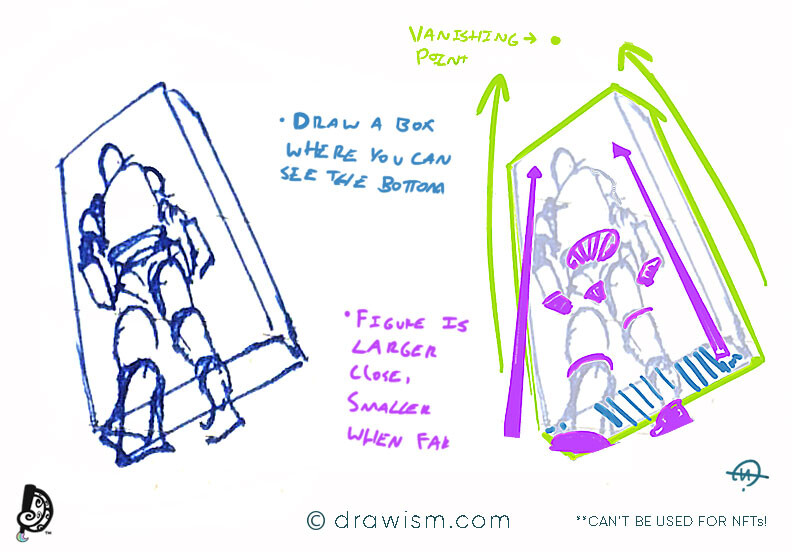
4. Back Pose at Low Angle

One of the next poses for art reference is drawing a character at a low angle. This means our view is low to the ground and we’re looking up at the figure.

This is a great type of art reference pose because it’s very dynamic. Even though the character itself isn’t very gestural, the perspective appears to give the figure movement, volume, and dimension.

Main points when drawing these types of art reference poses:

  • Draw a 3D box where you can see the bottom.
  • Draw your character inside the box while following the box’s sides of when they converge and when they diverge to really push the perspective.
  • Make sure you see the undersides of your figure or bottom edges, like the bottom edge of a head or pelvis like in the purple

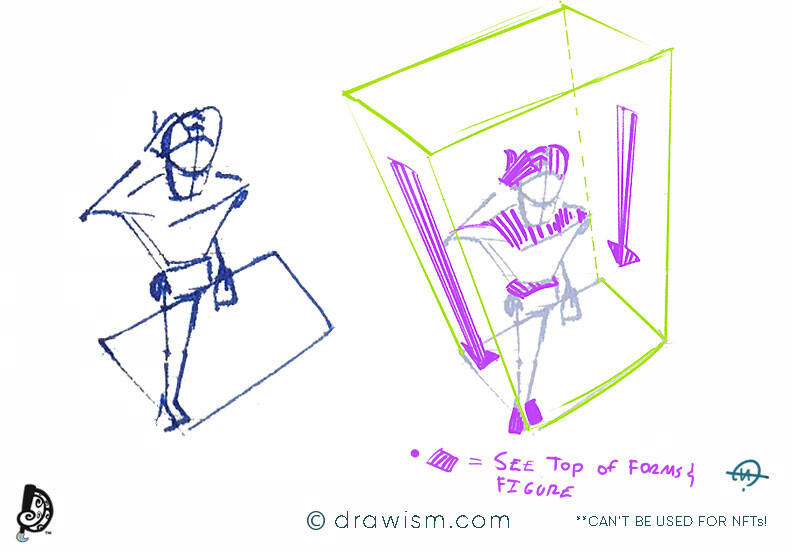
5. High Angle Pose

Here are some photos for art reference showing a character pose from a high angle.


High angle poses have the same effect as low angle ones in that they’re very dynamic to look at. They’re usually used to show a character in a voyeuristic or semi-creepy angle or even to make the character look smaller or appear less important. Like something foreboding will happen. So if you’re drawing a villainous vampire, an evil ruler of the skies who commands soul-sucking dragons, or a witch who uses devouring enchantments and herbs to create hungry teenagers bent on rampaging through school cafeterias, then these are the perfect poses for character designs in similar categories.

  • High angle poses are also fantastic for showing characters or figures that are less important. Like dwarves, a beefed-up meat head who occasionally talks to the main charcter, or any secondary or sub-character.
  • Draw a box in perspective, then your figure inside, making sure it converges downward. Hint: it’ll really help sell this point of view!
  • When done right, you should see (or pay attention to) the top sides of your figure (colored in purple below).

The pose above is something simple to get you started. If you’re not used to drawing characters from high or low angles, a simple straight pose with the figure’s hands on their sides is a great place to start. Don’t try to make it too complicated, though, esp. if this isn’t something you’re used to drawing.

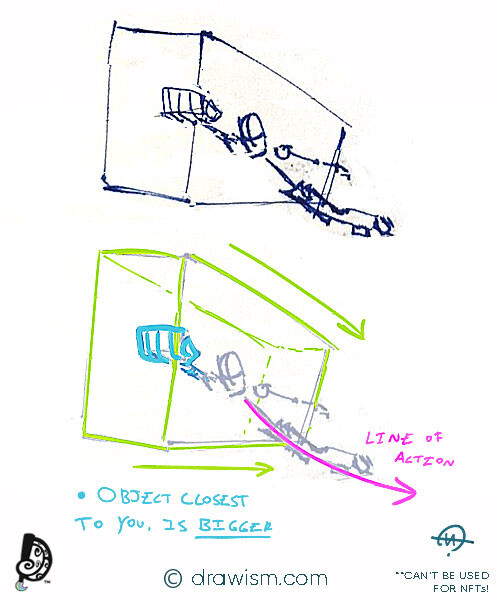
6. Foreshortening – “Flying Hero Pose”

The last of these essential poses for character designs is foreshortening.

Foreshortening is when a part of an object or figure appears closer to us than the rest of the object due to our viewpoint in perspective. Basically, the closer something is to us, the larger it looks. And the further something is, the smaller it appears. For example, if you hold your hand right up to your face, it looks large but when you extend your arm and hand in front of you, it looks smaller. It’s the same when drawing objects and figures.

There are many different types of art reference poses showing foreshortening from all sorts of angles.

  • Good foreshortening photos for art reference have figures posed where you can’t see their full body, only from certain angles where parts of their body are obscured or when you can only see 1 angle or side of their face.
  • Try taking your own art reference photos with a friend using your phone camera by placing an arm or hand in front of you.

The art reference photos above show a “flying hero” pose.

  • Draw a box in perspective that goes to a vanishing point.
  • One hand or limb is closer to us, so it looks bigger than other areas – Draw it bigger!
  • The line of action is shaped like a ‘swoosh’, like a trail of wind to give a weightless feel.
  • Pose is diagonal but can be horizontal when you want to show a character’s speed when flying or in full-flight.

Now you’re ready to create some stunning character and figure drawings using these awesome poses! With the right kinds of art reference photos, you can create unique figures and characters while standing out from the crowd.

More Helpful Drawing Tutorials & Guides

Check out some of these helpful resources for more figure drawing ideas, tutorials, and more:

Other Resources for easy ways of drawing the human figure from life:

  • Quick Poses – A unique site of multiple drawing ideas of people based on artists’ sketches.
  • Line of Action – Timed figure drawing sessions customized to you, with human figure drawing, animal drawing, expressions, & more.

See you in the next post!

The article 6 Best Figure Drawing Poses for Stunning Character Designs originally appeared on Drawism.com first.

Report

Social Media for Art: 10 Dangerous Lasting Effects on Artist's Mental Health

Article / 08 October 2023

Social media for art is a wonderful tool to get exposure and share your art. But it can also backfire if you’re not prepared to expect certain outcomes that may not meet your expectations. It’s incredibly easy to fall into a mental trap of disappointment, outside approval of things that you don’t have control over, and even loss of self-esteem at times. Ultimately, using social media can be a dangerous hazard to your mental stability. Here is a list of 10 lasting negative effects on your mental health when using social media for art.

Grab this free 2 PG printable PDF Drawing Stress Relief Cheat Sheet for Artists below to instantly plus 9 Essential Stress Relief Tips, 12 Stress Relief Activity Ideas + more!

10 Dangerous, Lasting Mental Health Effects of Using Social Media for Art

1. Low Self-Esteem

Low self-esteem comes from emotions such as feeling that you’re work and efforts aren’t noticed or that you’re ‘not good enough’ (whether it has to do with your skill or having a small following on social media).

This is a sly mental hazard that can pass under your radar when using social media for art because low self-esteem is very dependent on how you use it to gain a following . . . And that’s through other accounts’ engagement with your content.

For example, if your content gets noticed more, you’re more likely to feel happy and continue using social media. But if your content performs poorly, you’re more likely to feel bad about yourself and start to doubt your skills and posted work. Be sure to look out for this, if it comes up!

Low self-esteem from using social media for art comes from having either too high of expectations from outside sources that you can’t control (like how many ‘likes’ or ‘saves’ on your content) or too low of expectations in yourself, where you start to doubt yourself and what unique creations you bring to the table.

2. A Persistence of Approval from Outside Sources

In order to be successful on social media, we need engagement and even sometimes online social approval from other accounts and people.

Basically, when we use social media for art we must rely on outside sources to make it big on sites like Instagram, Twitter, and Facebook.

The problem here, is that we’re no longer relying on ourselves and thus our self-confidence, but leaving it up to the masses and what they like.

Therefore, a balance between personal satisfaction and wanting to satisfy others then becomes a struggle where the scales tip to the latter. When this happens and we start to cater and sacrifice bits of who we are to people we’ve never even met, we start to value their opinions and actions more than our own. And in turn, we may even lose ourselves and uniqueness in the process, which can be mentally damaging and challenging to get back later on.

A fix for this mental effect is to believe and have confidence in your individuality, uniqueness, and yourself. You can try learning to build yourself up through gratefulness, rewarding yourself on accomplishments (either big or small, doesn’t matter), or saying positive affirmations to yourself and manifesting positivity with optimism. Here are a few more techniques and mindsets that will help you overcome this negative feeling of having art anxiety and how to be confident with your art.

3. Disappointment in Lack of Online Engagement

Anytime we use social media for art, our account growth is primarily dependent on engagement from other accounts through sources likes ‘follows’, ‘likes’, ‘comments’, and re-shares.

For some sites, when our content performs badly, we get ‘punished’ by the site where our content reaches less people and therefore less engagement and is less seen. Just because your content isn’t getting engagement doesn’t mean it’s bad. It mostly has to do with the site’s algorithms and what’s currently trending which is not an accurate depiction of valuable content.

When you use social media for art, disappointment from a lack of engagement with your content can creep up if you’re not careful of your expectations from using social media.

In this case, it’s vital that you set healthy boundaries and expectations when deciding to post on social media to help prevent feelings of incompetence, disappointment, and low self-esteem. Boundaries can include how much time you spend on a platform, how much effort you want to put into a post, or how much you’re willing to engage with other accounts. Expectations can be how you use social media for art, in what specific ways you’d want to use it, and thinking ahead to how it will affect you if your social account doesn’t gain popularity.

Using the above tips will help you prevent these negative effects of social media on your mental health including the one that’s next – a real blow to how you perceive yourself in all aspects of your life.

4. Less Confidence in Yourself

Disappointment in how well or fast our accounts grow when we use social media for art can take a huge toll on our confidence.

Since social accounts rely heavily on what other people think, there is often a lack of trust in ourselves that becomes more prominent when we feel we’re not seen.

This lends itself to low self-esteem and self confidence, often in the form of doubt and feeling like we’re not good enough or that our content really sucks. Which in most cases, is not true!

Basically, our perceptions of ourselves become warped and often untrue. Over time, this constant way of negative thinking and having less confidence ends up spilling into our personal lives if not also professional.

Less confidence prevents us from reaching our goals and experiencing new things. It stunts our ability to change and grow from our experiences, keeping us mentally stagnant and even afraid of other possibilities. You don’t want to be stuck in an endless negative loop, do you? Hint: it’s not doing anyone any favors here.

When you use social media for art, try making a list of negative emotional triggers when using each platform. Like what makes you feel disappointed or sad. This’ll help you identify what is draining your self-confidence. From there, you can write down ways that’ll prevent you from falling into these negative mental traps while keeping you focused and consistent with your social media accounts. But only if it’s something you’re into!

For a more in-depth look and further solutions, check out this helpful article on how to stop and prevent anxiety and depression as a social media artist.

5. Using Social Media for Art Produces High Anxiety and Stress

A lot of us including myself have used social media for art but have gone about it the wrong way.

A common thing I keep hearing, is to ‘post every day’ if you want to be successful on social media.

Now, this may be possible for some but for a lot of artists including myself, I find this incredibly difficult and even impossible to do.

As a concept artist, it’s not easy to create something new every single day, especially when there’s painstaking detail and thinking involved in each design. I felt a constant pressure to always post a new artwork to Instagram. What posting every day did to me, was make me worry about all the days I didn’t post versus focusing on the day at hand. I failed miserably at posting. Not only did posting on social media for art exposure limit my perception of what I could do, I also felt very trapped with a constant cloud of anxiety and stress looming over me because I wasn’t able to post a new work every day. It was an unrealistic standard for me that I couldn’t reach. It built up so much stress and anxiety that I ultimately left the platform in 2019 to de-stress and collect myself. And I’ve been feeling fantastic ever since!

If you ever feel you need a break from social media, absolutely take it! Don’t wait. Your mental and physical health are always worth more than a couple pictures or online personas. You deserve it and owe it to yourself 🙂

Whenever you’re using social media for art take your time to understand and know your limits of what you personally can or can’t do on a platform. Do some research on how to grow a following in the easiest and most achievable way for you. This will help you be consistent with your content but helps you avoid stress and anxiety from building up into your personal life. You can also grab my free art therapy activity printables for relieving anxiety and stress when you just want a mental breather on-demand.

6. Burnout

Ever feel you work so much on something only to be mentally or physically exhausted and even unmotivated at times?

Well, that’s burnout.

Using social media for art can be wonderful in getting exposure but only if you’re consistent and have quality content. These two points are necessary in becoming successful on social platforms.

But guess what? They’re also the top two things that have a winning chance of unapologetically depleting your time, energy, and motivation to the point where it’s dangerous for your well-being.

If not taken care of, burnout has the potential to ruin our lives over time in ways we’d never expect. It’s because it attacks both our physicality and mentality. A frightening combination. But I don’t want to scare you.

With a few simple techniques and a bit of organization, burnout when using social media for art can be easily prevented. 

7. Low Happiness

We’ve discussed earlier that when we use social media for art we can lose our self confidence and self-esteem. When that happens, guess what else we lose in the process?

If you guessed happiness, you’re right.

When confidence in ourselves gets foggy we also stray away from the positive. When we put more energy and time into the negative it only makes those emotions stronger and no longer prioritizes our feel-good moments and qualities. A shift towards a bleak outcome tends to take over and engulf us at times.

A quick fix to remedy low happiness is to distance yourself from those negative feelings. Notice your negative thoughts and ask yourself why you’re feeling that emotion. You don’t need a solution, just a simple reason and some mental distancing. If this doesn’t make sense to you, you can also try these easy art inspiration drawing ideas to instantly put you in a better mood!


8. Procrastination – Fear of Failure When Using Social Media for Art

When we think of procrastination, we think of putting things off. While this is true, the main reason behind procrastination is not laziness but fear of failure.

  • To learn more about procrastination, here’s an accurate and informative video by The School of Life about how procrastination is a result of avoiding uncomfortable situations with tips on how to overcome it.

Fear of failure can arise from using social media for art when we’re afraid of making content that may be terrible or unpopular. While this may be true, it’s not certain.

While we do experience a fear of failing, it doesn’t mean that emotion is true. We don’t know the outcome for sure because we haven’t experienced it yet.

But when we do have that fear, we tend to avoid situations that make us uncomfortable, thus putting off our work and tasks for another time.

A result of procrastination when using social media for art is when we consistently post high quality content but are afraid the next one’ll suck. (I feel this way every time I post!) So, we end up delaying our post or not even posting at all! I’m definitely guilty of the latter. Or maybe there’s a fear of less engagement or a possible unfollowing from your next post. Have you ever felt this way when using social media for art?

When procrastination ends up becoming a constant habit, it can be quite difficult to remedy. It can end up pouring into our daily tasks and even into our work causing us to put off important duties or resulting in unfinished (work) projects.

An easy solution to get you started, is to think about all the rewards you’ll get from completing a task. How much good will it do for you vs. not completing a task? When you shift your mindset from fear, to comfort and positivity, you’re more likely to start a task and even finish it because you have a clear and positive outcome. Try thinking this way the next time there’s a duty you’re trying to avoid.

9. It’s Easy to Lose Track of Your Uniqueness & Style

An important thing to consider when using social media for art is your voice. What do you bring that makes you unique, different, and is a reflection of your personal style? These are all key points in having social media success.

But the trap here is it’s insanely easy to fall into someone else’s voice while losing your own. Social media requires us to spend time on their platform to be successful, allowing constant outside influences to be a part of that growth. What this can do, is water down our own uniqueness and style. Even influencing our art and voice outside of social media, something that makes us unique as individuals.

Keeping your personality in your art and work process is what makes people and companies enjoy you, your creativity, and want to hire you! Don’t forget that 😉

To avoid losing your creative voice when using social media for art, have a clear + specific plan of what you want to show online. Make notes of your goals and how to achieve them w/ your creative voice. Set boundaries for how much you want to stray away from that voice. For example, to boost my account growth, I’ll make a couple trending videos. But not where that’s a majority of my content.

10. You Start Comparing Yourself to Other Artists

For me, this was the biggest issue I overcame from using social media for art.

When you start comparing yourself to other artists online, doubt and fear of not being good enough may creep into your mind. These and other thoughts then have an enormous effect on your confidence, ability to complete tasks, and self-esteem, numbing your focus, determination, and happiness. A mental battle then ensues where you’re competing and trying to keep up with other artists. Thoughts like “I wish I was better”, “They have it so good”, “I want to do ___ instead of ___”, or “I’ll never be good enough” are all self-defeating and negatively affect other aspects of your life. Relationships, work, and your hobbies are all extremely vulnerable to this. So if you start comparing yourself to other artists, make a note of how it happened and try giving yourself positive affirmations instead.

A great fix is to take some time off from social media. It can be days, weeks, months, or even years. Whatever works for you. It’s a social media detox. If you must use social media for art, promotion, etc., then I’d highly suggest posting your own content without browsing the ‘explore’ sections or your feed. This allows you to focus on your content w/out being influenced or comparing yourself to others. You can even follow accounts where you like their content but don’t feel intimidated by them. This has helped me stay focused and consistent with my content.

That was the last one!

Other Helpful Resources & Artist Tips

Check out some of these helpful resources for more awesome artist tips, tutorials, and more:

Using social media for art is a wonderful tool to have more eyes on your work, just make sure you find a good balance between that and your personal life.

Which negative mental effect resonates with you the most or how has using social media effected you? Leave your thoughts in the comments below! See you in the next post.

The article Social Media for Art: 10 Dangerous Lasting Effects on Mental Health originally appeared on Drawism.com first.


Report

Stunning Cinematic 'The Matrix' Fan Art Location Photoshoot

Article / 04 October 2023

A digitized world filled with green hues, where everything is made of lies and code, is a false reality developed by machines called ‘the Matrix’. With the rise of AI, even the world of The Matrix may not seem so far off nowadays. It can be a scary thought. But for now, let’s not get too ahead of ourselves and instead take the ‘red pill’ for the next few minutes. Dive into this awesome Matrix fan art photoshoot, filled with pictures of ‘what ifs’ & possibilities if these things existed in the Matrix.


Why Matrix Fan Art?

One of the main reasons I decided to create my own “Matrix” fan art is because I’m an enormous fan of the original film. From the cinematography and the video game-esque feel, to the compelling and dystopic story, I was enamored with this visual masterpiece. And let’s not forget the stunning martial arts choreography (I love geeking out on classic martial arts films)!

It was the first “Matrix” film that played a huge role in inspiring me to become a concept artist and work in entertainment.

Whenever I showed my sci fi art at conventions, the question I got asked the most was “What was your inspiration for creating this piece?”.

I would always answer “The Matrix.”

My fascination with science fiction and psychological motifs started with this film and has been a huge part of my art and inspiration ever since.

I decided to create cinematic photographs of my own adventures and basically Matrix-fy them with that signature eerie green look.

To learn more about the Matrix film, here’s an IMDB article. And for info on the 4th Matrix film, Matrix Resurrections, you can visit www.whatisthematrix.com.

Here are 12 cinematic “Matrix” photos taken with my smartphone, capturing different scenarios and scenes, some we can definitely relate to, plus other things that we didn’t see really get to see in the movies.

Cinematic Matrix Fan Art Photoshoot

*All artwork posted is photographed using my smartphone and digitally edited by me. All images posted are at a lower quality to fit my blog format and for viewing purposes only.

*There are spoilers in the post so if you haven’t seen the first 2 Matrix films, I’d highly recommend watching them!

1. Behind the Door

Let’s start this off with a simple picture below, a sneak peek into a bathroom & shower, if it was Matrix-fied.

I wanted this to be a tight shot because in the Matrix films, there’s always a feeling of being trapped, confined, and even enslaved, so I wanted to give off that feeling right away. I wanted to capture the simple yet intricate details of the door’s handle in dark light with a stark contrast of bright lighting and lack of immense detail in the bath tub to give a sense of space and contrast.

And the little dark fuzz in the bathtub is my cat! Seems like he wanted to play in the tub for a bit.

And no, he’s not a black cat, no glitch in the Matrix here!


Tighter shots are a fantastic way to give off an impactful first impression while leaving your audience intrigued and setting the stage for what’s to come, keeping them constantly engaged.

When storytelling is involved, it’s best to start off with tight images or scenes so you don’t reveal too much too soon. If I told you the ending of the Matrix, that would spoil the movie and suddenly you might not be as interested. Same concept when it comes to showcasing an art project or anything that involves multiple images or scenes.

Fantastic storytelling doesn’t just rely on the story but the audience and how they perceive and understand it as well.

In many of these Matrix fan art photos, I referenced screenshots from the first two films to help me nail down the look and feel of each photograph. I really wanted to capture that greenish digital-feeling aesthetic.

2. Bridge Battle

In this next Matrix fan art pic, is an aged bridge.

I took this picture in the car while my dad was driving, so you can see a bit of the inside ceiling in the top left corner.

The architecture and details of the bridge are stunning and I love the peeling paint because it adds a bit of story and a feeling of age and use.

I took this photo because it reminded me of (one of my favorite scenes) the freeway scene in The Matrix: Reloaded, including the van/truck in the image.

Matrix fans, you know what I’m talking about!


Paying attention to the small details such as crack in walls or a broken object really helps tell a story and give your art unmatched character and personality as opposed to an image without those things.

Let’s widen the scene a bit with the next photo, below.

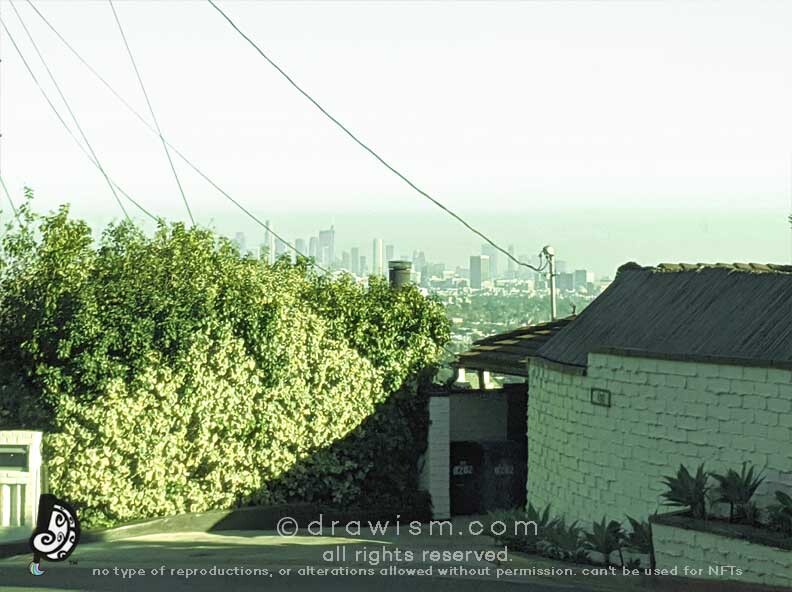
3. Digital Skyline

Here’s a hillside photo taken in the afternoon, overlooking a bustling cityscape.

I wanted to capture a more detailed scene than the previous pics to give off a greater feeling of environment and space. Basically giving our eyes space to ‘breathe’ a bit and to give you a better sense of a setting.


Like the films, I added that greenish-blue tint again to the photo. But since it’s in the afternoon, the yellowish light from the sun is less saturated and closer to a green-gray or white, like in the films.

Sadly, this Matrix fan art photo was not taken in Australia but in another very famous and well-known city.

Can you tell which city this is, above?

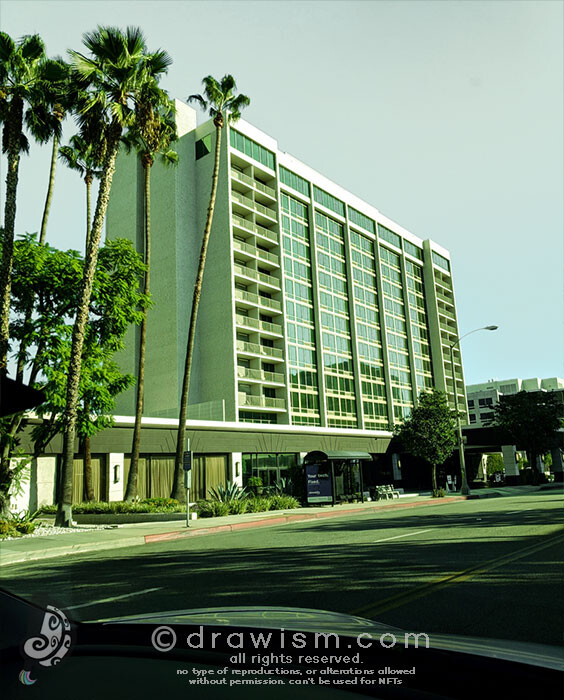
4. The Office Building

You can’t have Matrix fan art without some tall, menacing corporate buildings.

This picture reminded me of where Neo’s 9–5 job in the Matrix was, right before he got ‘bugged’ by the agents. It was a very iconic and intense scene, so I definitely wanted to edit an image of something (that seemed to me) devoid of happiness, color, and confined.

(I understand this is a hotel but it gives off a creepy corporate vibe.)


5. Mountains on the ‘Highway’

You know, we never really got to see any nature or pastoral scenes within the Matrix, in the films.

Only ever dense cities and buildings, which I’m guessing would make sense, given that the Matrix is built by machines and everything is supposed to feel and look artificial or man made but definitely not natural.


This is a little peek at ‘what if’ the Matrix did have some sort of special area that has a particularly natural, pastoral vibe.

6. Lines of People

So this next Matrix fan art screenshot was taken summer of 2020 — a depressing and scary time where we had our outdoor ‘freedom’, so-to-speak, confined to specific instances, depending on where you lived. I stayed home about 90% of the time and only went out to drive for a breath of fresh air.

It’s a great image because yeah, the pandemic almost didn’t feel real because of how insane and crazy it got, with the stay-at-home orders and mask mandates where I live.

The density of people in outdoor places wearing masks but not super packed as everyone needed to stay distant from each other was quite a surreal feeling at first.

This image was taken in the parking garage of an Ikea.

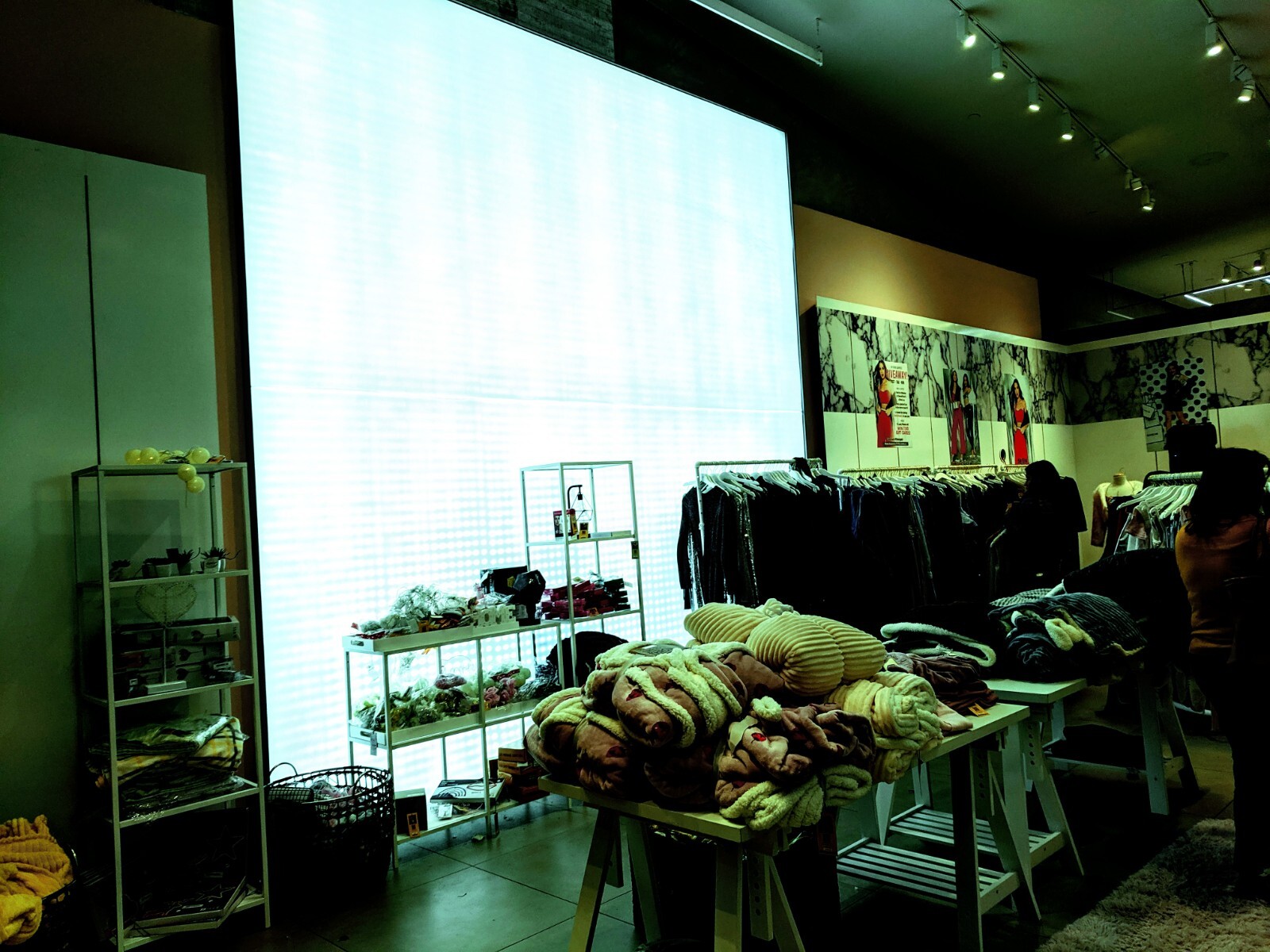
7. Don’t Forget the Giant Digital Screen!

How would a clothing store look like in the matrix? That’s the question I tried to answer in the photo below.

This next image is one of my absolute favorites because of the lighting and dark green colors, like those of Trinity’s chase at the beginning of the first film, and the indoor scenes later on, like when Morpheus needs to be rescued.

This Matrix fan art photo was taken inside a pop-up clothing store a few years ago.

I loved the indoor lighting and the projector screen really helps give off that digital feeling of being inside a computer or program.


I wanted to give as much focus to the screen as I could because it really stood out to me from the rest of the area.

The original unedited photo looks pretty blown-out with diffused lighting. I wanted these normal and randomly taken photos to have a cinematic touch.

8. Inspired by The ‘Oracle’s’ Apartment

If there was a yellow apartment that existed in the matrix during dusk, the below photo is what I imagined it would look like.

For this Matrix fan art image I was inspired by the Oracle’s apartment building. What if it was yellow and stood out from its surrounding area?

In fact, we never actually see the outside of her apartment, only inside.

The apartment was my main focus in the photos as it’s the most vibrant part of the piece and contrasts very well against a blue-green sky.

Some of the fine details really give character to the image and environment, such as the ‘Cleaners’ sign — ‘who uses that?’ and ‘why is it there?’ are some of the questions I ask myself when I take these photos.


When taking photos or creating a piece for a project, story builds the foundation for a successful and relatable piece of art.

Try to capture the things you like the most in your art and projects as they will really show your passion and inspiration in the end result.

9. Matrix Sunglasses

One of the most iconic images in the first film was Morpheus’ sun glasses when he makes Neo decide which pill to take.

It was such a stunning image that I tried to make my own but definitely not as story driven.


Sunglasses in the Matrix act as a means of disguise to shield one’s eyes, intentions, and even self, from the deception and lies of the machine’s programs. 

Or at least, to hide who they are.

If you’ve noticed, almost every time the main characters are in the Matrix, they have their sunglasses on. The few times you see them off when they are in the digital world, usually shows a scene of vulnerability and real emotion, like when Neo goes to see the Oracle, when he kisses the Merovingian’s wife, or when Morpheus fights one of the agents on the highway when he’s protecting the Key Maker.

So, I tried to capture the absurdness of the digital world through the sunglasses’ reflection with our ‘main character’ as a human and not a program.

Although, if you look close enough, you might find some interesting things going on in the reflection.

10. A ‘Matrix’ Burger Joint

Okay, question — What would a popular modern burger joint look like at night, if it was in the matrix?

That’s what this next Matrix fan art photo depicts.

Unfortunately in the films we didn’t see too much of the city in the Matrix, probably because everything looks how it does in reality, minus the green tint.

But here’s a modern take on that idea.


I love the orange construction barrier — it makes me think, “what’s going on here — what happened, what’s being constructed on?”. These little elements add more story and mystery to the piece.

The structure of the building feels sleek and somewhat futuristic, adding to the tech-y Matrix mood.

11. The Donut

Since we’re on the topic of food, the next image features a tasty treat!

We didn’t see any Matrix-ized food, so I created a picture of one.

I love tasty treats and if you’re like me, you’ll want to eat things that look good! So, I did my best to create a delicious donut if it existed in the Matrix. This was a Krispy Kreme key-lime pie donut.

Extra green on the icing with a crisp white dollop of frosting!


Is it real? Or just an illusion?

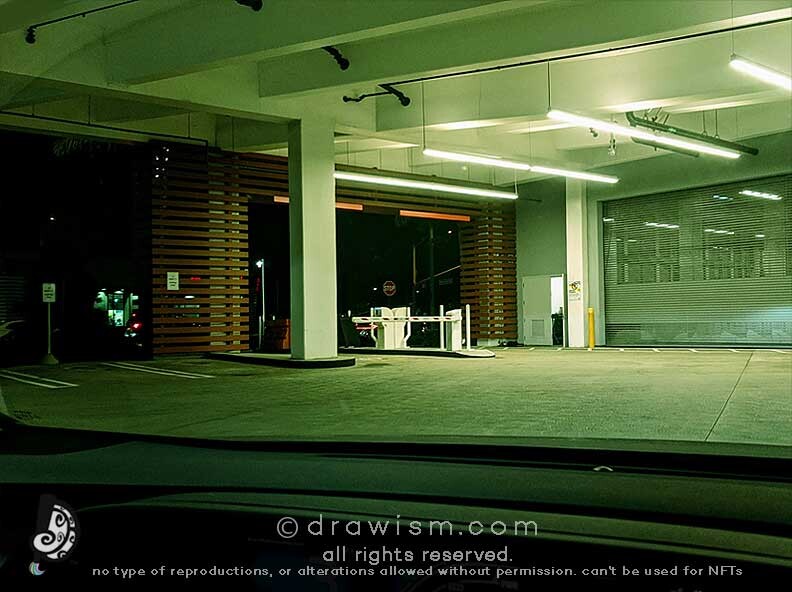
12. Parking Lot Battle

After watching the movies I definitely see a number of clean parking structures and buildings that give off a sense of being underground, like the underground world of hacking (basically what Neo and Morpheus’s team are doing). I guess the underground vibe really fit in well.

This is a mall parking structure. The lighting and architecture stood out to me against the night sky and I loved the reflective material against the garage door.

The ticket dispenser also reminds me of another scene — like Trinity could just blast into the building with her motorcycle.

Can you guess which Matrix scene this reminds you of? (Hint: it’s in the second film and part of the image’s title.)


13. Reminiscent of the Mansion of the Merovingian

No Matrix fan art is complete without a fight scene setting.

In this pic below, I was inspired by the indoor fight scene in Matrix Reloaded where the Merovingian unleashes his goons on Neo.

Definitely one of the most memorable and exciting scenes in that film!

I loved the classic architecture and sculptural setting in that scene which is why I captured this building with its classical elements.

On another note, the ceiling on the inside arch almost look like type keys in a keyboard, further adding to the films’ digital motifs.


That was the last image.

I hope you enjoyed taking this little ‘tour’ and seeing other possibilities that could exist in the Matrix.

Check Out More Exciting Pop Culture Art & Drawing Tutorials

For even more imaginative pop culture inspiration, art, and freebies, check out these other amazing related articles below!

Sadly our Matrix fan art photoshoot ends here. 

Which image stood out to you the most? Share your thoughts in the comments below!

The article Stunning Cinematic Matrix Fan Art Location Photoshoot was originally published on Drawism.com first.

Report

Little Nightmares Six Fanart: Draw an Awesome Stylized ‘Six’

Tutorial / 01 October 2023

Little Nightmares Six Fanart is the perfect thing to draw whether you’re looking for some cute & spooky flair or just want to draw something simple and fun. This tutorial teaches you how to draw a stylized Six, the main character from Little Nightmares, using some basic shapes and details.

If you don’t know what “Little Nightmares is” or who the adorable ‘Six’ is, I’ve made an quick summary with some basic facts about it, to fill you in. Just keep reading to learn about the world of “Little Nightmares”.

But (if your hands are itching to draw) if you just want to get to the good stuff and start drawing, skip to the section “How to Draw Stylized Little Nightmares Six Fanart“.

Let’s get started!

Grab my free How to Draw Little Nightmares Six art drawing guide with all steps in this post packed into 1 printable sheet plus a Six phone wallpaper added as an extra bonus, below!


What’s “Little Nightmares”?

“Little Nightmares” is a cute but creepy fantasy horror side-scolling video game created by Tarsier Studios, published by Bandai Namco (the current IP owner), and released on April 28, 2017 for Windows, Playstation 4, & Xbox One. It was then released for Nintendo Switch about a year later.

Little Nightmares’ art style mixes the worlds of fantasy and horror in a 2.5d format where everything is larger than life for the game’s main character, Six.

Here’re some screenshots so you can get a better idea of the game.

In order to progress in the game, players must solve puzzles in the form of obstructing objects, narrowly escape capture by giant monsters, and traverse an eerie floating vessel located in the sea, called ‘the Maw’.

From the cinematic yet ominous lighting to the adorable but slightly nightmarish character designs, the storytelling and artwork is top-notch (in my opinion) and an extremely immersive experience. The environments feel like more of a creepy dollhouse style, so not extremely graphic but oddly cute.

I’ll be honest, I really don’t like scary movies or video games but due to the lack of gore, blood, and over-the-top horror elements, this games feels more creepy and spooky than anything else, making it extremely accessible to people who share my lack of extreme horror.

Who is ‘Six’?

Six is the main character in both Little Nightmares and Little Nightmares 2.

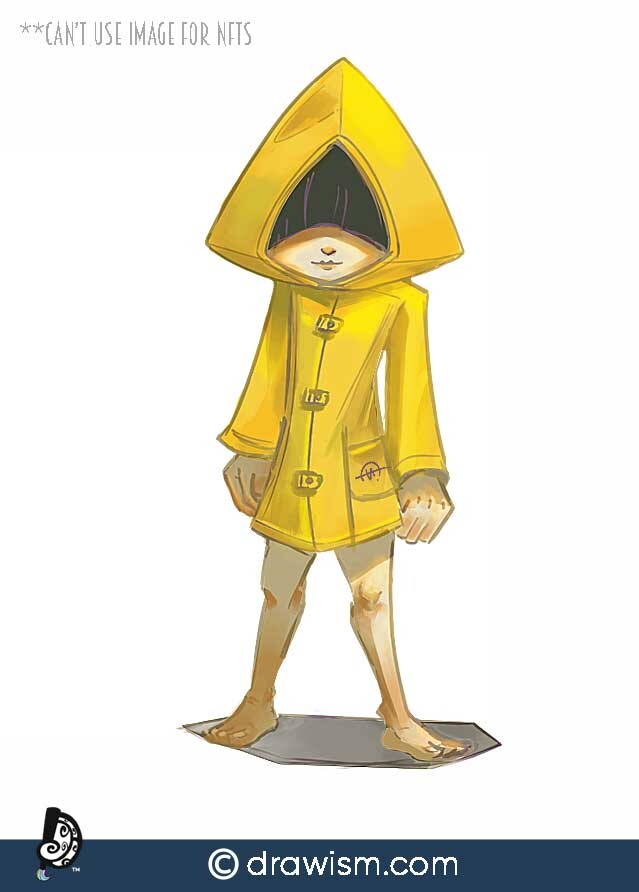
She is a lost girl at the age of 9 who has suddenly woken up in a spooky dungeon filled with child-sized cages on a floating water vessel named the Maw. Six is dressed only in a yellow raincoat with a unique triangle-shaped hood and her black hair obstructing her eyes.

Six tries to unravel the mysteries of the Maw and survive the many horrors that she encounters on her journey to escape it.

How to Draw Stylized Little Nightmares ‘Six’ Fanart

*All artwork posted is drawn by me. The characters & IP depicted are Copyrighted by and are Property of Bandai Namco. The original character design depicted was created by the concept art team at Tarsier Studios at the time of making Little Nightmares 1.

Little Nightmares Six Raincoat

1. Action Line

For this Little Nightmares Six fanart drawing, we’re going to start this super simple. First, draw a slightly curved line. It can be a continuous line unlike what you see below. This will be our action line which is the main line of movement for the body. This gives our character’s pose more fluidity and less stiffness, essential for successful character designs.

2. Draw a Slightly Tilted Half-Rectangle

Where the top of our action line begins, draw 1 straight or slightly curved horizontal line that goes past the action line on either side but don’t make it too long, otherwise, you won’t get that thin torso shape.


3. Draw Curved Lines

On the left side, draw a slight curve from the bottom of your rectangle so it fans out a bit at the bottom so it almost looks like a skirt.

On the right side, do the same thing but start a little before the right side of the rectangle line end. This implies a small fabric fold where the torso bends, giving the coat a dynamic look.

Make sure both lines end at the same length.

4. Draw Slightly Curved Lines From The Bottom Sides of the Coat to the Center

This will be our bottom hem of Six’s raincoat.

Add a slight outward curve to your lines as it will give the coat volume and dimension.

And you’re done with the main shape of Six’s raincoat!

Six’s Hood

5. Draw A Curved Leafy Diamond Shape

This’ll be open part of the hood where we see Six’s face.

Make sure the bottom of this shape touches somewhere towards the middle on the top of the raincoat.

6. Draw 3 Lines From the Angles of the Hood

Now, we’re extending the hood outward and giving it more volume.

Draw a short slightly curved line that touches the bottom angle of the hood.

7. Connect the Tips of the Hood

A key point to drawing instantly recognizable Little Nightmares Six fanart is drawing a large hood. You should get a larger triangle shape as shown below, which is the rest of Six’s hood.

8. Draw a Seam Outside of the Hood Opening


You can make these lines thinner and follow the shape of the smaller curved diamond.

You can also draw a slight fold towards the top of the hood. Just draw a thin angled ‘C’ and you have a fold impression!

Six’s Raincoat Sleeves


9. Draw 2 Lines Coming from the Hood

On the left, draw a slightly curved line fanning out and stopping a little past the middle of the raincoat.

Then on the right starting from the middle of the right bottom hood line, just draw a short, slightly angled line or mark. This’ll be Six’s right shoulder.


10. Extend the Right Shoulder Down

Use a slightly curved inward line again and make it a bit longer than the left line. Then, draw a curved line or half circle starting from the right of the coat, make it touch the bottom of the right sleeve, and curve it inward.

11. Draw A Straight Line for Six’s Right Arm

Draw this line so that it starts and stops at the raincoat. It should look like the right sleeve is behind the raincoat.

Six’s Legs

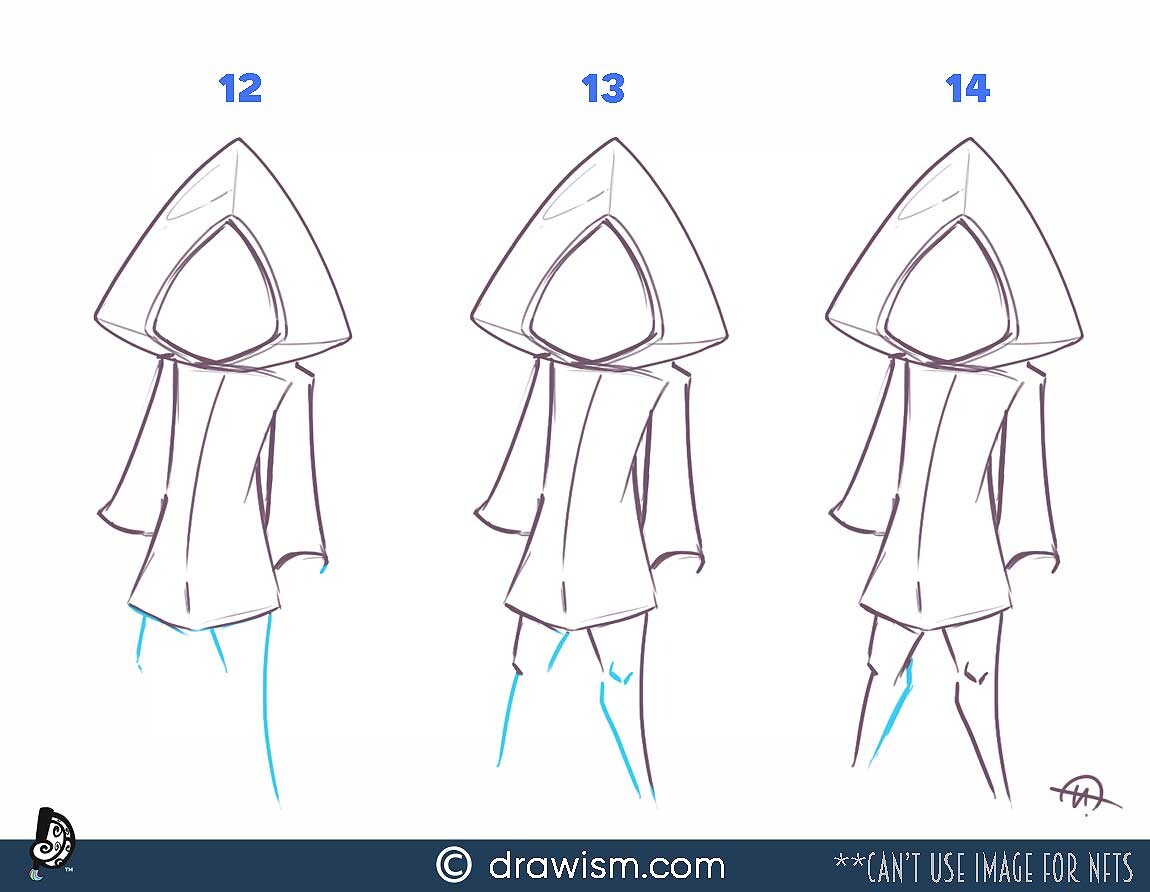
12. Draw a Short Angled Line from the Bottom Left Side & A Curved Line from the Bottom Right of the Raincoat

The short angled line is Six’s left thigh and knee. Draw a small inward mark to show the knee.

Then draw a small sharp angled line to the right of the coat’s bottom. This’s Six’s right thigh. Last, draw a curved line starting close to the bottom right hem of the coat which’ll be the right leg.


13. Draw Straight Lines for the Rest of the Legs

For the left inner leg, draw a short straight angled line that stops a little above the knee mark. Then, starting from the bottom of the left knee, draw a straight line about 2x the length of the line above the knee, for the front of Six’s left leg.

On the right leg, draw 3 small straight lines for the right knee. For the right calf, draw a small straight line outward starting where the short inner leg line end and then draw a longer straight line inward to make the leg taper in towards the ankle.

14. Draw A Short Straight Line Outward, Then a Longer Straight Line Inward for Six’s Left Calf

Start a bit above where the left thigh ends, draw outward and end that short line below the knee. Then from that line, draw a longer line tapering inward and make it the same length as the front. of the left leg line.

Ankles and Feet 1

15. Draw 2 Small Lines for Ankles on Both Feet

A little above where each inner leg line ends, draw a quick small line going out then another small line immediately going inwards. The ankles should look small and angled.

16. Draw Outward Curved Lines Starting From the Outside Leg Lines

This will be the top of Six’s feet. You can draw a couple quick marks at the top of the feet to show creases.


17. Draw a Curved Line Going Inward Staring from the Outer Edge of Each Foot

These lines create the shape of Six’s toes. Don’t draw them too far inward otherwise they’ll make her feet look huge!

Feet 2 + Hands 1

18. Starting from the Ankles, Draw Short Outward Lines for the Heels

Heels are thicker at the base, so they fan out a bit from the ankles.

Then, curve the ends of the heels and then connect them to the open ends of the toes using a ‘wave’ shape to get the foot dips on the inner part of the feet.


19. Draw Straight Lines for the Top of the Toes, Then a Curved Line for the Toes’ Bottoms

So, the toes should look straight where the toenails will be but curved for the sides and bottom.

Let’s also take this chance to start the top of the hands. Just draw 1 straight (or barely curved) line at the bottom of the sleeves but draw them towards the center of the sleeve so the raincoat looks to cover the hands.

Hands 2 + Toenails

20. Draw Inward Lines From the Tops of the Hands

These lines are the fingers. Then draw 3-4 short lines on the right hand the same level where the angle meets for the knuckles.

And for thumbs, draw 1 inward line touching the raincoat for the right hand and an ‘L’ shape for the left thumb, touching the raincoat.

21. Draw Tiny Squares For the Toenails

They don’t have to be full squares, just angled markings that look like they could be toenails. One the nails below only has 3 sides to it.

Face + Hands 3

22. Draw Rectangles for the Fingers and Curved Lines for the Hair

On the left hand, draw tapering lines to show the fingers getting thinner.

Draw a smaller diamond where Six’s face is supposed to be. That will be the bottom of Six’s hair. To show hair texture, draw a few curved lines that touch the bottom of the hair. Curved hair lines imply that Six’s head is round and looks less flat than straight lines of hair.

23. Draw the Bottom of the Nose and Six’s Lips

This is pretty easy. Just draw a small angled shape in the center of the smaller, flatter diamond (aka the hood opening) for the nose. Nothing crazy here.

And for the mouth, draw a thin line below the nose and a small mark underneath that, for the chin. In the center of the lip line, just add 2 dots or marks to indicate the top of the lips.

24. What the Final Face Should Look Like

Six’s Raincoat Details

25. Use Curved Lines for the Cuff Hems and Straight Lines for the Side of the Raincoat

Follow the shapes of the sleeves for the cuff lines, making them curved and following the form of the sleeve opening.

Then follow the shape of the right side of Six’s raincoat for the coat lines. For the pocket, just draw 2 slightly curved lines from the coat lines to the raincoat’s edge. Make the bottom line curvier for that pocket look.

26. Draw 3 Straight Lines or Marks Off-Center of the Middle of Six’s Raincoat for the Coat Clasps

27. Fill in the Coat Clasps with Curved Lines at the Ends and Add Thin Hem Lines to the Bottom & Left of the Coat

These are the finishing touches to the Little Nightmares Six raincoat – gotta add those coat details! They really help make the drawing look complete.

Final Little Nightmares Six Fanart

28. (Optional) Draw a Shadow

To really finish off our Little NIghtmares ‘Six’ fanart, let’s add a shadow. It can be a flattened circle or what you see in #27 in the image below, an angular trapezoid-looking shape.

Drawing a shadow not only grounds Six so it doesn’t look like she’s floating but it also adds a professional finish to it.

Whenever I draw characters, adding a quick and simple shadow is always a must for me because it gives more dimension and a sense of space to the image and character.

Grab my free How to Draw Little Nightmares Six art drawing guide with all steps in this post packed into 1 printable sheet plus a Six phone wallpaper added as an extra bonus, below!


*Feel free to color in your shadow if you’d like! I always fill in my shadows because it adds contrast to the drawing and really helps make it stand out.


And there you have it, a finished Little Nightmares Six fanart drawing!

Feel free to color it in if you want!

Check Out More Exciting Video Game Art & Drawing Tutorials

For even more imaginative pop culture inspiration, art, and freebies, check out these other amazing and easy drawing tutorials + game related articles below!

This Little Nightmares ‘Six’ was quite fun! What other characters would you like me to make drawing tutorials of? Leave a comment below!

The article Little Nightmares Six Fanart: How to Draw an Awesome Stylized ‘Six’ was originally published on Drawism.com.

Report

How to Art Critique the Right Way & Give a Valuable & Meaningful Art Critique

Article / 17 September 2023

Learn how to art critique the right way. Now more than ever, there’s so much online accessibility to art with many artists taking part in social media and online communities. Unfortunately, not everyone online has other peoples’ best interests at heart. This article covers the main differences between a constructive art critique vs. harmful art bashing, how to give a proper art critique, and how to react to art bashing. It’s important to know that while posting art online or showing it off can be fun and great to build your community, there are some individuals that don’t pay attention to the feelings of others when it comes to art.

Sadly, some artists have experienced hostile “criticism” that is neither constructive nor supportive of the artists and/or their work. Hostile criticism can be emotionally damaging at times. This is not a critique but rather a type of online harassment. Like putting someone down.

On the other hand, many online art communities are supportive of other artists and are willing to give advice to those who ask for it.

What is an Art Critique?

An art critique is a type of constructive criticism or feedback that is made with the intention to help someone improve their art.

The purpose of an art critique is to help inform the artist, both pointing out the strong and weak points of an artwork, not just the bad points. This is an especially important note because their (art critiques’) purpose is beneficial to the person receiving the information.

Think of it as helpful and valuable advice for your art.

An art critique usually focuses on all aspects of an artwork including technical skills, ideas and thought processes, and even the creation process of the work which encompasses concepts and materials.

It is mostly given by professionals or people in that particular field.

Examples of people giving art critiques are professors, mentors, teachers, artists, and/or people working in the industry. They can even be your peers and classmates. So, they’re usually people with professional working experience and most likely some amount of success.

An art critique helps you understand the process of creating art. It helps guide you in a positive direction while helping prevent certain bad artistic habits. That’s the only way to get better: learning from your mistakes.

A sample critique would be if an art instructor told you that you spend too much time on an artwork or challenging the way you think about new ideas. It helps improve your work exponentially and quickly, while helping preparing you for real- world challenges. It’s definitely a good situation to be in if you take art seriously and want to succeed in this field. Because most likely, there’re going to be a LOT of mistakes made but it’s a part of learning, so you’re good.

What is NOT an Art Critique

There are many ways people can talk about art but it’s important to distinguish an art critique from common one-off statements if you either want to give a legitimate meaningful critique, or want to avoid being offended by a useless comment that doesn’t help you.

Here are examples of what is not considered an art critique or how, given certain parameters and situations. Some of these can be helpful to you or other artists but it always depends on the situation and context so use your best judgement when either giving these comments or receiving them.

  1. Opinions

    • There are many opinions when it comes to discussing art but remember they are just that: opinions.

    • Opinions on an artwork may not be considered art critiques to some because they don’t usually have the main intention of helping the artists improve their work idea-wise nor technically.

    • They usually start with an ‘I’ statement, like “I like this piece” or “I think this artwork looks like . . .”.

    • Most opinions are short comments but some can be quite long.

    • Basically, they’re just someone’s individual point of view. An expression of how the viewer feels about a piece which may or may not take into consideration the artist’s feelings or efforts.

    • Take into consideration that opinions come from people who may not be in or fully familiar with the art community.

    • Remember: These statements might not be honest or true, so take them at face value, first, then use your best judgement if you find them helpful or not.

  2. One-Sentence Statements

    • Simple statements or comments that talk about 1 point or aspect of a piece without going into any sort of detail.

    • These don’t take much artistic intellect.

  3. Compliments

    • Mostly harmless, short statements.

    • These definitely make artists feel good but they’re not constructive when they don’t go in-depth about why an artwork is great.

    • Basically, they’re just nice opinions but non-constructive, like “I love this!”, “Great job”, or “I wish I could buy this”.

    • Yeah, people may like the way your work is already but sometimes too many compliments without constructive feedback can stop your growth as an artist or even set a high standard for your work that you feel you might not be able to meet later on.

    • Relying too much on compliments as an artist can be detrimental to your work, while giving them thoughtfully can be beneficial in connecting with one (an artist). It really depends on the situation and how you want them to work (or not in your favor). So use your best judgement when receiving or giving compliments on someone’s art.

In the next section, I explain why art critiques are valuable to both the person who is receiving one and the individual who’s giving it.

Why Art Critiques are Worth Your Time

From an Artist’s Point of View

Art critiques don’t have the intention of being malicious or mean. They come from a place of respect and understanding, with a desire for another person’s success.

Although some critiques can sound nit-picky or like the critic is pin-pointing just you, they’re not.

Everyone has a different view and perspective when viewing art.

So, it’s very important to know that critiques are not personal in any way and not directed at who you are. And that’s okay if your work receives varying opinions. Not everyone will have the same thought for an artwork. That’s what makes art so unique.

Everyone views art in their own way and isn’t bound to any one interpretation.

Lastly, having many art critiques for your artwork can be a wonderful thing. With multiple art critiques, you have different types of eyes and opinions on your work. This is great because it allows you to see a different side or new idea of your work, that you may not have thought of. This helps your creative process by challenging you to think outside of your normal ideas and techniques to create a more informed and knowledgeable artist,you.

From a Critic’s Standpoint

Giving meaningful and thoughtful art critiques improves your ‘artist’s eye’, which helps you recognize what needs to be improved in not only someone else’s work but in your own as well.

When giving an honest and helpful art critique, you’re also more aware of mistakes and areas that need improvement. You’re helping another artist out by giving them valuable advice. It’s a win-win situation!

The best, most successful artists, take critiques as a chance to grow and become better at their craft, not as an insult.

How to Spot an Art Critique

1. Usually in a productive work environment with at least 1 professional artist. Some examples include a classroom, seminar, portfolio review, study session, workplace, panel or convention, group meeting, or on a team project.
2. Art critiques discuss changes and fixes to an artwork. Basically, how to make it better than it already is or how to improve weak areas.

3. When a critic or person critiquing, points out what’s not working but immediately follows that up with an improvement on how to fix the work. For example: “this looks rough and doesn’t look like you spent much time on it. Instead, try spending a bit more time on your idea and practice your techniques for the next assignments. It’ll make your project look professional and clean while painting you as a hireable artist.”

When You Should Give an Art Critique

1. When an artist specifically asks for an art critique or review.

2. In a classroom setting where feedback is asked for by the instructor.

3. When reviewing an art portfolio.

4. During judging for a competition or similar event.

5. Any other event that specifically prompts an art critique.

When NOT to Give an Art Critique

Art critiques when given unannounced, can actually be quite rude and disrespectful to an artist. This is because not everyone is in the mood at all times to receive these critiques. It can be draining for someone to constantly have their art reviewed when unprompted, especially in settings that don’t call for it. Not to mention, it can make the reviewer look like a total jerk.

So, the setting is incredibly important if you’re giving a good art critique.

Here are some situations and settings where it’s NOT okay to critique someone’s art.

  1. On Opening Night at an Art Gallery or Show

    • Art galleries and art shows are all about showcasing the artists’ talents.

    • This is a night for entertainment, celebration, achievement, praise for their hard work, and an overall fun night, not another art review.

    • Here, viewers have the opportunity to connect and talk with the artists, not tell them how they should paint or draw. Positive comments and potential clients are a main focus for artists on these nights. Most artists want to be appreciated for their hard work and sacrifices. So, you can give it to them if you feel comfortable doing so.

    • Instead, keep your criticism to yourself. These events aren’t about anyone else except the artists and those who helped put on the show.

  2. When an Artist is Selling their Work In Person

    • This follows the same ideas as mentioned above.

    • When an artist sells their work (either online or in-person) they’re presenting their work AS-IS!

    • This isn’t the time to be telling them how to improve their art.

    • Usually when an artist has their work for sale, they feel their work is at a professional quality to do so. It’s beyond disrespectful and rude to critique them when they are selling. Instead, praise them for what you do like, if you want to.

  3. When the Artist Has NOT Asked for it and Is Merely Showing or Presenting Their Work

    • Again, same exact principles as 1 & 2.

    • NEVER give an art critique in an un-prompted setting. It can come off as rude and disrespectful.

    • Many people don’t want advice when it isn’t asked for. Same for artists and their work.

    • When this does happen, a lot of artists will smile and agree with the critique so to not be rude (I definitely do this). But most likely, they won’t think about that critique again nor take it to heart and just continue with their day.

    • Many artists are self-aware of their own skills and talent. And chances are, they have a pretty darn good idea of where their skills are at, myself included.

  4. Any Relaxing or Fun Event that Isn’t Art-Centered

    • It can be anything from a wedding, convention, family get-together, or a vacation.

    • These events and settings are joyous and most people want to enjoy them without thinking about work. The same applies to artists (although not all of us). But if an artist asks for a critique, better to give the advice AFTER the event as they’ll be more prepared to respond and value your critique.

    • Quick Story: I went to my sister’s wedding and just wanted to enjoy the day. I did, for the most part. But at dinner, I just wanted to eat and relax. These types of events are extremely draining for me. Basically, my relative kept asking me questions about my blog and art. I understand his comments were extremely helpful. But honestly, I just wasn’t in the mood nor felt I had the energy to continue. I felt I had to appease him by keeping the conversation going and I was out of it by the end of the night. I remember some of what he said (more like 20%) but couldn’t recall the rest because my mind wasn’t in the head space for that.

Keep reading to find out how to give a valuable art critique and what it looks like. And if you don’t know how to art critique or give a proper critique, I’ve made a quick guide to help you understand the art critique process below!

How to Art Critique the Right Way: Give a Valuable & Meaningful Art Critique

1. Start by asking what the artist specifically wants to be critiqued for and why they want to be critiqued.

  • This will prevent you from making any unwanted comments or accidentally offending the artist and coming off as rude, mean, or insensitive.

2. Give your thoughtful opinions based on the answers from the previous step.

  • If the artist wants their work to be at a professional level, point out exactly what is or isn’t working.

  • If there’s an area where the artist is lacking, immediately follow it up with what they can do to improve that particular area of work.

  • Remember: don’t over-critique someone’s work or the artist might feel that they’re being made an example of or feel badly, especially if it’s online or they’ve never met you before.

  • If you’ve never met or engaged with the person you’re critiquing, keep the areas of improvement to max. 2 things. Neither of you have met prior, so there’s no guarantee the artist will take the critique as valuable feedback.

3. Point out their strong points.

  • Not only will this make other artists feel better but they’re more likely to take your critique in a positive manner and fix what wasn’t working.

  • It’s always great to be cordial with one another, especially in the art community as fellow artists are usually more than happy to extend a helping hand for those who are polite.

  • Not only that, when good compliments are given, people are more likely to remember and interact with those nice folks.

4. Try to give thoughtful ideas that the artist might not have thought of.

  • For example, you could say, “This tree painting looks nice but why not put the tree in a pool of water to show that It’s growing from the sea, since you said it needs saltwater to survive.”

  • These types of comments really help motivate others to continue with their art and projects in the best possible way.

  • Not only does it spark a new idea but it can really improve an artwork and push it to the next level.

  • You can think of these comments as leading another artist to a gateway for more inspiration and creativity.

  • Not only that but you’re critically thinking about an artwork as well and approaching it from a new standpoint, something that you can use for your own work. It’s a win-win situation!

5. End the critique with a positive comment.

  • Here are a few things you could say, “you’re doing a great job so far”, “you’re work has been improving, keep it up”, “I can’t wait to see more of your work”, or “you’re on the right track”.

  • This is important because it makes the artist feel really good & that their efforts haven’t gone unnoticed.

  • These comments blatantly acknowledge the artist’s time, the skills they’ve learned with the sacrifices they made, and their improvement.

  • It gives artists a big feeling of accomplishment and sense of achievement.

  • Positive comments on artwork leave artists with a positive feeling, motivation, and willingness to keep making art and it’ll make you feel good, too, knowing you made someone’s day a little bit better.

  • Not only that, they’ll most likely remember for saying kind works about their art. As an artist, it really means a lot when someone acknowledges my efforts and work.

For an even more in-depth look at how to give a meaningful but not mean art critique and how to distinguish good critiques from bad ones, here are some helpful links below:

Art Bashing

Art Bashing is when someone makes a negative comment or controversial opinion about someone else’s artwork, that is neither constructive nor positive towards the artist. These comments are usually said without thinking about the artist’s feelings & are extremely opinionated. These types of comments reflect the commenters’ feelings with no consideration to the artist while being mentally hurtful to the artist.

Most often these comments come from people who might not know how to art critique or have little to no interest in giving one.

It is important to know when you or another artist is art bashed, so you can remove yourself from a hostile situation and replace it with a more positive environment❗

It’s never okay to harass someone, period. It doesn’t matter if the bashing happens online or in person, or even if it’s not about a person specifically but about an action they took, harassing someone is never okay‼

Why?

Because art bashing (and any type of verbal harassment for that matter) creates a hostile atmosphere that produces instantaneous negative feelings in someone.

Everyone has feelings.

And those feelings can include sadness, depression, loneliness, anger, anxiety, regret, low confidence, insecurities, and fear. Not everyone deals with those feelings the same way.

Please remember that everyone is different on the inside. Not everyone has thick skin to harsh words. Some people are more sensitive to comments than others and that’s 100% okay. It’s not their fault nor is it up to you or someone else to fix that.

When art bashing happens, it creates an instantaneous divide and sense of uneasiness between the person who gave the comment and the person that received it. Sometimes, the effects of art bullying can be long- lasting. In severe instances, traumatic.

If you don’t have something nice to say, keep it to yourself .

It’s 100% okay if there’s something you don’t like about another person’s art. Maybe you don’t like their art style, their coloring, or their process. That’s 100% fine. No one is forcing you to like their art. But at the same time no one is telling you or anyone else to say mean things to another artist.

Instead, say something nice of the artwork that you do like.

We all must be mindful of our words and create a better tomorrow with positivity 😃

Types of Art Bashing

There are a few different forms of art bashing. They’re great examples of how to art critique the wrong way and what you or the critic should not be doing.

It can happen in these ways:

  • Someone posts mean, unthoughtful comments on social media about the artist, their work, or both.

  • Saying their work isn’t good enough or putting that person down.

  • Drawing over or editing someone’s work in a malicious way that’s intended to make the artist feel negative.

  • Telling your followers or community to go after someone or their art.

  • Making fun of an artist’s work. An example, would be comparing someone’s drawing to a heinous person, act, or event that is riddled with negativity.

How to Spot Art Bashing

A surefire way to check if someone art bashes is when someone says or posts a short unthoughtful negative comment and doesn’t follow that comment with something positive or constructive.

Here are some examples of art bashing and mean comments on artists’ work, great references for how to art critique the wrong way :

When someone does this, they’re letting their words and comments sit so it can sink into the minds of their targets. This is a manipulative mental tactic used to make someone feel inferior, defenseless, and doubtful of their own abilities.

But the one thing you MUST REMEMBER, is that what these jokers say isn’t true. Their comments are meant to get a negative reaction from you. Basically, they want to annoy and bring you down. That’s the main point of harassment.

Harmful comments can be very dangerous tools that can shift someone’s sense of stability, protection, and confidence into a pile of rubble.

Yeah, you won’t get physically hurt from it now, but any type of harassment can have an enormous effect on someone’s mental well-being and way of life. It can even become so bad where your body maybe in stress mode and start to damage itself! So it’s crucial to know when and how to keep away from people and things that’ll risk your mental health.

It’s not always easy to get away from it but below are a few tips to help you stay away from and recover from art bashing, specifically online.

How to Protect Yourself & Recover from Art Bashing

  1. Take Time to Yourself

    • You need this more than anyone right now and deserve it.

    • With a calm mind, you can take steps to address the situation when you’re ready.

    • You’re also more likely to do something you won’t regret later on.

  2. If it’s Social Media, Feel Free to Block or Report Them

    • If someone said something mean and hurtful that really hurt your feelings, take some time to process the situation. How do those negative comments make you feel? What do you need right now in the moment?

    • You need to surround yourself with positive and supportive peers. And an art basher is neither of those. So block or report them if you feel comfortable doing so.

  3. Make Your Mental Health a Major Priority

    • When you surround yourself with the people and things you love, you tend to be mentally unbreakable. This is because you know what you value in life and aren’t willingly to give attention to things that take away from it. This is because surrounding yourself in toxicity is just not worth your time.

    • When we’re in a mental state of being happy with ourselves, accomplishments or not, we’re more likely to let negative things pass by us and move on rather than waste our time engaging in the negativity.

  4. Get Off Social Media

    • We sometimes don’t want to admit it (myself included, for sure) but it can be extremely stressful not to mention mentally draining at times. Especially with some platforms requiring you to post content and interact with users on a daily basis.

    • A well-deserved break is definitely needed. Try treating yourself to a self-care weekend retreat by doing things that make you feel amazing or pampered.

    • If you feel you need to get rid of social media completely, absolutely do so. I’ve stopped going on Instagram because I was so stressed about what others thought about my work or felt like I didn’t have enough artistic talent. Since then, I’ve been extremely productive and one of the results is this blog!

  5. Talk to Someone That You 100% Know You Can Trust, About Your Situation

    • It can be something recent or something that happened a long time ago.

    • Verbally talking to someone else about the incident helps you in 2 immense ways.

      1. This helps you relieve stress from the situation by getting it out of your system. It’s a weight lifted from your shoulders that you don’t have to continue keeping to yourself nor is it a situation that you must face by yourself.

      2. Your confidant can give you suggestions. Basically, you’ll be much better equipped and prepared the next time around when art bashing (or just harassment) does happen. Not only that but you’ll feel more confident in a negative situation that you’ll be able to get out of more easily.

To learn more about dealing with art bashing and negative comments on your art, you can check this article out below:

Other Helpful Art + Artist Tips & Resources!


What art critique tips or stories do you have? Share your experiences below!

See you in the next post and keep creating!

The article Art Critique Vs. Art Bashing: How To Art Critique Right as originally published on Drawism.com.

Report

How to Draw Hair Buns for Male & Female Character Designs & Portraits

Tutorial / 03 September 2023

In this post you will learn how to draw hair buns for both male and female subjects. You will also learn the differences between male and female hair buns, how to make each look a certain way, and when to use a particular style, as each can give off a different feel to your character or subject. Lastly, I’ll teach you how to draw them in both a simple vs. detailed style, depending on the look you’re trying to achieve or if you’re crunched for time. Let’s get started!

WHAT’S A HAIR BUN?

In order to draw a believable hair bun, we first need to understand what it is, how it works, and for what reason the subject has their hair tied.

This may seem trivial at first, but figuring these points out early on will not only help you understand how a hair bun forms a particular shape but will help you give more flow and movement to your subject’s hair.

So, a hair bun is when someone ties their hair into a primarily rounded shape that usually sits on the upper half of their head with a band or hair tie.  When drawings hair buns, the hair strands meet or converge at the hair band because that’s where all the hair is tied. The individual hair strands n the bun then “balloon out” in the form of a bulb because the mass of hair expands outward as it’s “free” and not tied up. See the pic below.


The oval or egg shape is the most common form of hair buns.


The ends of the subject’s hair are usually hidden within the bun or right at the edge of the hair tie. So, this means there usually won’t be too many stray hairs sticking out of the bun or from the person’s head, depending on the hair style. This adds to a cleaner, neat look. But also less tedious detailing for you 😉

Hair Buns are usually used for longer hair but there are shorter hairstyles, such as those for men or women with chin-length hair. Hair buns are used to keep hair tidy & from obstructing the person’s vision when doing an activity.

*Remember this when designing your own characters! You don’t want your lady knight defeating a tri-headed dragon with her hair getting in her face .

Let’s get started with a simple hair bun tutorial below!

How to Draw Hair Buns

1. Define Your Hairline

A. This is the point where the hair starts (or ends). Adding a hairline gives a natural look to your hair bun. If you were to just draw a bun on someone’s head without showing a hairline, it looks as if the bun is attached to a bald head. This doesn’t make sense because hair buns are made of hair, so how can you have a hair bun when someone doesn’t have hair? You can’t! So you need to draw in a hairline. Plus, it gives some more volume to your subject’s hair.

B. After we’ve figured out where the hairline is, you can color it in if you’d like.


2. Decide Where the Hair Bun Is

You can place a light mark with a pencil on the area you want the bun to be. I drew a little “X” to mark the location of the hair bun. This is where I’ll be drawing my hair tie or band.

This helps define how the bun sits on the head.


3. Add a Hair Tie or Band

It can be as small or big as you’d like. I drew a kinda thick bulbous band below because I want it to support and cushion the bun.

You can try experimenting with different shapes & sizes of hair bands for different looks!


It also helps pinpoint the direction of the bun and how gravity may affect  it. Buns in the center of the head are more likely to stick up because their center of gravity, is well, in the center. But if you draw a hair bun to the side, that bun’s center of gravity has now shifted to either the left or right side, causing your hair buns to droop a bit.

But don’t forget to draw one, otherwise how’s the subject supposed to have their hair all tidied up? 

4. Draw the Hair Bun as 1 Main Shape on top of the band. (Usually a bulb or sphere)

Just one main shape. Nothing fancy or detailed. You can do more complicated shapes later but I want you to start off with a bulb or sphere first, as it’s the most common bun shape.


When we draw 1 simple shape for the bun, we’re drawing the entire bun as 1 object. This helps us understand the overall look and feel of the bun without getting super caught up in details. It also keeps us from drawing something that doesn’t look like a hair bun.

Basically, your hair bun needs to look like a hair bun the moment you see it.

5. Add Some stray hairs Coming From the Hair Line if you’d like

This adds more realism as real hair buns aren’t always perfect and neat. Some hair styles have shorter hair in certain areas and these stray hairs help account for that. There’re usually a few stragglers hanging out. 

Feel free to color in your hair bun or hairstyle with a solid color.


And that’s how to draw a quick and simple hair bun!

To learn about the difference between male and female hair buns, continue reading below.

Male VS Female Hair Buns

Male

Men usually have shorter hair than females. For male hair buns, they’re often tied from the top third of their head. This is because in more modern hairstyles, men have longer hair growing from the top of their head, while they have either a shave or “fade” that is much shorter. The fade often starts from the back of the head and continues to the side burns and top half of the back of their neck.

In the picture below, I drew some different styles of male hair buns.

Some look messy with stray hairs, while others look neat and tidy. It all depends on the look you want to achieve with your subject or character.

As you can see, these male hair buns have all different shapes and styles. Don’t feel you always have to stick to one particular style. Try experimenting with different shapes and hair combinations!


The pic below shows a male hair bun style where ⅔ of the hair is shaved.  You can see that in the drawing below.

On the right side, I sectioned off different areas of the male hair bun aesthetic. You can see the different parts of this hairstyle and how it might be a bit more complicated than drawing a female hair bun.


You can add a few stray hairs to show gravity if you’d like.

Here’s a quick tutorial on drawing ‘man buns’. It’s basically the same as drawing a female hair bun.

How to Draw Male Hair Buns or a ‘Man Bun’

1. Draw Your Hairline


2. Mark Where You Want Your Hair Bun to Be & Draw a Hair Tie


3. Draw Your Main Hair Bun Shape on Top of the Hair Band


4. Draw In Any Surrounding or Stray Hair Coming From the Bun


5. Color In The Hair Bun


6. And You’re Done!

Now you know how to draw man buns.


There’re a variety of shapes on how to draw male hair buns.

All you need to do is draw your main shape for how you want the bun to look. It can be anything from a sphere to a cylinder. Whatever you feel fits your subject or character the best.


Female

Unlike male hair buns, female hair buns usually have longer hair. What’s great about this is the infinite possibilities to style hair!

You can draw combinations of hair buns with long hair or hair buns with short hair.

Female hair buns can either look glamorous and tidy or you can opt for a messier look.

As female hair is generally more versatile in shape and style (due to its length), keep in mind the volume, texture, and form of the hair. Is the girl’s hair curly or straight? Is it light and fluffy or dense and rigid? All these details have an effect on hair buns so keep that in mind.

In the image below, I drew some different hair buns and styles from imagination. Some look a bit more traditional while other styles are more experimental, like drawing the bun to the side or drawing curly hair buns. I even experimented with different hair lines for a more unique look. And if you look closely, I played around with the hair tie/band which greatly influences the overall look and feel of the hair bun.

The main thing to keep in mind is that a hair bun is a 3-dimensional object that has volume! It is not flat.

Like in the picture above, you can design your hair bun in any shape you’d like and in any style. Many hair buns are not just all tied up on the head. Some styles have hair that’s partially tied with the rest just falling over on the side of the head. Some hair buns are tied to the side, or even lower on the head.

Heck, you can even draw multiple hair buns on one person or subject depending on what you’re going for.

There are a lot of female hair bun styles where long hair just falls to the side. It’s a popular look.

Keep reading to find out how to add detail to your hair buns!

How to Draw Detailed Hair Buns

The tutorials I showed above were how to draw a quick hair buns with little to no detail.

For detailed hair buns, they’re more involved but not by much. 

You can use the same hair bun you drew on the previous tutorial or draw another one.

Let’s get started!

1. Find the Bun’s Converging Point

* The converging point is where all the individual hair strands meet at a single point. Basically where the bun is tied.

2. Draw a Simple Highlight

A quick way for me to draw hair highlights, is to make circular arches like those shown in the picture below. In this case, my highlight is one big white arching shape.

You can draw the arches following the curvature and form of the bun. When you follow the form of the bun, you’re emphasizing its roundness and giving the appearance that your bun is in fact bulbous.

*The highlight shape needs to follow the form of the bun! Otherwise it’ll look like the highlight was pasted on and won’t be as believable.

3. Draw Lines from/to the Converging Point Following the Bun’s Shape.

Basically, draw individual hairs starting or ending at the hair tie while following the curvature of the bun.

You can draw the hairs through the highlight or draw them around it. For this tutorial I drew through the highlight to show more detail on the bun.

Keep drawing hair strands until you’ve gotten from one side to other, covering the bun.

*Note: I left a few spaces between some strands to further show the bun’s roundness. You can do that if you’d like.

Lastly, as shown in #2 in the pic below, color the hair bun (using a color of your choice) in the areas surrounding the highlight.

Don’t color in the highlight because that area is the shiniest and should be the lightest in your drawing.

You’re done!

And that’s how to draw a hair bun!

Other Helpful Art Tips and Drawing Tutorials:

Now that you have a general idea of how to draw hair buns for males and females, you can try drawing them for your own characters or portraits!

The article How to Draw Hair Buns for Male & Female Character Designs was originally published on Drawism.com.

Report

Working as a 2D (Concept) Artist | FireDEV Interview

Article / 31 August 2023

Have you ever wondered what it’s like to have an artistic career behind the scenes, what it takes to achieve one, or the business side of things? Or what about being a freelance artist, whether you want to work in entertainment / commercial industries or just want to teach art? There are many different paths to become an artist and make money off your art and there’s no one perfect or correct way to be one. Finding your artistic path is a journey of creativity and self-discovery but can come with a lot of risks, as I’ve found out. In this post, I share my own artist’s journey with a behind the scenes look of what it’s like to be a freelance 2d artist, teaching art, and working on different types of art projects plus a couple art and business tips with a bit of nerdiness tossed in!

What’s a 2D Artist?

A 2D artist is an artist that works exclusively in 2 dimensional art mediums and creative processes including pencil, pen, marker, watercolor, drawing, painting, sketching, and even digital painting, to name a few, and doesn’t include 3D mediums or art, like 3D art programs (such as Blender or Zbrush), traditional sculpting, or installation art.

It’s an industry term used to differentiate between 2D and 3D artists and the type of art they make.

Types of 2D Artists

Here are some of the different types of 2D artists that fit within this category, including:

  • Illustrators
  • Sketch Artists
  • Concept Artists
  • Visual Development Artists (Like a concept artist but for animation)
  • Painters
  • Fine Artists : Include gallery, professional, and hobby artists trained in traditional art mediums like pencil, colored pencil, graphite, pen, acrylic paints, watercolors, oils, etc.
  • Graphic Artists / Designers
  • Storyboard Artists

A 2D Artist’s Origin Story & What It’s Like to Be a Freelance Artist

Earlier this year, I had the pleasure of joining Frahaan Hussein on his podcast, Fire Dev. The podcast emulates a fireside-style chat featuring other industry professionals working in tech and entertainment, including 3D artists, developers, UI, graphic designers, and more!

You can check out the the main FireDEV podcast page here.– Big Thanks to Frahaan for inviting me to be a part of FireDEV, it was such a blast and pleasure to be a part of!

During our incredibly fun and insightful conversation, we talked about what’s it’s like working for smaller companies and indie studios vs. a larger company, the pros and cons of each, and even what happens when a project fails – yup, it definitely happens, especially with start-ups, so be prepared!

And that’s just one of the obstacles we discuss that comes with an art career.

But we get into more detail about them plus my personal solutions and art tips!

Because after all, being an artist and living off your art is incredibly rewarding, fun, and for some us, really a dream come true as long as you’re willing to really put in the time and effort!

Key Points Mentioned in the Podcast Episode

Below, I’ve outlined some key points and topics that Frahaan and I talk about during this podcast interview.

  • Valuable Artist Tips and Secrets to Success!
  • What Inspired Me to Be an Artist
  • How I Got My First Big Art Commission + Professional Experience at Fandango
    • You’ll never guess how!
  • Making a Game from Nothing, with People All Over the World (That I Never Met!)
  • Working for a Crypto-Based Game Studio Using NFTs
  • Is Being a Freelance Artist Sustainable?
  • What It’s Like Teaching Art
  • Working Remotely As an Artist
  • How to Manage Personal Life vs. Professional Life with an Art Career
  • What Recruiters Look For When Hiring Artists for a Big High-Profile Project
  • And Awesome Video Game Recommendations + more!

Honestly, this conversation was a blast and we hope you enjoy it as much as we enjoyed making it!

Check Out the Full Artist Interview & FireDEV Episode Below!

Ready to dive into the world of being an artist (2d artist) and see what it’s all about?

Then let’s go!

Here are the links to the full interview and episode. You can choose your preferred podcasting platform below:

Podcast Links to the 2D Artist Interview & Conversation Below

Other Helpful Art + Artist Tips & Resources

The article Inspiring & Crazy Adventures of a 2D (Concept) Artist | FireDEV Talk was originally published on Drawism.com.

Report

Art Anxiety : How to Be Confident with Your Art & Stay Motivated

Tutorial / 27 August 2023

Do you feel you’re art isn’t good enough? Does your art make you feel negatively about yourself? Or maybe you browse the internet and social media for all the latest and greatest art just to end up feeling negatively about your own work because you’re comparing yourself to other artists. For starters, I am guilty of the latter and found myself not enjoying my work. I felt mentally weighed down by the art and popularity of other artists when browsing online. Second, I found it extremely difficult to focus on my art projects thinking about why my work isn’t popular and how it feels like my work is a lost cause for me and my career. Low self-confidence in my artwork broke down my motivation for making more art. This thinking is extremely toxic not only to your mental health but your physical well-being and your interest in your creative projects. But how do you get more confident with your art?

Beat Art Anxiety: How to Be Confident with Your Art and Creative Projects


1. Know that you won’t make a perfect piece every time.

Every artist starts from the beginning, including myself. The beginning, as in making anatomically incorrect characters, perspective, and shading mistakes, to name a few (and I’ve made a bunch of them!). And that’s 100% okay! It just means some artists haven’t fully built up their skill set yet or haven’t learned enough about that subject yet. It doesn’t mean you’re bad at making art, by any mean. Of course, there are a few geniuses at art that whatever they make, it looks amazing, but those artists are extremely rare. That being said, not every piece you make will be perfect whatever your artistic experience. We’re all human, even artists. And like everyone else, we have our good days and our “I don’t like how this turned out” days!

“Know that you can control the amount of time and effort you put into your creative projects and that you’re skill set will keep changing and adapting to you until you feel it’s at the quality you want.”– Drawism.com

Some days we make great art or masterpieces, and some days we make “disasterpieces”.

Not making great art every time is completely normal, even among professional artists. When I make work for clients, there are sketches or drawings that look like crap, no joke! If it’s not a final piece, I will usually show my (extremely) rough art to them because they tend to find it quite interesting and may spark new ideas. If you feel like your art isn’t good, think again. Sometimes art directors, clients, or art teachers may find some of your “lesser work” quite interesting and unique, especially if you’re presenting your creative process or need to draw something in 2 seconds.

As long as the piece you’re making seems clear and readable to you, you’re doing great. If you’re working for a client or in art school, you’ll have to explain your art a bit as long as it gets your main idea across.

So don’t feel negative about yourself or your work if you’re not reaching perfection 100% of the time. Instead, know that having off days on your creative projects does happen and that you can make it better.

2. Failing is part of learning.

As artists, we all start from the beginning, including myself. I didn’t reach the technical and mental skill level I’m at today, if I didn’t fail hundreds of times at my work.

The key is to not give up and continue. Because reaching a proficient or professional level of art requires years of time, practice, and dedication, and won’t happen overnight. So don’t be afraid to continue your art from fear of failure. You can overcome art anxiety with enough artistic practice!

To make things easier on myself, I do simple art exercises that help me improve my technical skills without them being overwhelming for me. Knowing your limits of what you can and can’t do is a fantastic indicator of your current skill set and will help prepare you for more challenges along the way.

3. Art anxiety won’t last forever. Know that you will get better the more time you spend on your projects.

The more time you spend on your creative projects, the more accustomed you will be to producing the work you want while familiarizing yourself with the creative processes, both mentally and physically.

What you create in that moment is not the end all be all of your art. It’s just a step to improving your skills.

You will get better at your art! 

Getting better at your art is inevitable if you keep practicing, keep a positive mindset, and are mindful and conscious of your areas of improvement.

4. Don’t let the fear of failing prevent you from starting or continuing a project.

I’ve struggled with this for years. Every time I thought about drawing, I would freak out about it. I’d get into my head and stress about the entire art process. I’d think about starting the project and when it was nighttime, I didn’t accomplish anything. This wasted my precious time because I didn’t know how to properly address that fear of starting.

Art anxiety can manifest before you start working on a project.

Instead, I re-framed my thinking. I approached projects in much smaller parts. I started setting aside 15 min a day to work on my art because it was enough time for me to work on a piece without feeling overwhelmed.

Sometimes when we work on a project, we start thinking about all the steps and tasks we need to do before we start. This is when art anxiety can start to creep in. At times, this is extremely dangerous to our productivity because we set ourselves up for a result that we don’t know if we can achieve. This places intense emphasis on an imagined final product rather than fully understanding our own unique process of creativity.

Methods for being creative are not a one-size fits all but rather an individual identity of how we express our artistic sides.

To make this easier on yourself, identify your creative process and try writing it down. What methods works best for you in order to complete a project? Are these methods physically or mentally draining for you? If they are, that’s completely fine. But if so, how can you down-size the task to make it more manageable for you? For example, you can set a small, easily achievable time limit for one part of your creative process. I like to give myself 15 minutes to think about what I’m going to draw before I start a new artwork because it’ll make my workflow more manageable for me down the line.

5. Know that you’re doing something for yourself and focusing on self-improvement.

You’re improving yourself and becoming better at things you’re not good at.

It takes a lot of courage to realize something may not be working for you or that you might have feelings of art anxiety. Don’t be afraid to acknowledge that some things aren’t going the way you want in your creative endeavors. If you do, it will ultimately save you valuable time and get you closer to a path that will lead you to success. Use these moments of self-reflection as an opportunity to better yourself and your understanding of who you are in a creative space.

So take some time to treat yourself and give yourself a pat on the back for stepping out of your comfort zone to become a better version of yourself. You deserve it!

6. Your art is a representation of you, but that representation doesn’t last forever.

Your art will keep changing throughout your artistic journey. Don’t worry about those 5 bad portraits of your dog or how you didn’t ace your art class.

Your ‘bad’ art will soon be in the past if you continue to improve your artistic skill set. Soon, you’ll be making art that you’re more proud of that fits you at your current level. So don’t sweat the small stuff, you will overcome it! Keep in mind that just because you don’t like your art does not mean that it’s terrible or someone else will absolutely not like it. Art and the creative process is subjective, meaning it’s up to the viewer to decide how they feel about it. And that’s something you can’t control. So feel free to let that thought float out into the wind and keep on your path.

Instead, know that you can control the amount of time and effort you put into your creative projects and that you’re skill set will keep changing and adapting to you until you feel it’s at the quality you want.

7. Technical & mental artistic progress is inevitable if you keep at it.

As long as you’re focused on your creative projects, you’ll keep getting better at your work.

When we’re more familiar with something, the better we get. Not only will motor skills like your hand-eye coordination and precision get better but the way you think about and creatively approach your art will skyrocket as well.

Who knows? You might discover a new art style, process, or awesome idea on the way.

8. The process is just as important as the end result.

Don’t get too caught up in the end result of your art and projects.

The steps you take to get to the end matter just as much as your final piece because it’s the decisions you make while creating your art that help you achieve the results you want.

Take time to appreciate the thought process and steps. It helps you realize the little things you do that make you unique creatively.

“Methods for being creative are not a one-size fits all but rather an individual identity of how we express our artistic sides.”– Drawism.com

9. The more time you spend on your projects, the faster you’ll improve and reach your creative goals and overcome art anxiety.

You’ll keep improving on the skills you already have.

The sooner you keep practicing, the more fresh the skills in your mind are.

10. Don’t worry that you’re not achieving a huge following on social media. It’s okay to not be popular online or on social media.

Yes, it can be a huge help for your work. But it isn’t the only way to get noticed.

There are a lot of factors involved with your work being seen on social media. Social media is a lot different now than it was a few years ago. For starters, the algorithms on those sites are meant to keep you on those platforms for longer. Basically, you’ll need to give up a big chunk of your time to create substantial followings on those sites, which may or may not happen, depending on the quality and (even more so) popularity of your content.

Posting on social media constantly can be extremely toxic to your creative progress as well as your mental health. It’s a huge reason why art anxiety among artists has been increasing over the last few years. Not only that, social media sites require you to consistently post (usually on a daily basis). And not everyone has the time or resources to do that. I know I can’t keep up with it daily, which is why I stopped posting on social media a few years ago. And honestly, I’m so glad I did because it allowed me to focus more on myself and what I wanted to do with my art.

Social media engagement of your creative work is not a definitive nor completely accurate representation of your artistic work and abilities. So don’t take everything that happens on social media to heart. That’s not to say that it’s false when someone says they like your work because chances are they do.

I’ve worked with studios and a major company even though I only have 290 followers on Instagram, 26 on Twitter, & 73 on Tumblr. Oh yeah, and my Pinterest account was at 7 followers for the past 4 months before I reached my current grand total of, wait for it . . . . . 55, yup XD It can be disheartening knowing you have a small following but don’t let that stop you from achieving your artistic goals. You can achieve success and satisfaction without social media. So don’t worry that you’re not winning at Instagram, Facebook, or Twitter. It’s normal, even for pros.

“Don’t be afraid to acknowledge that some things aren’t going the way you want in your creative endeavors. If you do, it will ultimately save you valuable time and get you closer to a path that will lead you to success.”– Drawism.com

11. Prevent art anxiety by keeping a positive (or at least negative-free) mindset.

Staying positive while creating art is a huge aspect of being artistically confident. When we have a positive attitude towards our projects we’re more likely to engage with them and bring our best selves.

But when negative thoughts start to creep in, that’s when we start to lose confidence in ourselves. When this happens, our self-esteem is the first to be attacked. From there, we may get feelings of sadness, depression, and lack of motivation.

If you’re ever feeling this way, start associating your artistic projects and creativity with things that bring you joy. You’re more likely to have a favorable outcome if identify your habits with feelings of accomplishment, self-satisfaction, and happiness.

12. If you can, create things you enjoy.

This may seem pretty obvious. But it can be easily overlooked.

If you make things you enjoy, not only will it help you feel positive but you’ll feel more energized and motivated to continue with your projects. And the more you keep up with your creative passions, the more experience you will gain, helping you to become more confident in that particular activity.

13. Help get rid of art anxiety by making a ‘creative dump’.

When it comes to artistic activities that require hand-eye coordination (such as drawing, painting, or photography), take a minimum of 5 minutes to do that activity and just make a ‘whatever’ piece of art that you couldn’t care less about. This is a fantastic exercise because you don’t have to worry about the end result. You’re essentially exercising your creative muscles and warming them up for your more serious art and projects. Think of this exercise as if you’re dumping/taking out all the garbage (mistakes, un-coordination, so-so designs) that could potentially hinder the quality and creativity of your projects. Making a creative dump, either by drawing or getting my ideas on paper really helps me feel more confident in my art.

Art anxiety is just one of the many psychological obstacles that artists and creatives face. There are many more and they can be extremely intense both physically and mentally if not addressed. Some of these challenges include creative burnout and the mental effects of nft art theft and copyright protection.


Other Helpful Art Resources and Anxiety Relief for Artists:

With these tips and tricks, you’ll be able to tackle art anxiety easily!

The article Art Anxiety : How to Be Confident with Your Art & Stay Motivated was originally published on Drawism.com.

Report

Free Download: Drawable Artist Stress Relief Cheat Sheet

Article / 12 August 2023

One thing that won’t disappear is stress. That’s why I’ve created a free printable day planner for stress relief that will help manage your stress while improving your drawing, or at least allow you to be creative in a productive way that can also help you mentally.If we don’t take the time to control our stress, acknowledge, or address it, it might get so out of hand where it could consume us and remain constant in our lives. Let’s take a look!

Free Printable Day Planner for Stress Relief

My free & undated Daily Stress Relief Cheat Sheet is to help manage your stress and be aware of it. At the same time, I want you to express yourself creatively & productively. When you’re creative, you’re more likely to let go of what’s bothering you in the moment and focus on the present.

Creativity and drawing help inspire positivity because it first takes you to a place of mental neutrality. When this happens, you’re in a state of neither good or bad. Just calm, neutral, and present in the moment. From there, you’re more likely to reach a positive mood because  you’re no longer feeling as bad as you were.

This planner is structured to make you feel (hopefully) more positive/calm than when you first started using it.

How the Stress Relief Cheat Sheet / Planner Works

Below, I’ve created a helpful guide that will show you how to use my stress relief planner.

The planner is meant to be used from top to bottom, starting with the circle on the right.

First, there is an emotional tracker. Draw whatever emotion you’re feeling at that moment, in the circle and describe why you’re feeling a particular way. Doing this exercise helps you be in tune with your emotions & realize potential triggers (good or bad) that can help you react to certain things in a productive way. Realizing how you’re feeling helps you be aware of & may even help you control certain emotions and reactions.

Second, I created a section for controlled breathing. Taking just a few minutes a day for some slow breathing helps calm you down and collect your thoughts. It’s a great yet easy & quick way to help get you focused & to instantly relieve stress. Deep, slow breathing gets more oxygen into your body & to your brain which relaxes it. I’ve placed a quick controlled breathing guide of 4-7-8. Inhaling your breath for 4 seconds extends your  air intake, getting more oxygen into your body. Holding your breath for 7 seconds focuses your mind on your breath & body which helps bring you into the present. This helps you let go of other thoughts. And exhaling for 8 seconds releases the stress inside, gently massaging your brain & relaxing your diaphragm.

Third, I created a section that will help get you into a more positive mindset by listing & drawing 3 activities you like. I like this exercise because  the activities are tailored to you, helping you figure out what works for you. It’s important when improving your mental health that you do something that fits & works for you, as you’re more likely to keep up with something that’s familiar, makes you feel good, & is easy to complete. When you draw something you like, that opens up the door for Positive inspiration. Drawing is also soothing and fun🥳, making this planner (hopefully) more enjoyable. I also stuck in a little activity tracker at the bottom right to help you decide if your activitiy made you feel better or not. If it did, then try incorporating it into your daily or weekly schedule as a stress reliever.

Important Details

  • Fun & Simple exercises that help calm you down while allowing you to be creative
  • Uses a Combination of Stress Relief Techniques with Drawing Exercises
  • Relieve your stress while being Artistic
  • Printable 8.5×11″ PDF
  • Undated Planner for Daily Use
  • Simple Layout
  • Includes Breathing Exercise
  • Use Daily or Whenever you Feel Like it
  • Best of all, it’s COMPLETELY FREE!

CLICK HERE TO GRAB THE FREE PRINTABLE ARTIST STRESS RELIEF CHEAT SHEET!

Other Resources and Guides for Reducing Anxiety & Stress:

The article Free Download: Drawable Artist Stress Relief Cheat Sheet was originally published on Drawism.com.

Report