3 Quick & Easy Palm Tree Drawing Tutorials for Beginners

Tutorial / 10 February 2024

Looking to add some tropical flair to your art or just want to learn how to draw a palm tree? You’re in the right place! This article will show you the top 3 palm tree drawing tutorials with no art experience needed! You’ll learn how to draw a detailed / realistic palm tree, as well as a cartoon version plus a palm tree outline, with sketch tips and tricks to help you along the way. Let’s get started!

Contents

  1. How to Start Drawing a Detailed Palm Tree with Leaves (Realistic)
  2. How to Draw a Cartoon Palm Tree
  3. How to Start Drawing a Palm Tree Outline in 3 Steps

How to Make a Detailed Palm Tree Drawing with No Art Experience

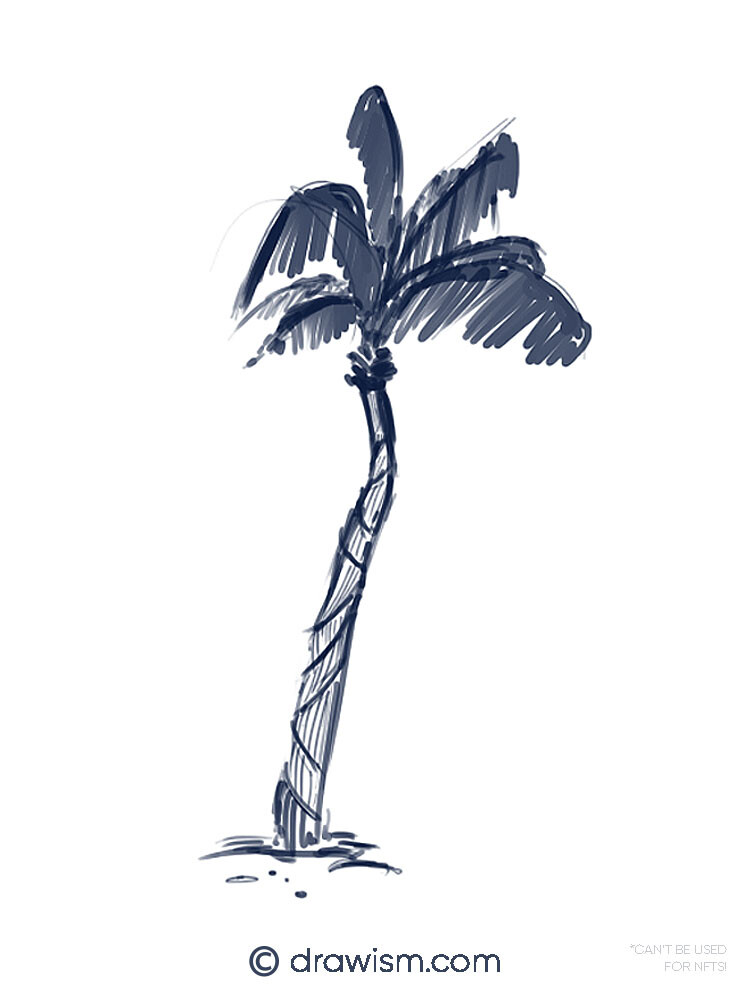
1. Learn to Sketch a Detailed Palm Tree Drawing with Leaves, Realistic Style

1. Draw the Trunk

Let’s first start drawing the trunk. Sketch a slightly curved and angled line. This is essential for getting a detailed or realistic palm tree drawing because palm trees normally don’t have perfectly straight trunks, they look like they slightly sway to one side.


2. Draw the Rest of the Palm Tree’s Trunk

Try your best to draw the same shape of the trunk like you did in step 1, for the trunk’s right side and make sure to taper it, making the trunk wider at the bottom. This makes your palm tree sketch more believable and realistic.


3. Draw the Sand

Draw a few curved lines of sand at the bottom of the tree, for more detail and realism. This makes your sketch look more realistic and detailed.

Add a couple spots to the sand to really make it stand out.


4. Draw in Trunk Details

Let’s add some details to the palm tree’s trunk. Sketch in slightly curved lines within the trunk, leaving some space between each section. These lines section off the trunk, making it more realistic.


5. Draw the Husk

Draw the husk at the top of the trunk with a few simple dabs or lines. A palm tree’s husk is where the coconuts and leaves sprout from, so having this unique detail in your drawing makes it feel more realistic.
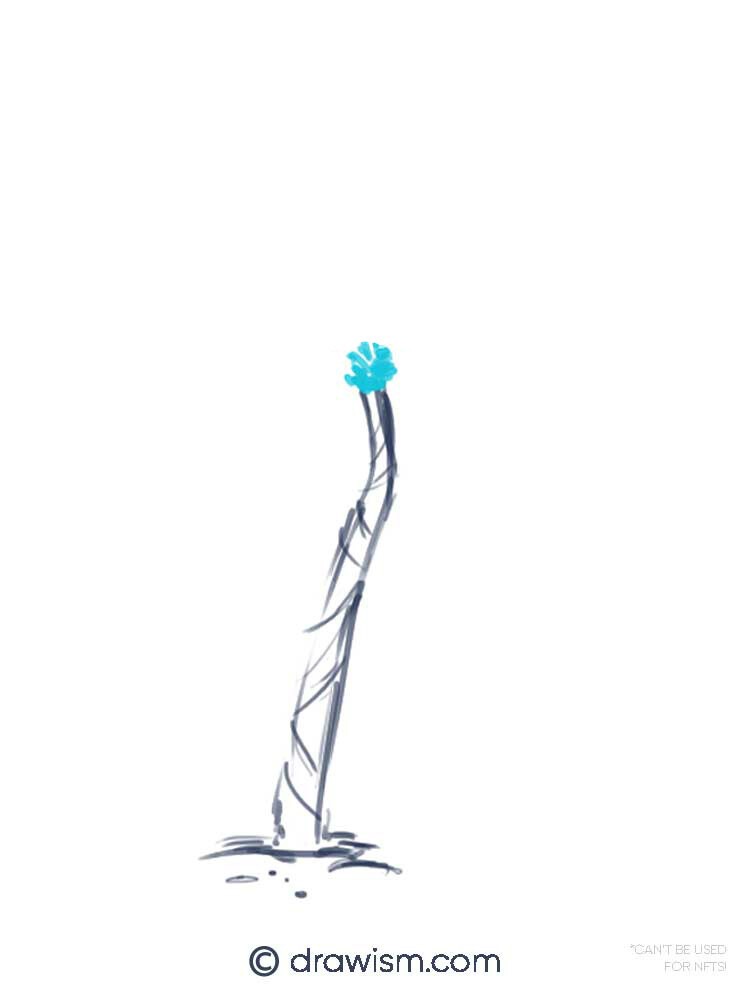

6. Sketch Where the Palm Tree’s Leaves will be

Before we start drawing the leaves, here’s a fun fact: palm trees don’t have branches. Their leaves actually grow on top of the trunk!

If you’d like to learn how to a draw a tree branch, check out this easy drawing tutorial for beginners showing How To Start Drawing a Simple Tree Branch Freehand!

Next, let’s start drawing the leaves!

When making a palm tree drawing with leaves, it’s easy to be overwhelmed with all the details. So lets’ simplify it by just sketching lines for where we want our leaves to be. This will make drawing the leaves 1,000 times easier!
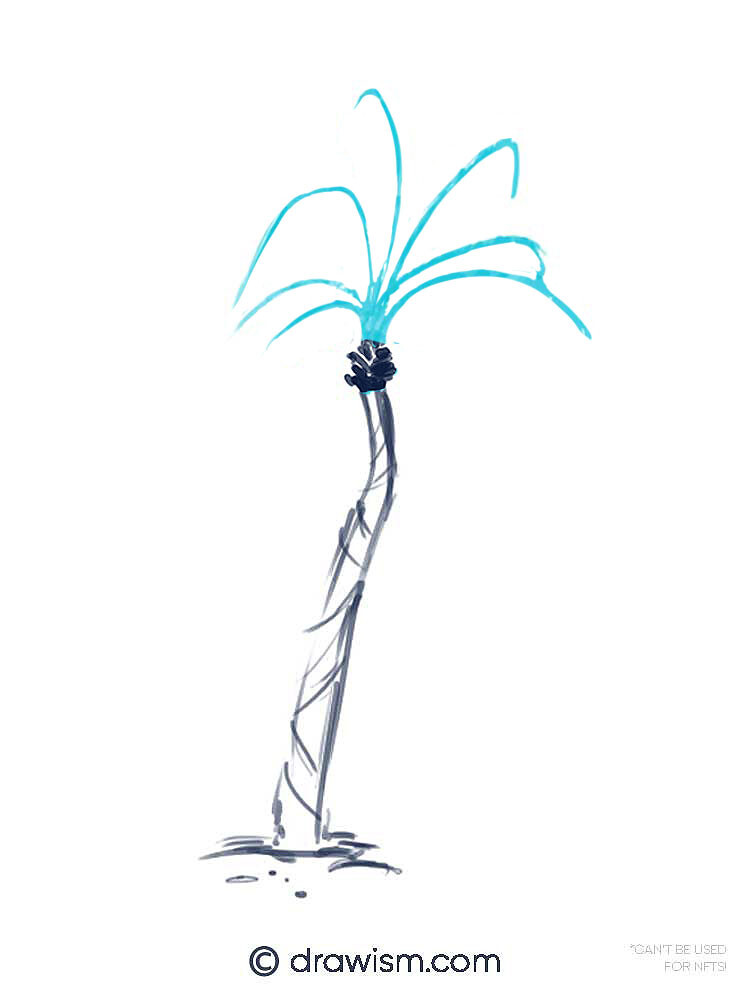


7. Scribble in the Leaves

Now for the fun part! Instead of drawing the leaves one-by-one (which will take so much time and look uneven) just scribble them into the sketch lines you drew in the previous step! Not only will you get a lot of detail but your palm tree drawing will look realistic pretty fast! It’s that simple.
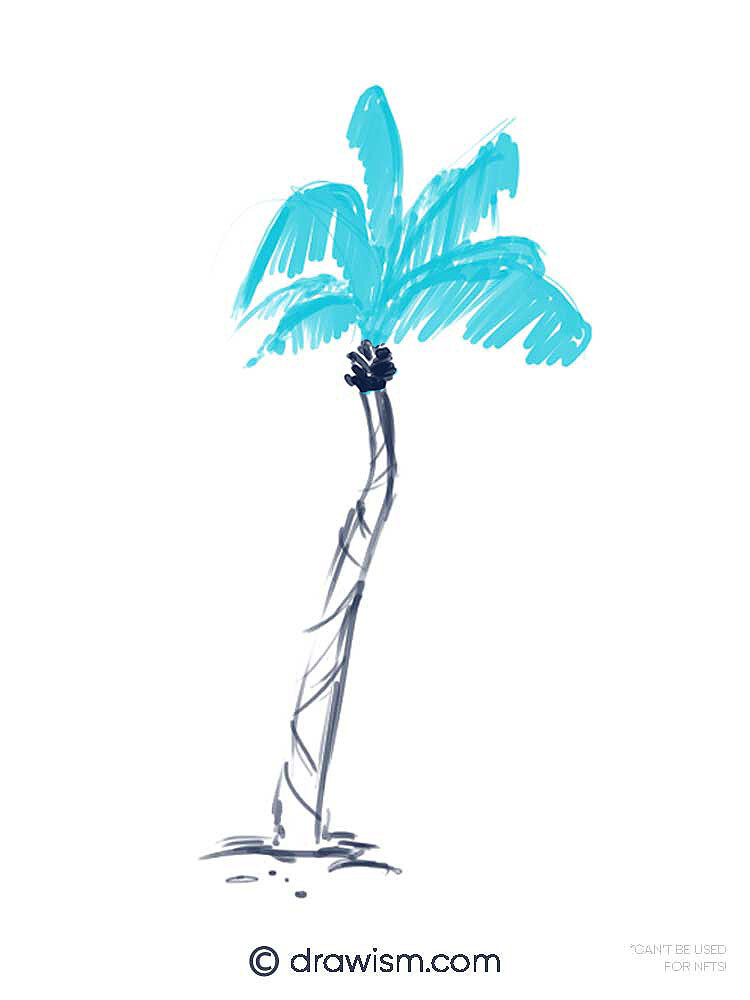


8. Finished Detailed Palm Tree Drawing with Leaves

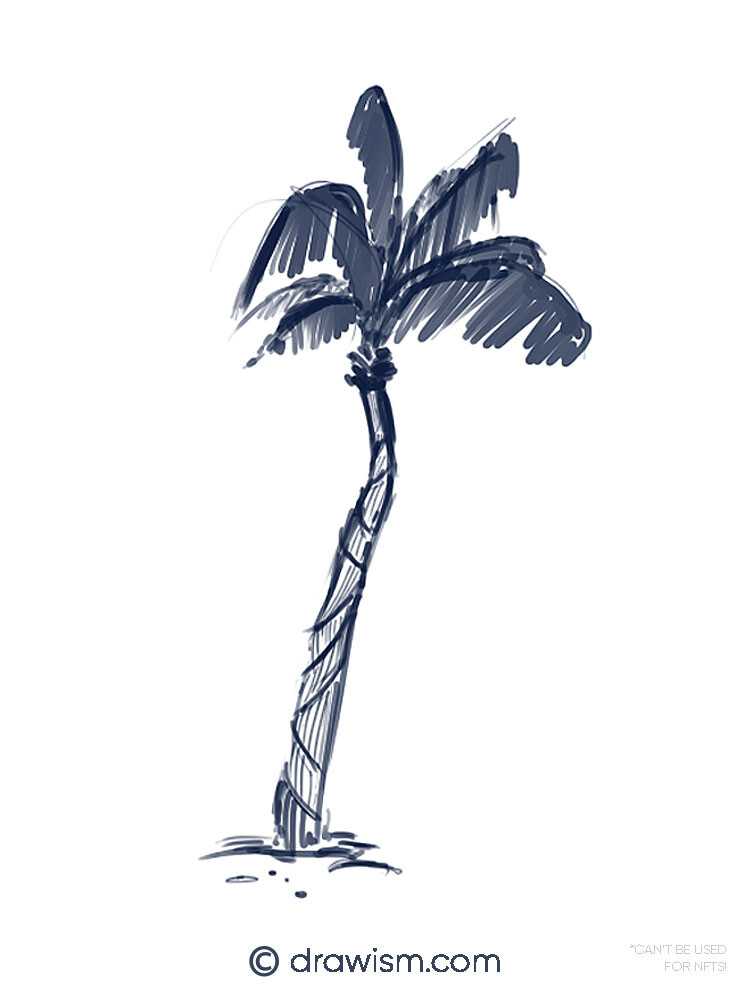
Congrats, you’ve finished drawing a realistic and detailed palm tree drawing!

To add even more detail and realism, you can shade in the trunk by drawing in quick, short lines in each section of the trunk and that’s it!

Amaze your social circle with this awesome drawing or post it to social media and show it off.


2. Draw a Cartoon Palm Tree


1. Start with Drawing the Tree’s Leaves

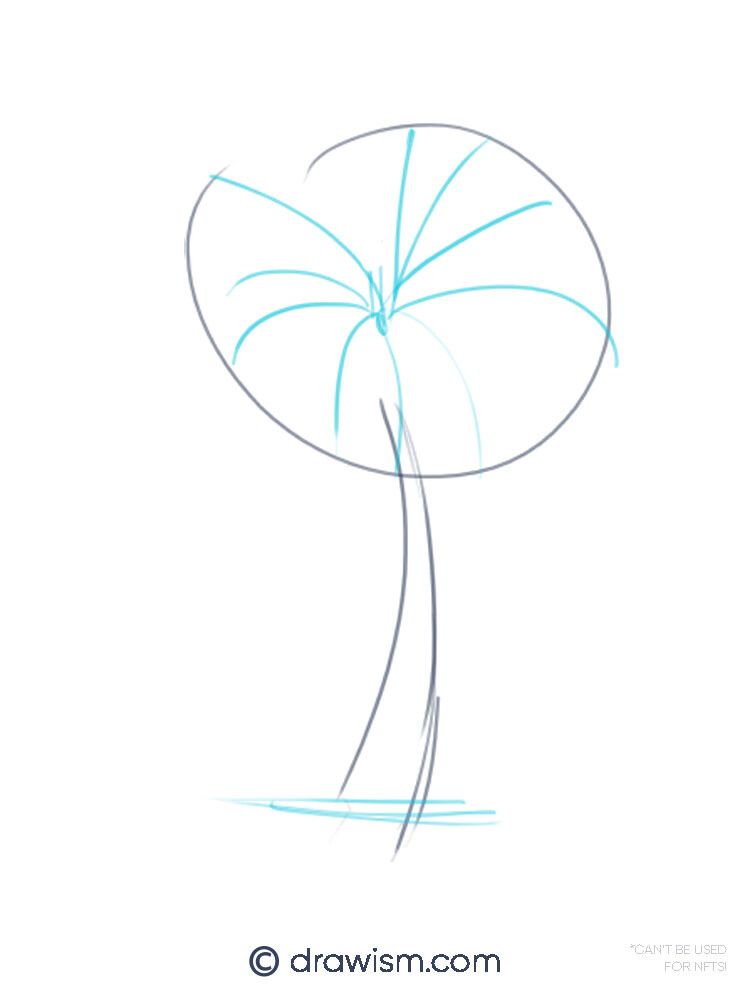
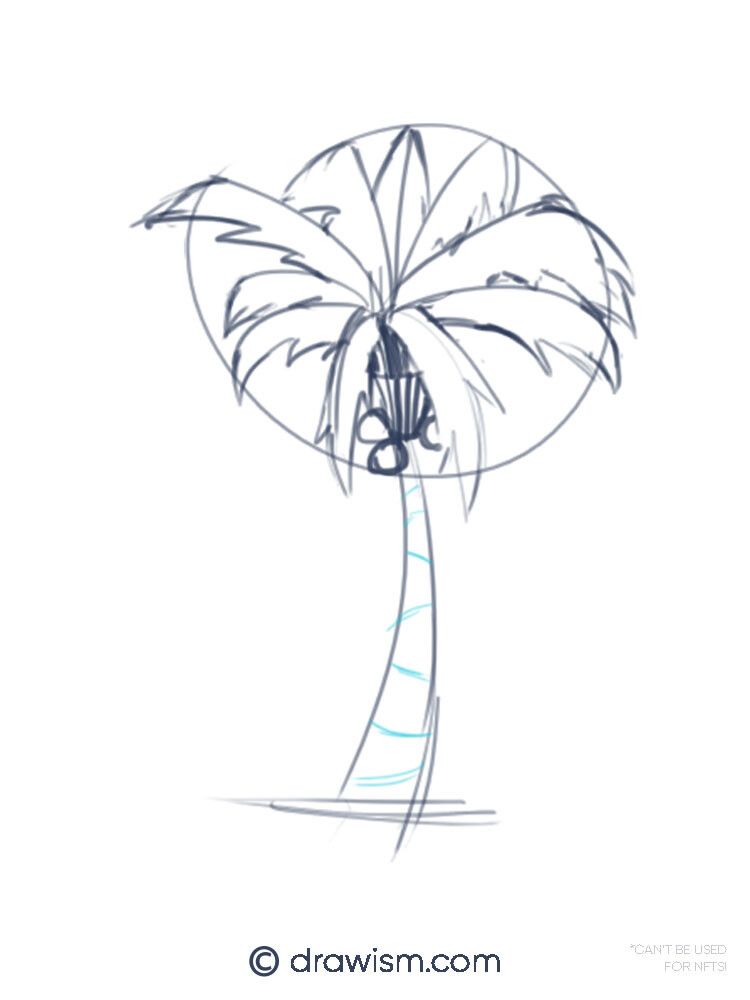
Let’s start drawing a cartoon palm tree by first making a circle. This will be the base sketch for the palm tree’s leaves and is essential for making them uniform and correct.


2. Sketch the Trunk

Starting close to the bottom of our leaf circle, draw 2 curved vertical lines for the palm tree’s trunk. Make sure they taper from top to bottom to give your drawing more volume. The more curved and tapered you make the trunk, the more cartoony your palm tree will look!


3. Sketch in Curved Lines for the Leaves

Draw curved lines from the center of the circle to the rim, making sure they’re coming from all directions. These lines will make it a lot easier for us to draw in the palm tree’s leaves.


4. Draw the Leaves’ Fronds

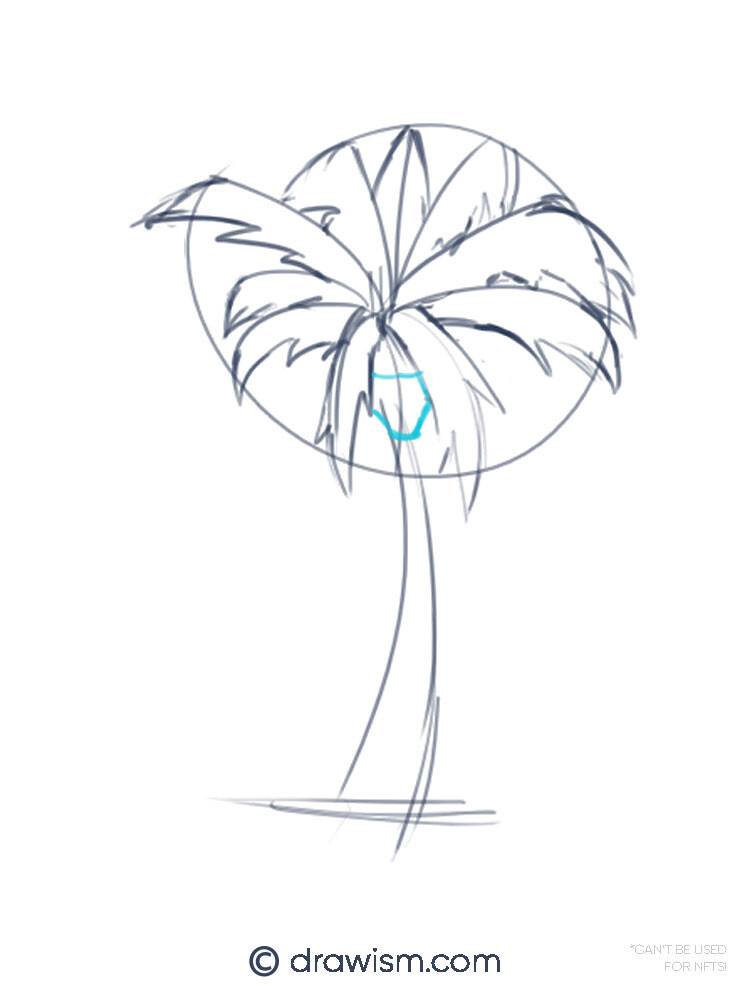
Using each line you drew for the leaves in the last step, draw in the rest of the leaves with curved and sharp fronds. This makes our palm tree drawing look a bit more cartoony.


5. Draw the Palm Tree’s Husk

Where the leaves and trunk meet, draw in the husk. You can think of this shape as a pair of bikini bottoms to make it easier to draw!


6. Let’s Draw the Coconuts!

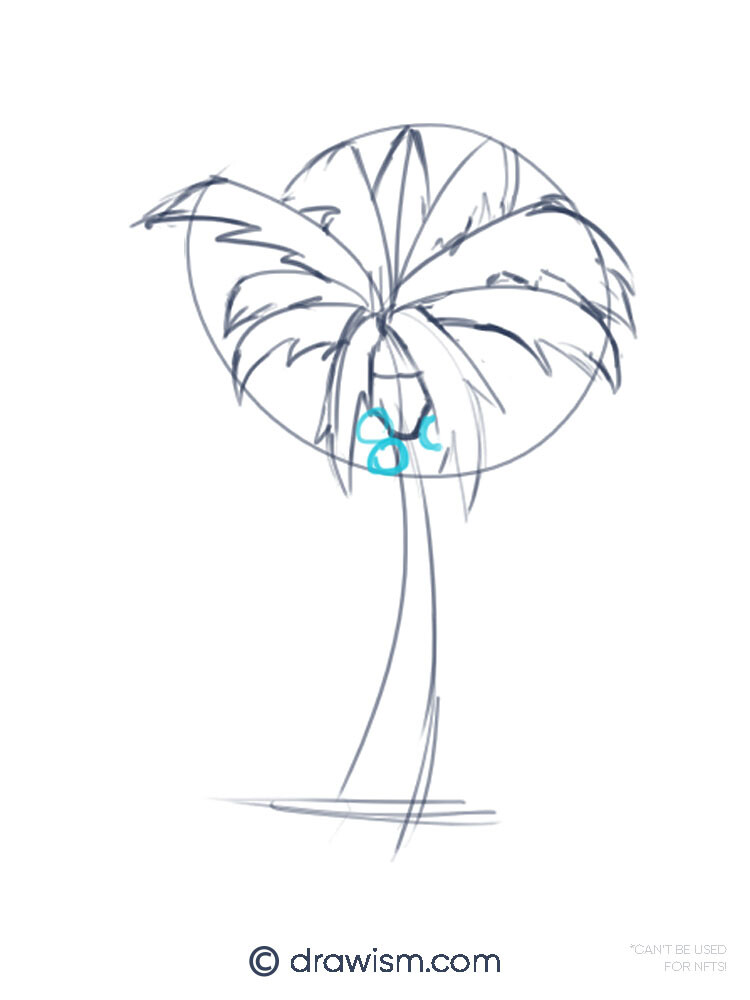
Around the husk, just draw 2–3 circles for the coconuts to make it look more like a cartoon palm tree!


7. Add Details to the Palm Tree’s Husk

Draw in some detail to the husk to add more dimension. Just draw lines inside the husk’s outline, nothing fancy!


8. Draw the Trunk’s Details

Let’s add some details and dimension to the palm tree’s trunk by sketching in curved lines. You can make them straight or in a slope to make your palm tree drawing fit the cartoon style better.


9. Let’s Add the Sand

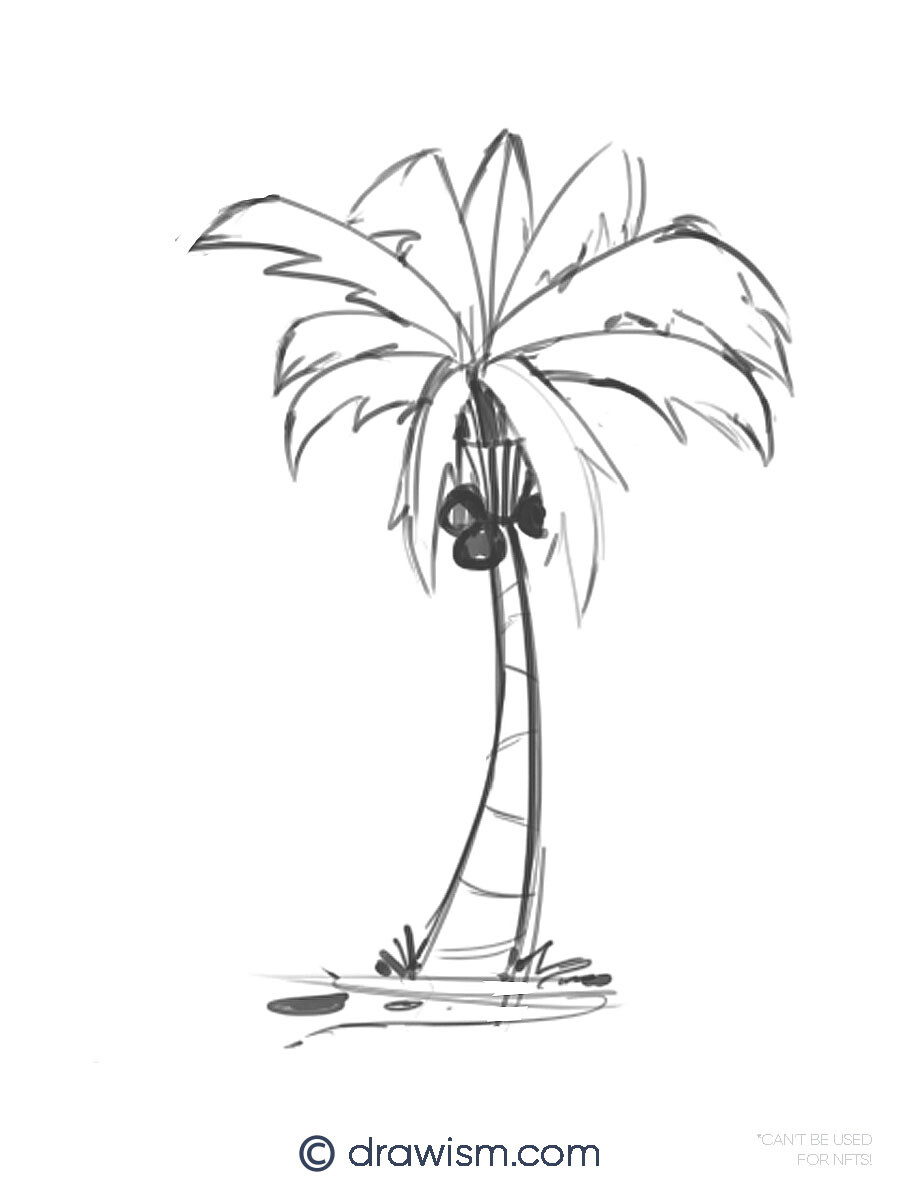
To finish your sketch, add some cartoon sand and plants!


10. Fill In the Coconuts and Make a Darker Trunk

To finish off your cartoon palm tree drawing, you can color or shade in the coconuts and make the trunk thicker, by drawing over it once or twice.


11. Finished Cartoon Palm Tree Drawing

Congrats, you’ve finished drawing a cartoon palm tree! Give yourself a pat on the back and feel free to add this to your sketchbook, journal, or anything else that needs a bit of tropical cartoon flair!


3. Drawing a Palm Tree Outline

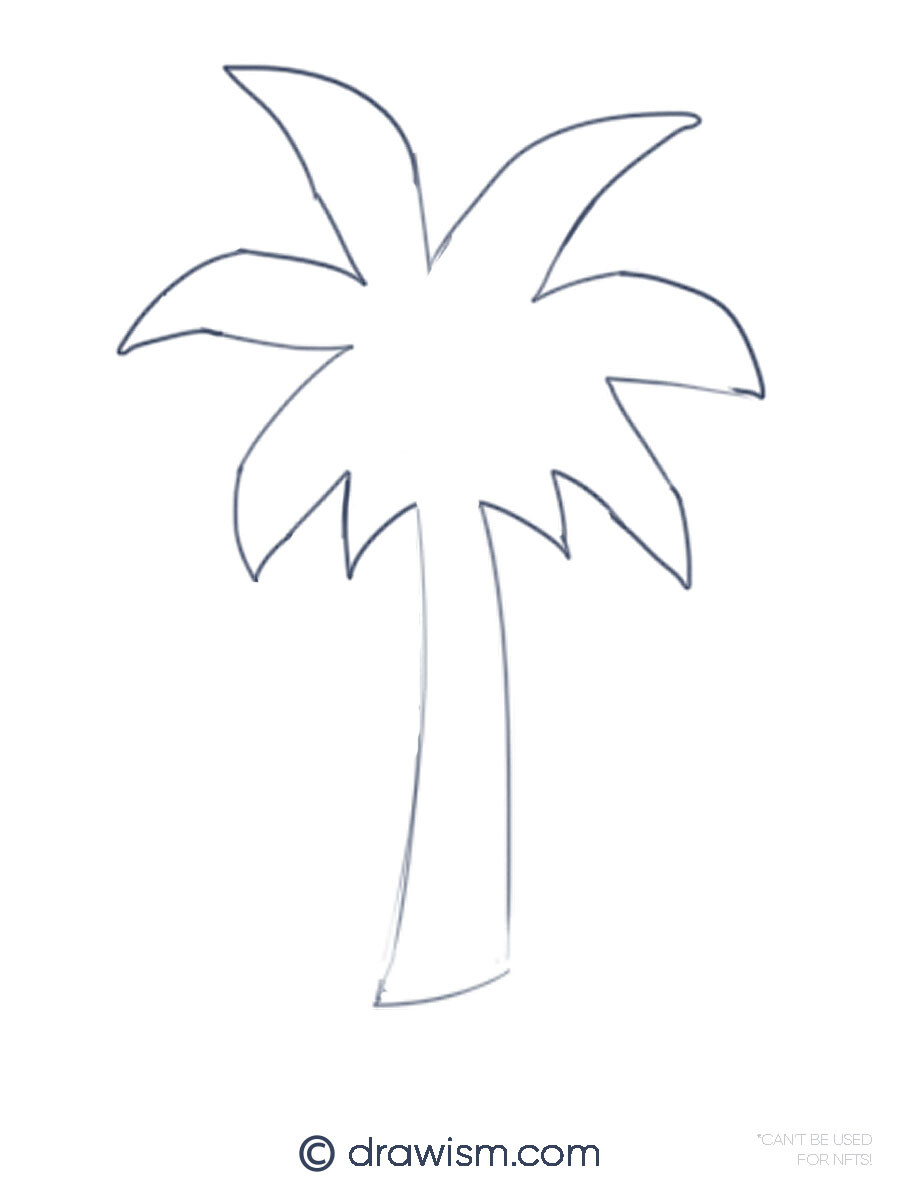
Unlike the previous palm tree sketches, this quick tutorial will focus on only drawing a palm tree outline instead of all the little details inside the doodle.

This type of drawing is fantastic because it’s both quick and very simple to sketch. Plus, you can add your own details and designs inside the line work if you like.

1. Draw the Trunk Outline

This step is quite simple — draw a slightly curved and tapered rectangle, without the top line. You can also curve the bottom line of the trunk a bit to make it look more rounder and voluminous.


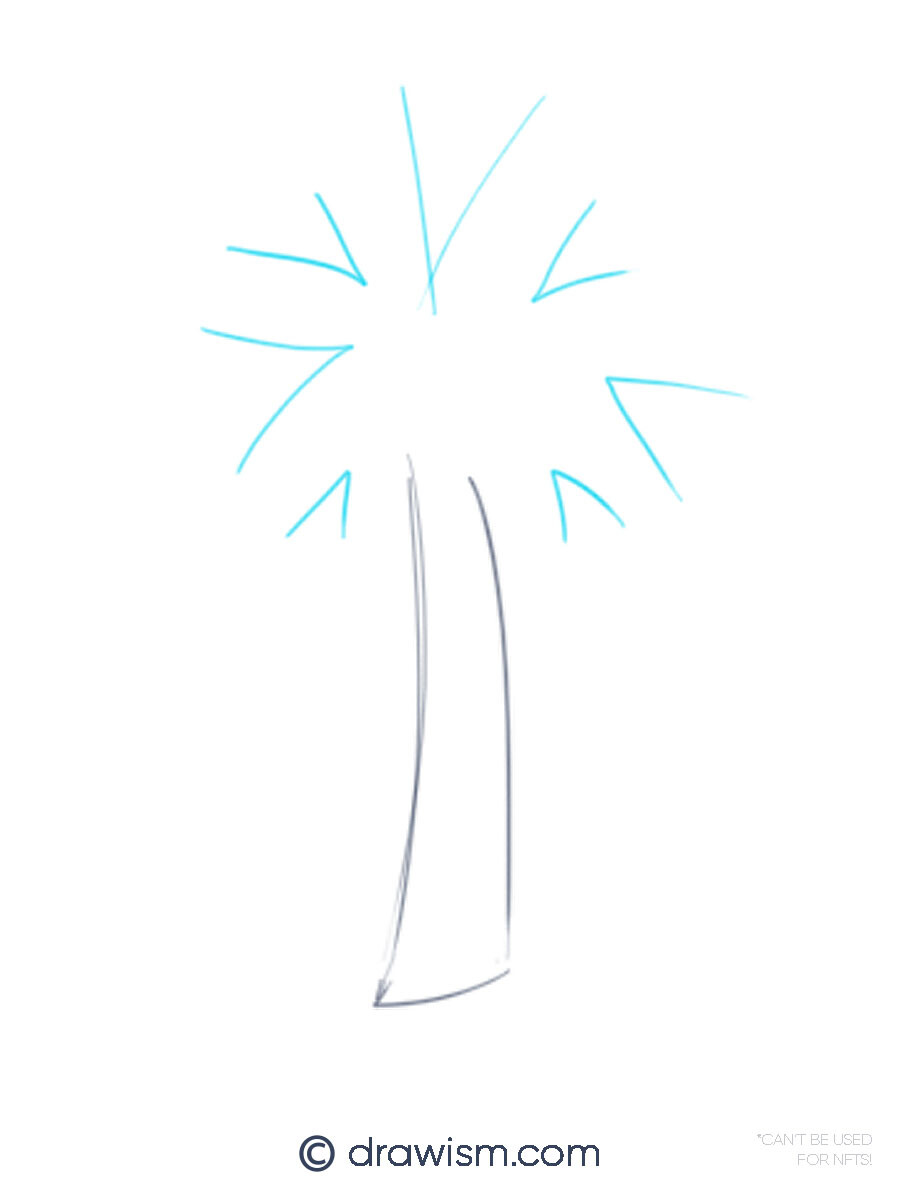
2. Draw the Leaves

Instead of drawing each individual leaf (which can take more time and can come out quite uneven), let’s sketch the palm tree’s leaves in reverse!

Have a general idea of where the center of the tree’s leaves are. You can even make a little mark in the center of where you want to draw your leaves, to help guide you in drawing their outline.

Once you’re ready, just start drawing ‘V’s’ in different sizes, around the palm tree’s trunk. Nothing fancy!


3. Draw in the Ends of the Leaves

Looking good so far! To finish drawing your palm tree outline, let’s draw in the ends of the leaves.

All you need to do is sketch in the curved points of each leaf. Try to connect the ends of the lines as best you can to the rest of your palm tree drawing to complete your outline.
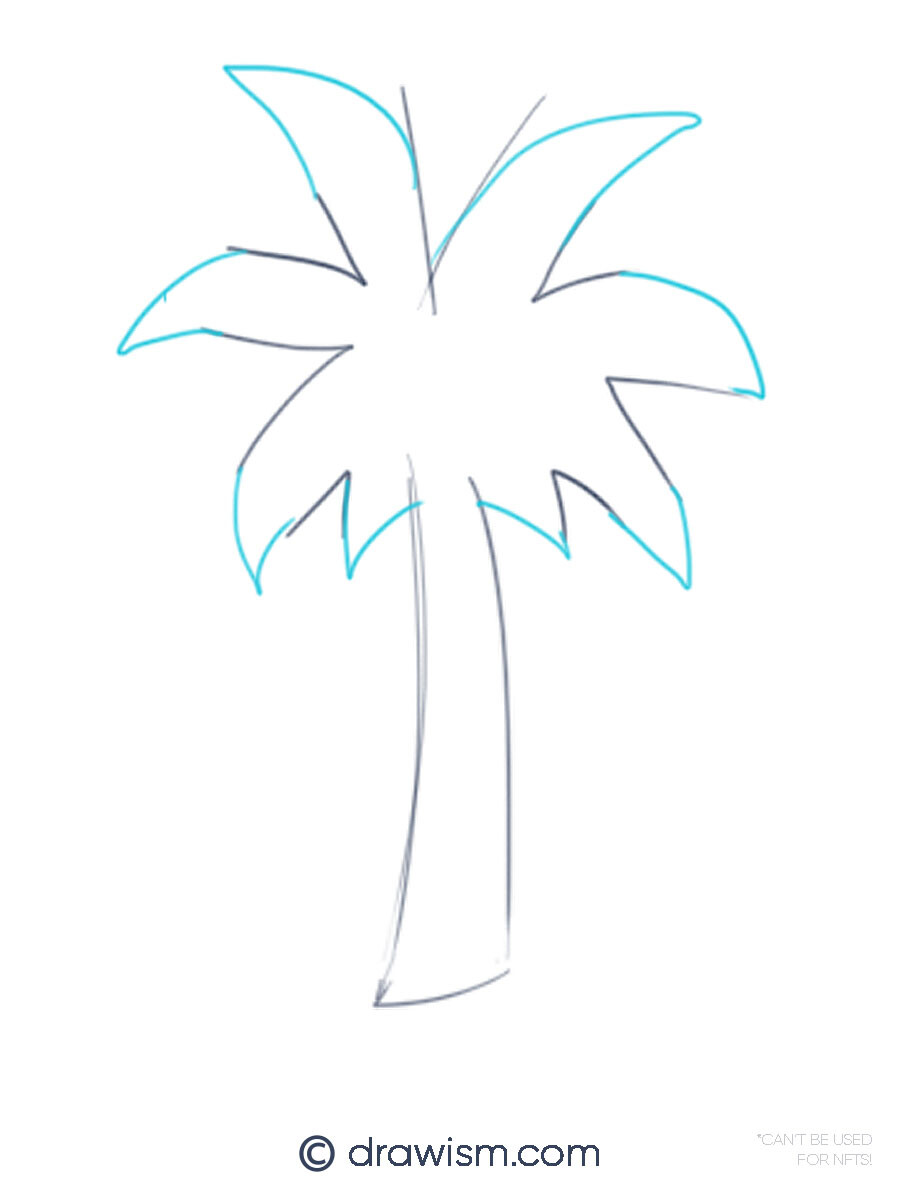


4. And You’re Palm Tree Outline is Finished!

Super easy, right?
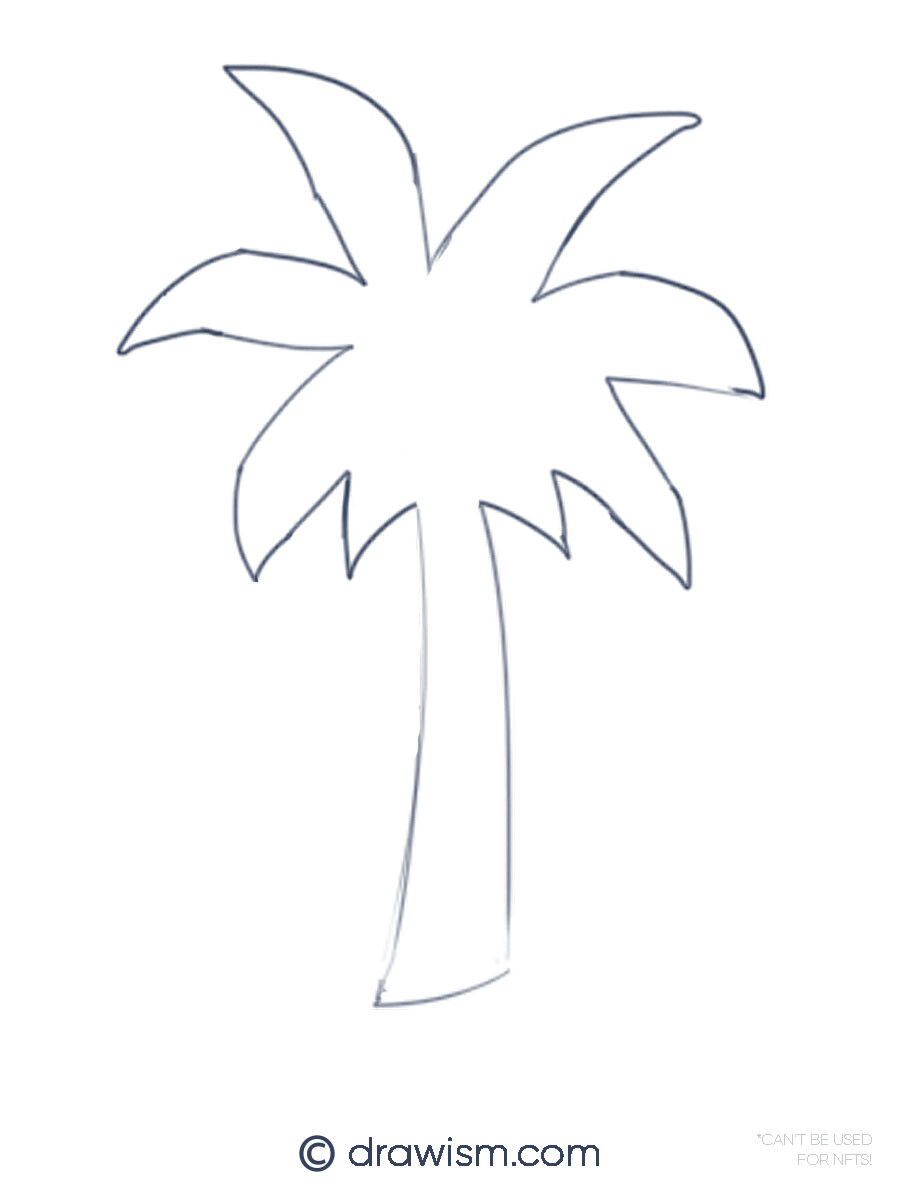

If you’d like, you can clean up the outline of your palm tree by erasing out the sketch lines inside the drawing and anything else that looks out of place.


You can add this drawing to your sketchbook, notebook, or planner and add anything else that you’d like!

Palm trees come in all different shapes and sizes. You can use these drawing tutorials as a guide to sketch different types of palm trees, whether they’re short, tall, or somewhere in between. You can check out this awesome guide written by Georgette K. showing 43 different types of palm trees for a bit of drawing inspiration!

If you’d like to learn how to draw more nature, check out these other easy and fun drawing tutorials:

More Related Drawing Tutorials, Art Tips, & Cheats (Outbound Links)

For more quick and easy drawing tutorials with no art experience and how to get started drawing fast, check out some of these helpful articles below!

Which palm tree drawing do you want to try first? Leave a comment below!

The article 3 Best Palm Tree Drawing Styles with No Art Experience was originally published on Drawism.com first.
Report

How to Start Drawing a Tree Branch Freehand, Simple

Tutorial / 09 December 2023

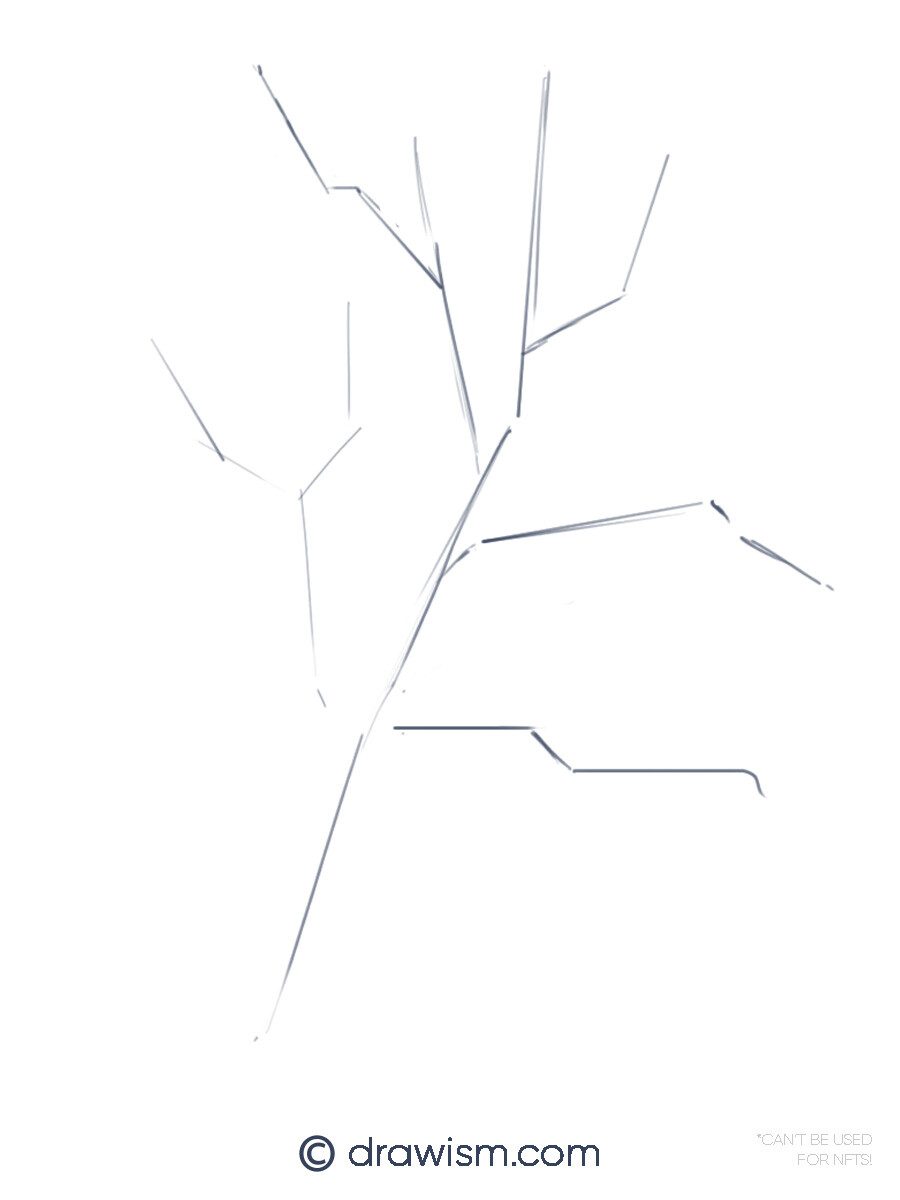
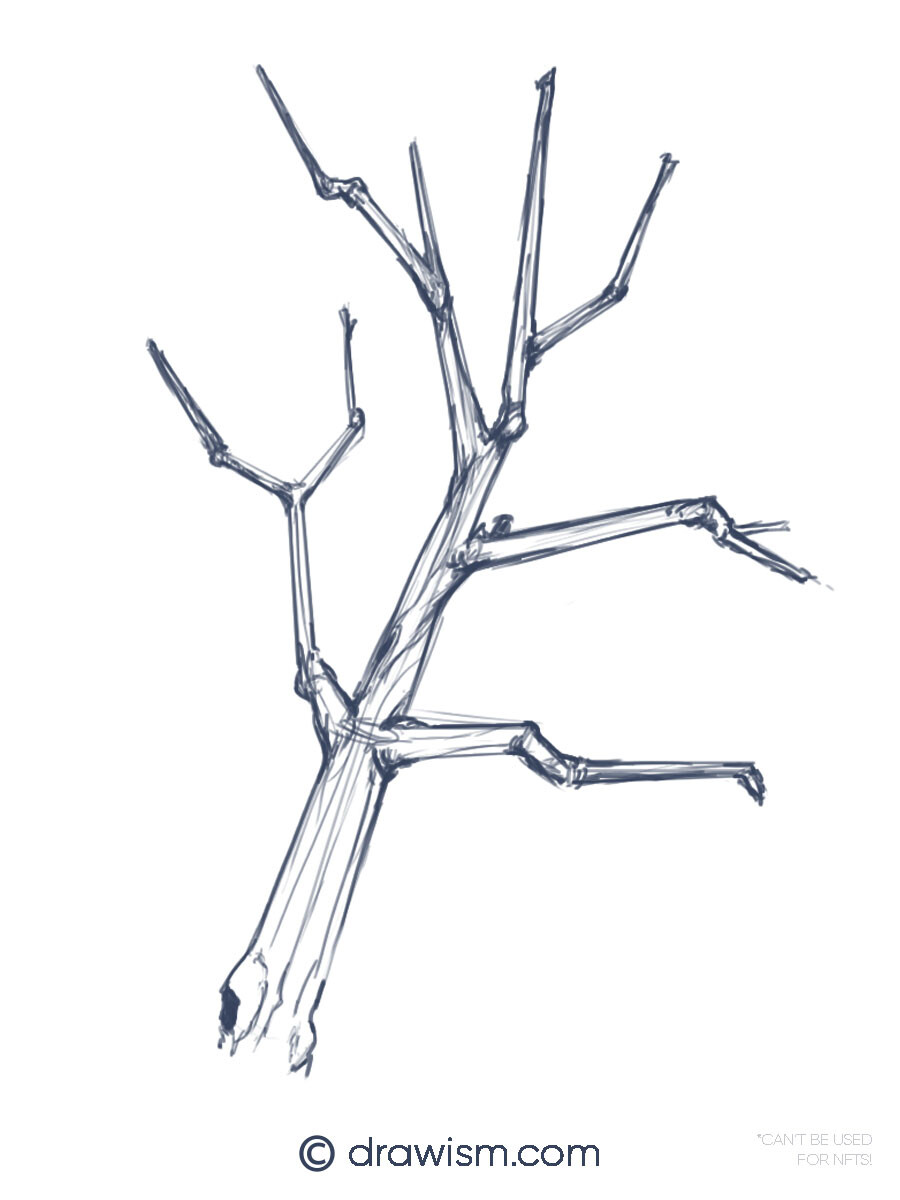
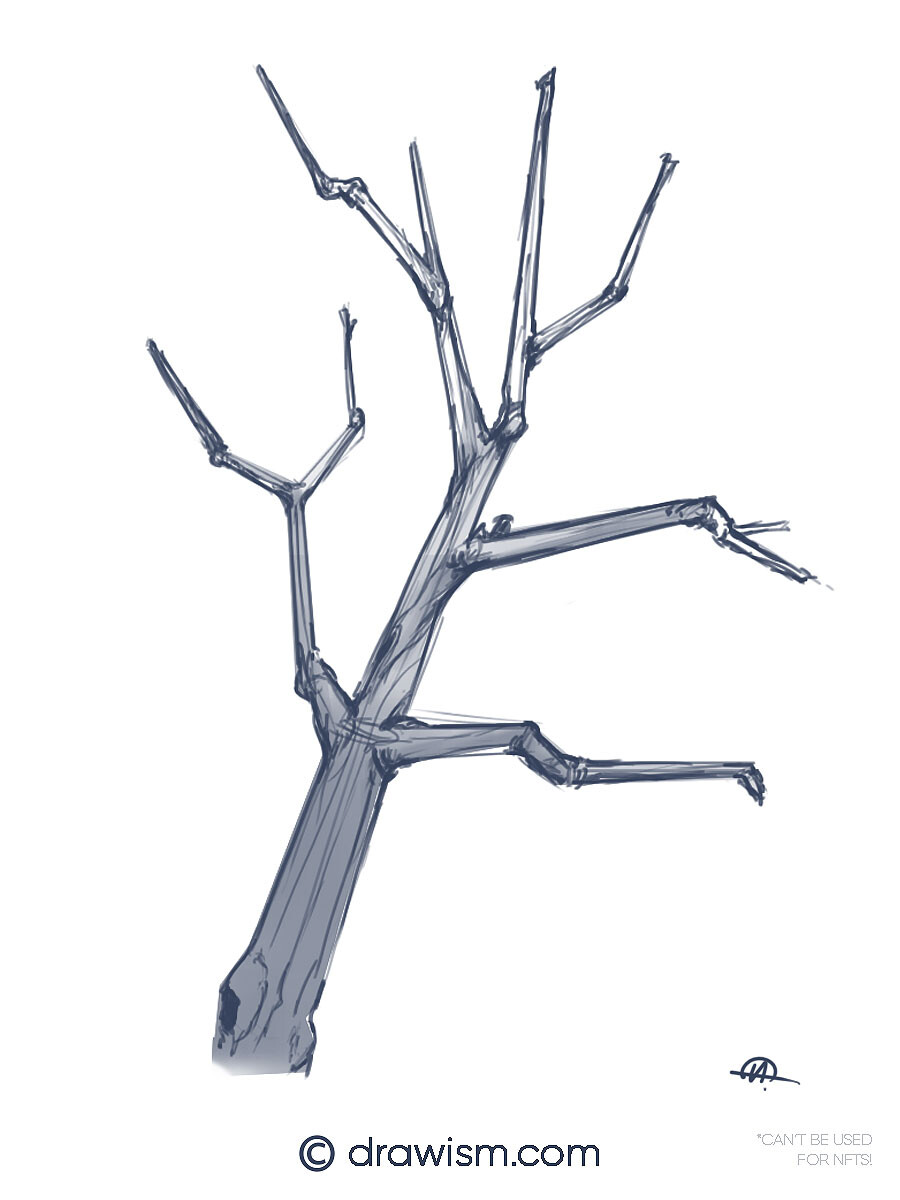
Looking to start drawing a little bit of nature freehand and fast but don’t know where to start? You’re in the right place! This drawing tutorial will show you how to start drawing a tree branch freehand with a simple branch layout like the image below, plus sketch tips and tricks to help you along the way. Let’s get started!


How to Start Drawing a Tree Branch Freehand!

1. Gather Reference

Before I even get started drawing, I often use real life reference photos to correctly draw my subject. Whether it’s a person, object, or even my own character design, I always, always, always, use reference before doing any physical freehand drawing.

Why?

  • Remembering what something looks like slows down the sketching process and can take time
  • With reference photos, you’ll be able to capture details and forms well, while making your drawing actually look like your subject
  • Reference photos make the drawing process very simple and understandable while giving you a general layout of how to start your drawing

How to Get Reference Photos of a Tree Branch Before You Start Sketching

This part is very simple.

Open up your browser and just type / google in ‘tree branch’ into the search bar and press enter (search) or you can just take photos with your phone or camera and use those instead (what I usually do).


Whether you’re using Google or another web browser, there should be tabs around the search bar that say ‘images’.

Click on that and you’ll be shown so many images of tree branches you won’t even know what to do with!

All you need is 1-2 images. Too much reference photos can be overwhelming, especially when you first start drawing, so keep it at a minimum.

If the image allows, right click on the reference pic you like and choose ‘Save as Image’ to save it to your computer. You can print it out if you’d like, to always have your (tree) reference on hand.

2. Get Your Drawing Supplies Ready

You don’t need anything fancy for this tutorial.

Just a drawing surface, something to draw on, and something to draw with. You can use the classic paper or pencil or if you want to go digital, use a digital program.

To get a more in-depth idea of drawing supplies, check out this beginner-friendly article on How to Start Drawing with No Art Experience and what supplies you can start using right away.

3. How to Start Drawing a Tree Branch Layout with Simple Lines!

Using your reference photo of your branch, lightly start drawing straight lines that mimic the direction of the tree branches. This serves as a layout for your tree that you can then erase out or layer with details in your finished drawing.

Instead of thinking in 3 dimensional shapes, think in simple lines for now.

We’ll add some dimension to our tree branch later in this tutorial.

  • Remember: Keep it super simple – use only lines for this tree layout!
  • Focusing too much on detail now will slow you down and you might miss the opportunity to have a strong branch shape as a foundation for your drawing, possibly leading to your drawing not looking like a tree branch at all! Yikes!
  • Detail is secondary to your overall shape and form of your drawing

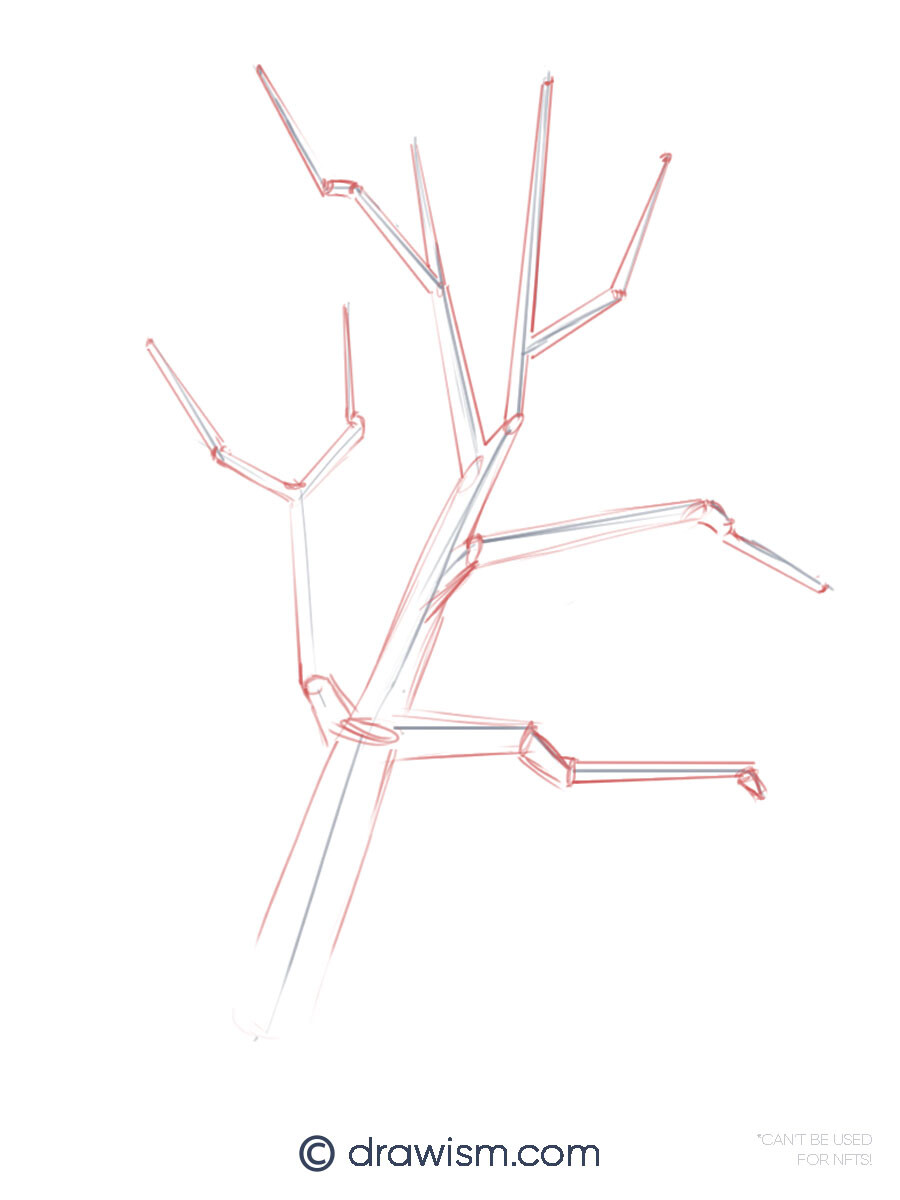
4. Think in Simple Forms – Only Cylinders for the Branches

Once you have your lines drawn, we can start thinking in 3d, yay!

So what is the general shape and layout of a tree branch? Figuring this bit out is important because it helps you visualize your subject in 3d, making it simpler for you to draw it. Well, since it wraps around, is a thin and circular tube, a tree branch’s primary shape is a cylinder, as well as the trunk.

  • Start drawing simple cylinder shapes freehand, using the the lines you just drew
  • Make sure the cylinders taper from thick to thin when making your way from the bottom, to the top of the entire tree branch
  • Remember: thicker cylinders at the bottom and thinner cylinders at the top

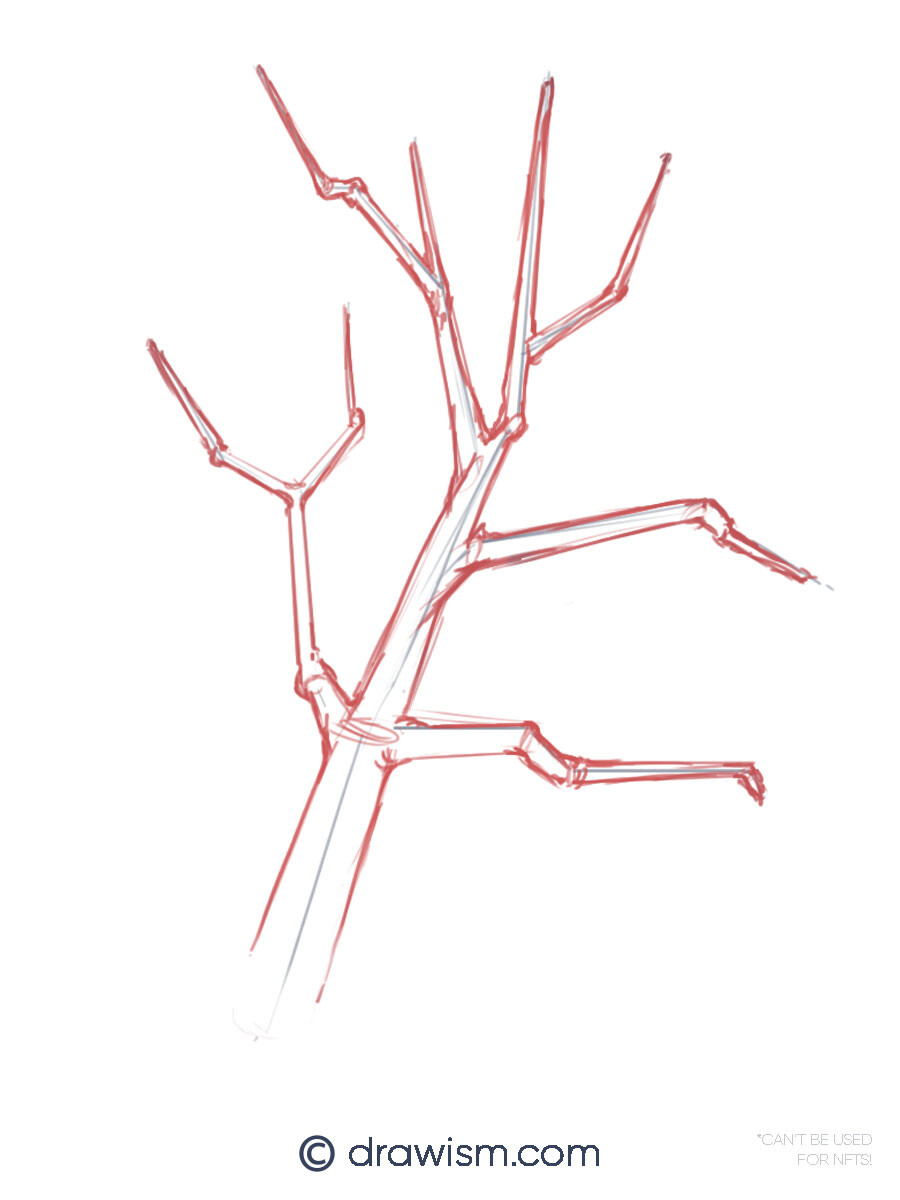
5. Refine/Darken Branch Linework Following The Cylindrical Forms

Once you’re happy with your sketch, it’s now time to solidify your lines, that is, make them slightly darker then the rest of the sketch.

  • Stick to drawing your lines thicker/darker focusing only on the outside lines of your tree branch
  • This gives your tree branch drawing more form and prominence

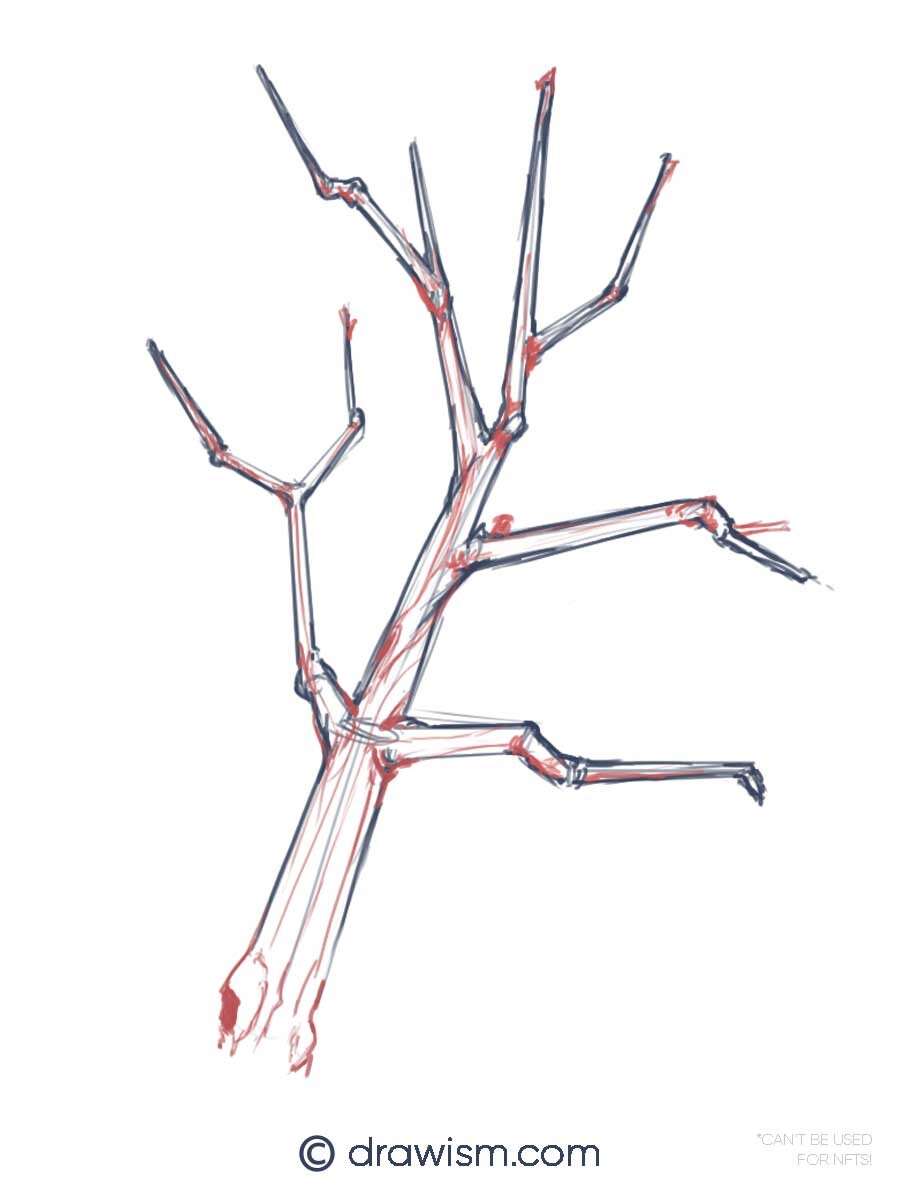
6. Add a Bit of Detail to Your Tree Branch

Now for the fancy part – drawing in the branch’s details!

You don’t have to go super crazy detailed at this stage but if you do , go for it! Just remember to use your reference photo so you know what the details look like and keep it simple.

For me, sometimes less detail is better since the tree branch drawing won’t be too busy but has enough information to tell what it is.


  • Draw your details either over your branch’s layout lines or erase your layout lines (now’s the perfect time to do that)
  • Remember: follow the form of the tree (a cylinder)
    • This means to draw your details following the cylindrical form of the tree stems, so instead of just drawing straight lines, draw curved lines for the branch’s texture
  • You can add little broken off branch tips if you like for a more jagged feel or a few leaves
  • If drawing a branch is too simple for you, try adding a trunk
    • Like a branch, the tree trunk is also cylindrical
    • You can sketch it out either when you’re starting to layout your tree branches with simple lines or at after you’ve finished drawing them – just make the sure the finished quality of the tree trunk matches the rest of the branches
  • Make your details lighter than your outside lines

Hooray, you’ve just drawn a tree branch drawing freehand, whether you made it simple or detailed!

Add it to your art journal or sketchbook if you’d like.

If you want a bit more of a challenge drawing trees, check out this these Palm Tree Drawing Tutorials with no Art Experience.

7. Bonus : Add Some Simple Shading if You’d Like

To give your sketch that extra level up, you can add a bit of shading to your drawing for a bit of dimension or realism.


  • Again, follow the form of the cylinder
  • You can start from the bottom of the tree branch (or trunk) and start drawing multiple lines across the form, side to side
  • You don’t need to shade the entire drawing, just enough for it stand out
  • Keeping your shading simple and clustered together and in broad/thick strokes really helps define and layout your drawing better, making it more recognizable
  • If shading with a pencil, take a look at this quick guide on types of graphite drawing pencils.

Want to draw more nature? Check out these simple drawing tutorials of How to Make Mushroom Drawings Step by Step or How to Draw Clouds with Pen & Ink Easy.

Simple Drawing Tutorials, Art Tips, & Cheats to Help You Start Drawing Immediately

Now you know how to start drawing a tree branch freehand, super simple!

The article How to Start Drawing a Tree Branch Freehand, Simple was originally published on Drawism.com.

Report

Realistic Sci Fi Digital Painting Key Frame & Art Process

Tutorial / 25 November 2023

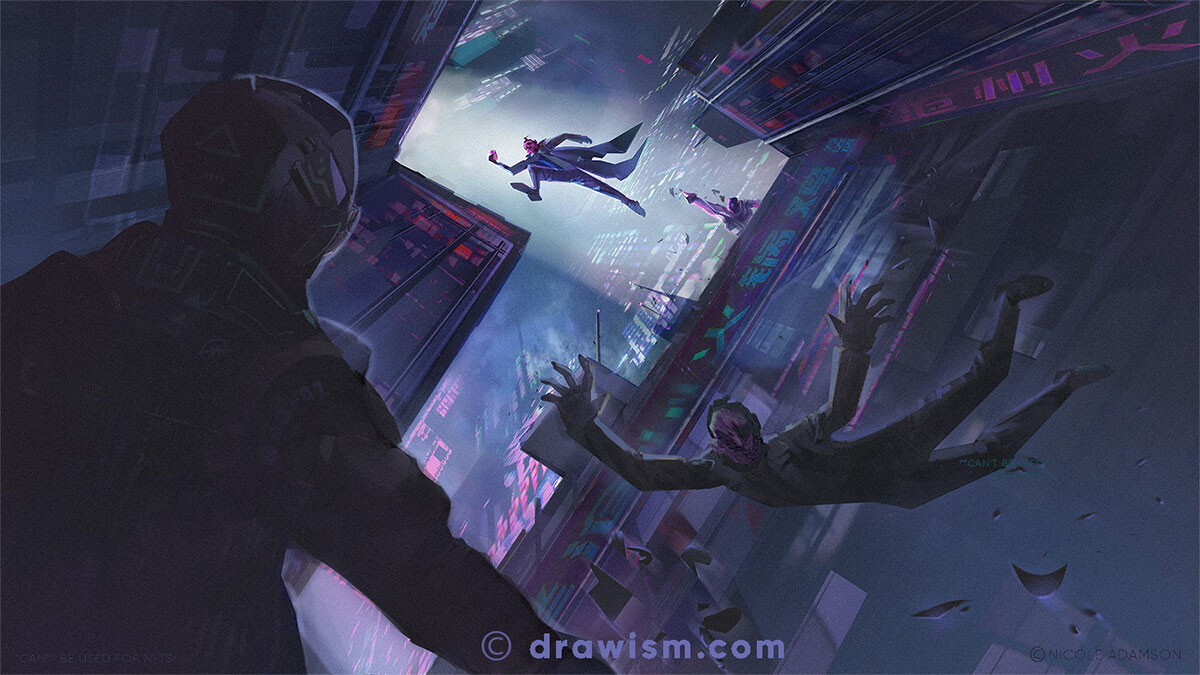
Recently I’ve been making new artwork for my portfolio to give it a little boost and show some of the new skills I’ve been learning, a little art update you could say. A new artwork I finished earlier this year is a realistic digital painting / digital art background of a chase at night in a futuristic city, seen below. The artwork is created in the style of a key frame concept or a semi realistic illustration.

In this post, I’ll give you a sneak peek at my art process when creating realistic and detailed digital art.


  • Key Frame Concept — A concept painting that is used to establish the mood and feeling of a ‘key’ (important) scene in cinematics that’s relevant to the plot.
  • Illustration — An image representing an idea, concept, or text that is used for digital or print media.

Sci Fi Art | Night Chase Realistic Digital Painting

The key frame or illustration I created is my take on chase happening in a futuristic sci fi city.

The digital art background has towering buildings and skyscrapers against a sky filled with dappled lights.

The picture shown is the finished piece.


I have some difficulty creating dynamic artwork, partly because my main focus are backgrounds and environments which are usually pretty static. So, I’m not too much of a character designer. 

But placing characters in a scene can really help tell a story and show action, where landscapes normally don’t.

For this image, I wanted to show a character being chased by some bad guys because it gave me an opportunity to create some characters in a scene and show off some dynamic character poses with art reference. 

I loved the idea of a vigilante jumping between buildings to make it seem like he was almost flying through a spotlight.

I chose to create the scene at night to give a more dramatic feel and to give the city a darker side (no pun intended).

Normally I don’t spend more than 8–10 hours on an artwork (depending on what it is). But for this piece, since I was applying a few new techniques and creating a realistic digital painting, it took me longer because I was processing the information while also figuring out how to replicate the commands in a digital art program.

How I Start Creating a Digital Art Background

As detailed as the final image looks, I take a good amount of time to plan things out first before I make a finished piece. Doing this speeds up my process so I don’t spend countless hours trying to figure out what’s working while trying to come up with color, value, or anything else at the same time — it’s so much work & really slows you down!

It’s so much easier for me to do things step by step especially when creating a realistic digital painting in a sci-fi art style.

Sketching

My first step is to draw a quick sketch.

I make these as basic as possible so I don’t get caught up in wasting time on unnecessary details. It really slows you down and keeps you from focusing on the bigger picture (again, no pun intended).

Since I wanted to draw a chase scene, I sketched in some buildings and blocked in a couple characters.


Once I had a composition I liked, I updated the art by filling it in with value, as seen above.

Value is how light or dark an object is. You may probably recognize the term as ‘shading’ instead.

Adding very simple value or shading to my sketch helps me establish a general idea of what the final image will look like, along with a final lighting scenario. 

This sketch is important because I use it as a base or reference image when creating the final version.

If you’re a beginner and would like to learn how to draw the right way & be successful at it, check out this helpful post on How to Start Drawing with No Art Experience, filled with the stuff art teachers don’t talk about!

Making a Digital Art Background

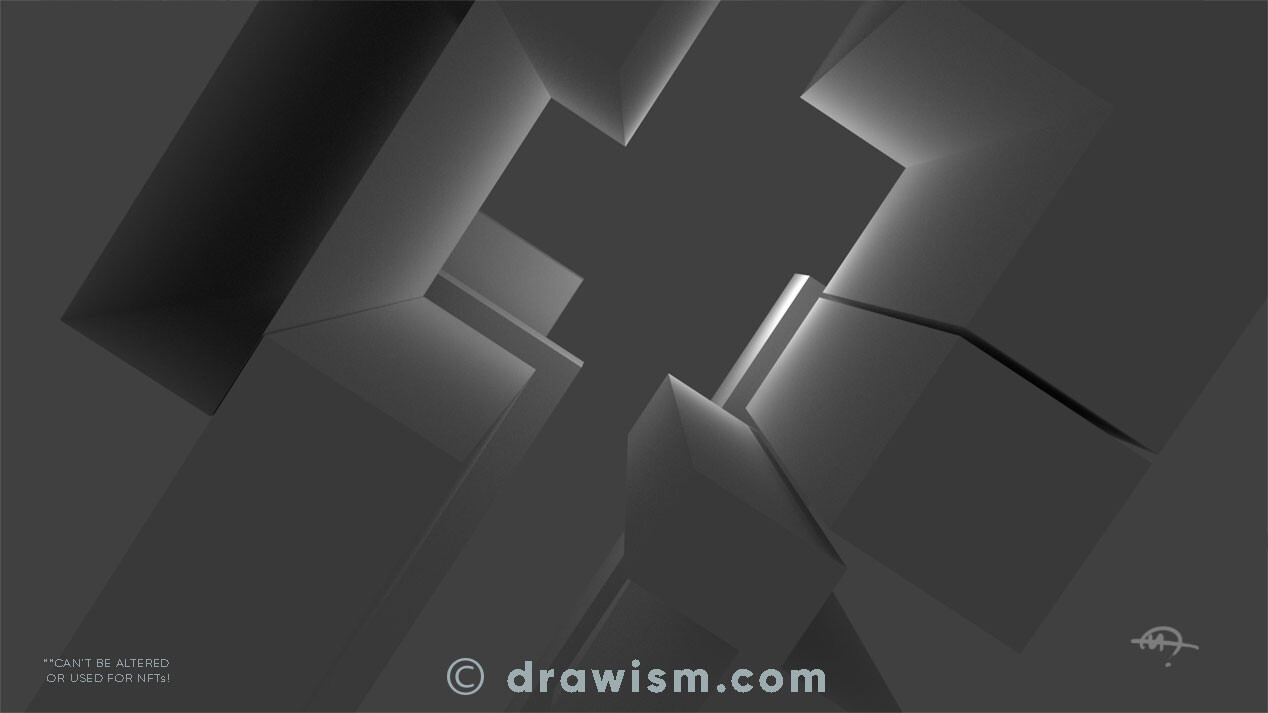
Normally, I would just start painting in details at this stage but for this art update portion, I used 3D to help me block in the surrounding area to speed up the process.

I made some basic shapes and blocked in the ‘futuristic buildings’.

The 3D program I used is Blender. 

What I love about Blender is that it’s a powerful 3D program great for beginners like myself and best of all, it’s free! You can click here to download Blender for free and start experimenting with some modeling!


I tried to get my 3D block-in as close to the buildings in my sketch as possible while also trying to match the angle I drew.

Since the 3D image is a base, I made some updated art changes to it, so it matches better with what I was going for.

Painting a Realistic Digital Painting by Adding Color & Details

Once I made changes to the 3D block in, I started painting over the image in a digital program.

I use Adobe Photoshop since it’s an industry standard.

As you can see between the above and below images, I removed some elements from the 3D render that weren’t fitting in with my original sketch.

For this next part, I added some color and started adding details to the buildings to help make the whole scene come together.

I started defining some of the characters a bit with some light detail.

In this stage I’m experimenting a bit with digital art background effects like rain and smoke. It helps give this sci fi art a more realistic digital painting effect.


I liked the look of those realistic illustration effects but ultimately took the rain out because it was too distracting.

It’s important to self-critique your work, especially when working making art updates or towards a finished piece or giving it a little art update because you can start catching what elements are working well and which ones need to be improved. It’s a quick way to train your eye into recognizing compositional mistakes and will improve your drawing skills immensely.

Final Realistic Illustration in a Sci Fi Art Style

After a lot of detailing, self-critiquing, and refinement of characters, I finally ended up with the realistic illustration you see below — a mysterious chase scene with both the city and characters in question, shrouded in darkness.

As the chase commences, a futuristic cop on the bottom left catches a glimpse of the action just in time, while the hero seemingly glides across the towering rooftops avoiding the grasp of his pursuers.


Check Out More Amazing Artwork & Drawing Tips!

If you’d like to see more amazing artwork or want to start making your own, check out some of these inspiring and helpful articles below!


The article Realistic Sci Fi Digital Art Painting originally appeared on Drawism.com first.

Report

How to Draw Cute Yoshi Eggs Fast | Drawing Tutorial for Kids & Adults

Tutorial / 04 November 2023

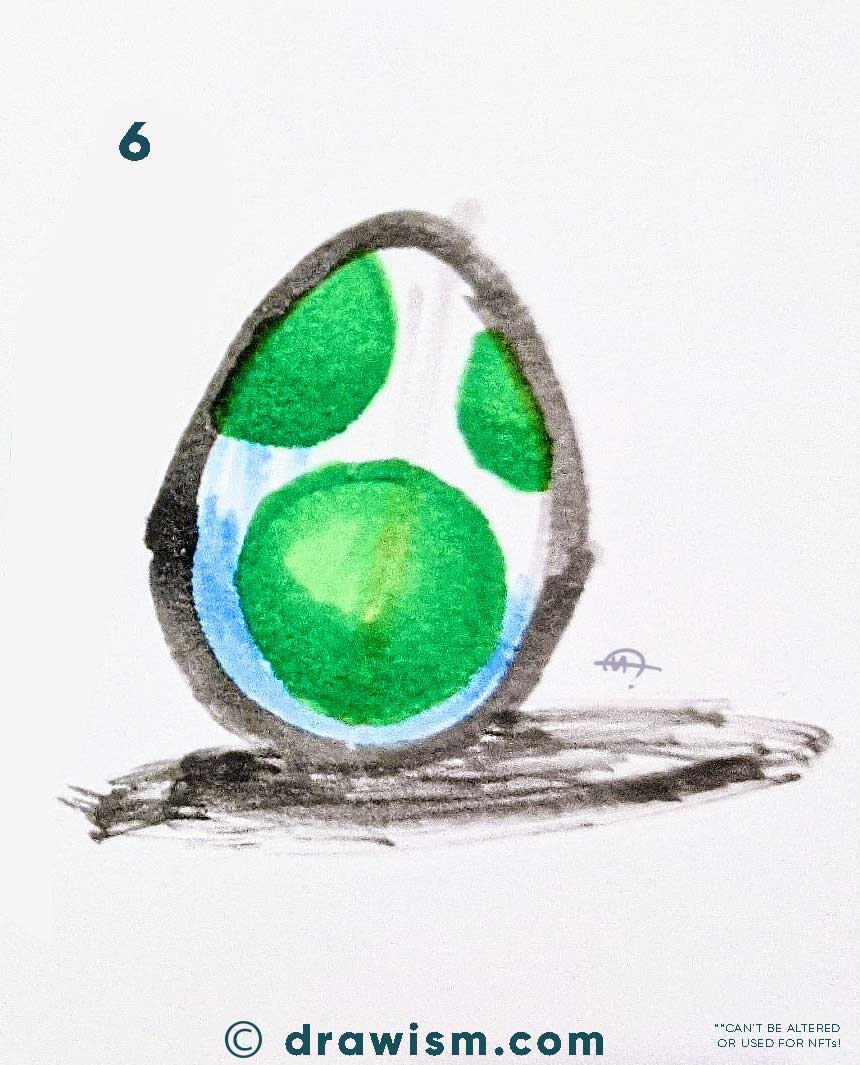
With everyone’s favorite pipe-teleporting and mushroom-eating Italian plumber, Super Mario has been popping more into mainstream media along with his devastatingly adorable dino sidekick — Yoshi. This “too-cute” huggable dino hatches from a Yoshi egg found in the game. In this easy drawing tutorial for kids and adults, you’ll learn how to draw Yoshi egg and how to draw an egg shape in 3 minutes, making an awesome yet cute (Yoshi Mario) egg drawing like the pic below!


Grab your drawing supplies and let’s get started!


TABLE OF CONTENTS

  1. How to Draw an Egg Shape
  2. How to Draw Yoshi Egg in 5 Minutes
  3. What Are Yoshi Eggs?
  4. Yoshi Egg Colors

How to Draw an Egg Shape Easy

Before we get started on how to draw Yoshi egg, you first need to know how to draw an egg shape. All it takes are a few light pencil markings paired with some curved lines. Once you understand these basic steps, you’ll be drawing (Yoshi) eggs by the dozen in no time!

Sounds easy, right?

Just follow the steps below with this easy drawing tutorial for kids and adults. You can even scroll through to the numbered images if you really want to learn how to draw an egg shape fast!

1. Sketch the Egg’s Line of Action or Tilt

Draw a light line on your paper or drawing surface using either a light color or pencil. This is called the ‘line of action’, the main axis on which we will be drawing our egg.

If using pencil, you can erase your sketch line when you’re finished with your drawing.

I used a light gray marker below.

If using markers or any other colored material that can’t be erased, make sure the color you’re using to draw the ‘line-of-action’ is lighter than the color you’ll use to draw the egg outline, so it won’t be distracting in the final picture.


You can even draw the line slightly leaning either to the left or the right side to give your egg outline a bit more volume and dimension, similar to a real egg when it’s tilted.

2. Sketch Out the Egg’s Width

Next, lightly draw a dot on the lower 1/3 of your line, or somewhere around that area.

You can see in the pic below where I placed my center dot — right on the line towards the lower half.

Then, around the same height as where you placed your center dot, draw another dot on the left side, spaced a bit from the center line, and then one more dot equal distance on the right side.


These outer dots will be the points where the bottom circular part of the egg will change into a thinner upside-down “u” curve. Basically, where the shape of the egg will lightly converge at the top, giving your drawing that classic egg shape — an essential part of learning how to draw Yoshi egg.

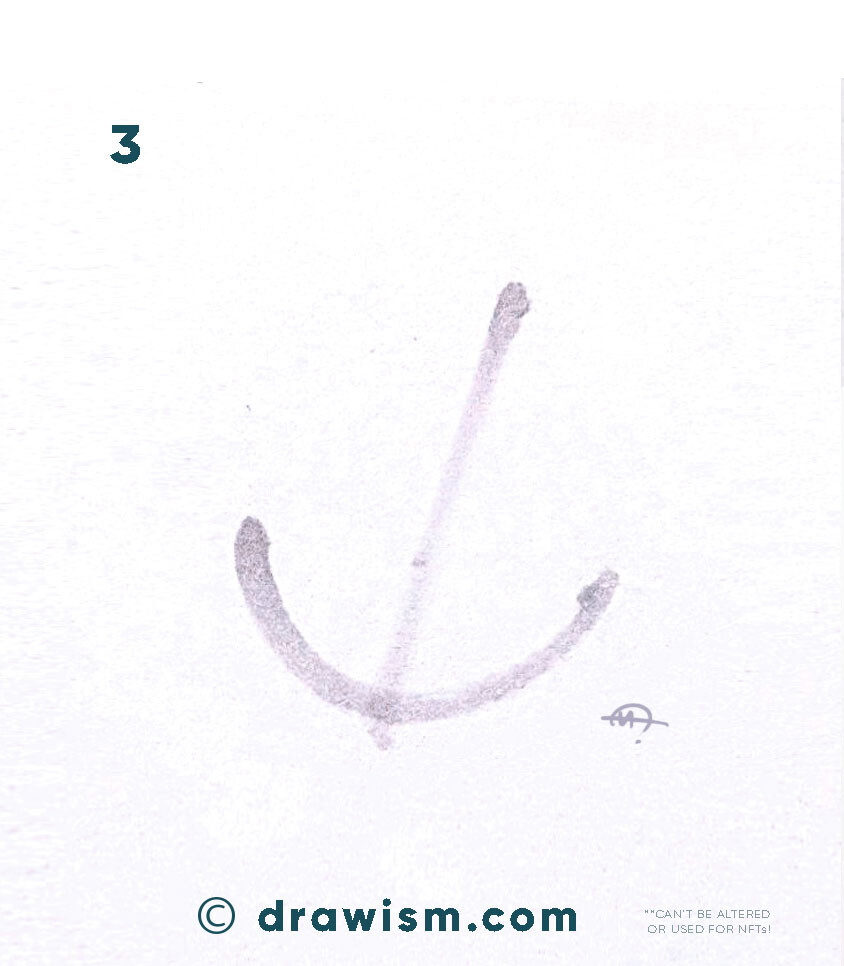
3. Draw the Bottom of the Egg

For this next step, all you need to do is connect the outer dots that you drew in step 2, using a curved or half-circle line.

The finished result should end up looking like the drawing below with a sort of anchor shape.

You can use the bottom of the line you drew in step 1 as a guide to draw how deep your curve will be.


Try your best to draw your half circle as close to the bottom line’s edge as you can. It’s okay if you can’t since this type of hand movement involves more precise line control and can get a bit tricky. I sometimes have trouble doing this type of sketching.

But if you keep practicing, you’ll know how to drawn an egg shape easily!

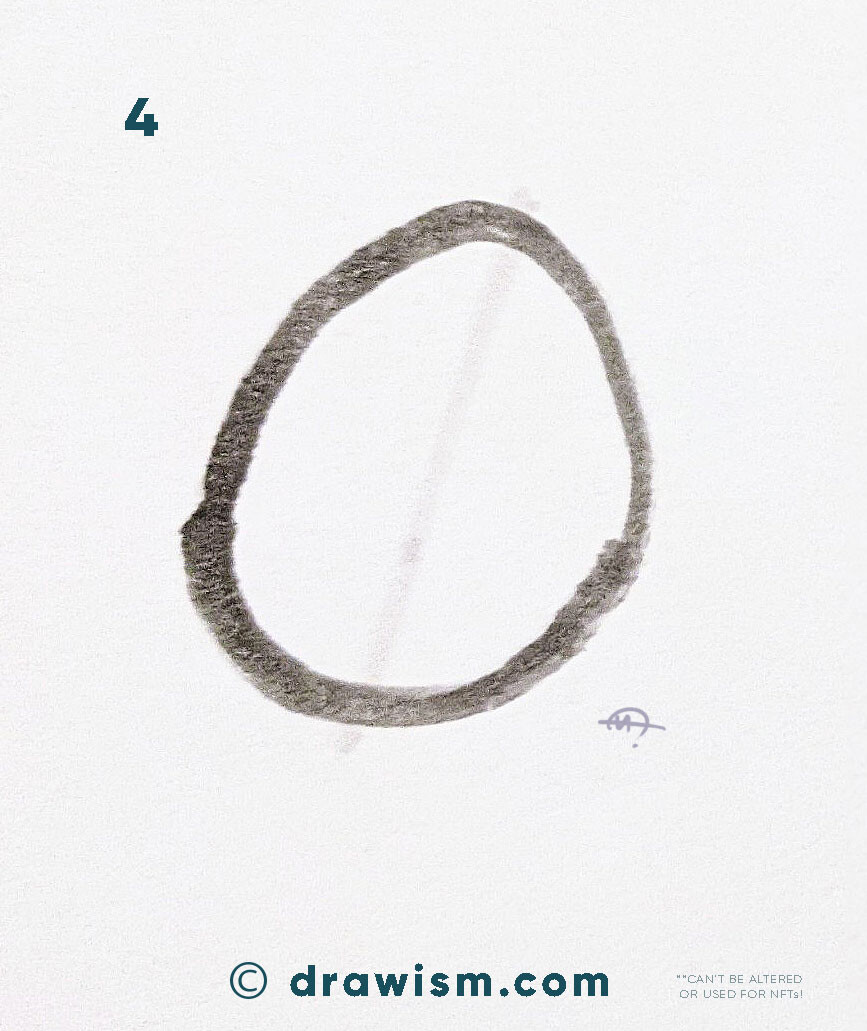
4. Connect the tips of the lines for a Full Egg Shape

This next step is pretty darn simple, almost as simple as just drawing a line — drawing a curved line.

All you need to do is just connect the edges of the lines together but curve them to make a rounded shape — an absolute must when learning how to draw Yoshi egg.


You can do this in a couple of ways:

1. Draw 1 Continuous Curved Line from One Side of the Egg to the Other

This method is quicker but may be a bit more difficult for kids and beginners, as it involves 1 continuous line without lifting up your pencil.

I mean, you can definitely lift up your drawing tool if you need to but drawing in 1 continuous line will make your egg outline look much cleaner and professional.

When drawing this upside-down ‘U’, you can try to get as close to the top edge of the center line as it’s a guide for how tall your egg will be.

2. Draw 2 Curved Lines from Each Unfinished Side of the Egg

Okay, this may sound a bit trickier than the 1st option but is actually quite simple!

Remember the anchor shape you drew in step 3?

Well instead of drawing 1 continuous curved line from side-to-side, you’ll be drawing 2 slightly curved lines.

Just draw a slight curve from the left side of the anchor tip to the top of the center sketch line.

And repeat for the right side!

A quick tip is to draw the bottom portion of the egg as a half circle. For the top part of the egg, draw the outline as a parabola or a stretched, upside-down “u” shape.

A quick tip is to draw the bottom portion of the egg as a half circle. For the top part of the egg, draw the outline as a parabola or a stretched, upside-down “u” shape.

You now know how to draw an egg shape!

*Keep in mind that you’re sketch doesn’t have to be perfect especially when you’re drawing the curved lines. You’re doing great, as long as it looks like an egg.

How to Draw Yoshi Egg Easy

Now that you know how to draw an egg shape, it’s time to make your drawing look like a Yoshi egg!

Drawing Yoshi eggs is super easy!

Can you guess how to draw Yoshi egg from an egg outline?

If you guessed ‘drawing spots’, you’re correct!

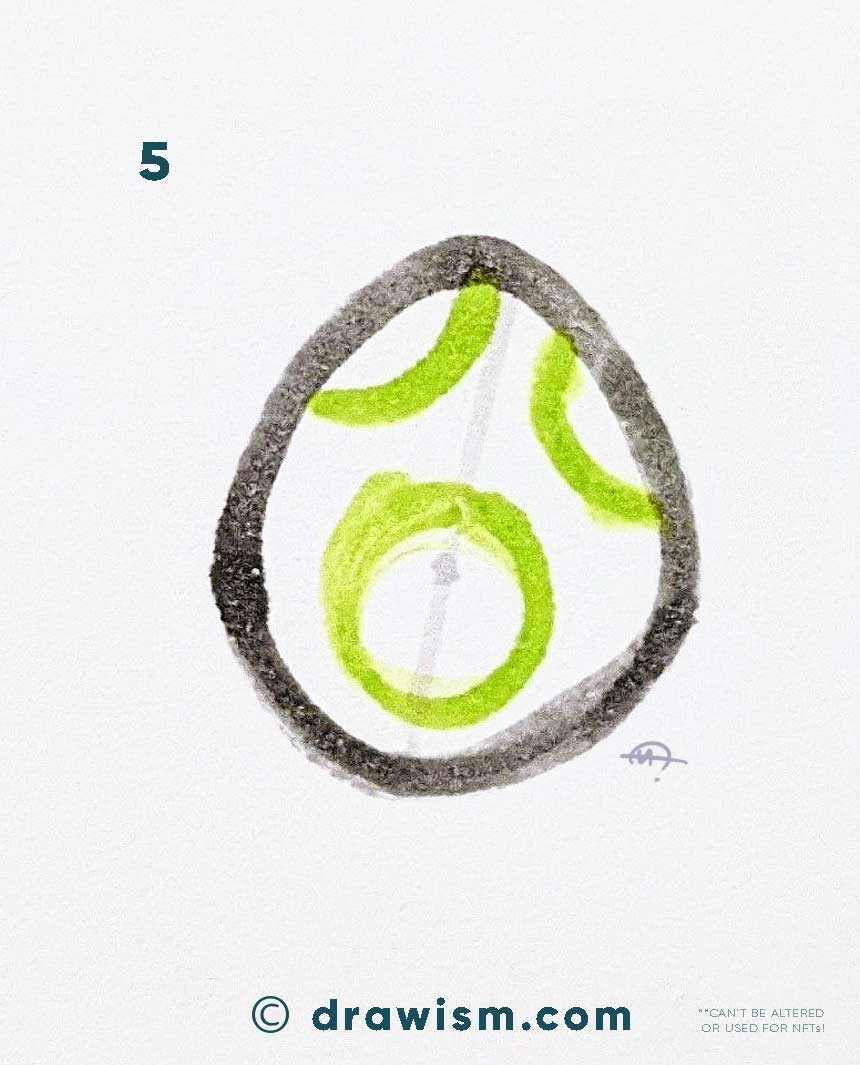
5. Draw Circular Spots on the Egg

Once you have your egg outline ready to go, all you need to draw are the colored Yoshi spots!

And no, you don’t need to be a master at drawing circles or ovals perfectly, especially when learning how to draw Yoshi egg.

Pick 2 or 3 areas where you want to draw the spots.

Normally when drawing Yoshi eggs, the spots are usually medium-sized in comparison to the egg, meaning there’s not a lot of them and they ‘re spaced out a bit from each other, not right next to one another.

You can use my drawing below as reference.


I drew the spots in green because that’s Yoshi’s main color.

There are different colors of Yoshis, from red to purple. The color of the egg spots reflect not only the color of the Yoshi once it’s hatched but also it’s favorite fruit. So in this case, a green Yoshi’s favorite is melon, yum!

So, if you’re thinking of changing the color of the spots, then you’re Yoshi would technically be the color of the egg along with it’s favorite fruit — choose wisely.

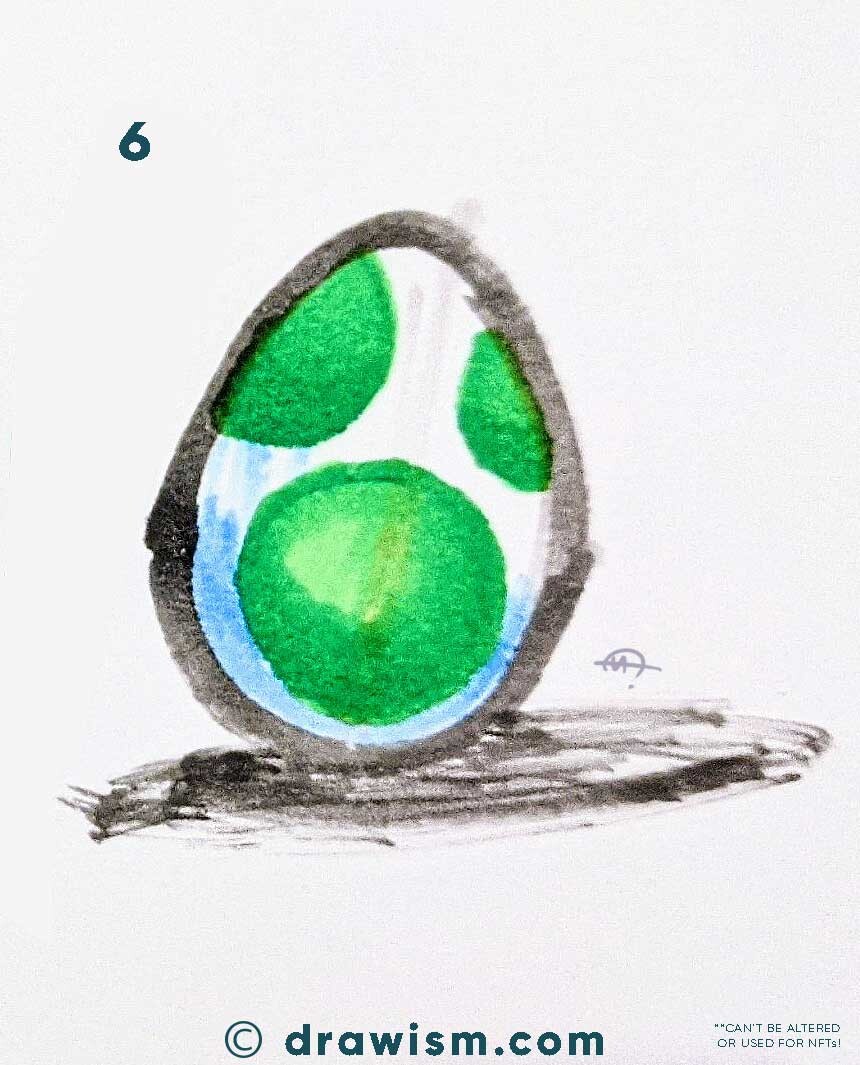
6. Bonus : Color in Your Drawing

If you really want to go above and beyond when learning how to draw a Yoshi egg, you can choose to color in your drawing if you’d like.

For starters, I’d definitely recommend coloring the egg spots because it’s a defining feature when drawing Yoshi eggs or a Yoshi Mario drawing.

If you want a more illustrative or semi-realistic look, you can do a little bit of shading at the bottom of the egg.


You can even add a shadow for a more 3D look under the bottom of the egg by drawing a flat circle or oval right underneath it.

What are Yoshi Eggs?

Yoshi eggs are little spotted eggs found in the Super Mario & Yoshi video game series and come in different colors. Each egg usually contains a cute Yoshi dinosaur that matches the color of the egg.

So if you see a blue Yoshi Egg, there’ll be a blue Yoshi dino inside.

What Yoshi Egg Colors to Use When Drawing Yoshi Eggs?

With a range of 11 colors to choose from, sticking true to the franchise, Yoshi eggs come in different colors including Green, Yellow, Orange, Light Blue, Blue, Pink, Red, Purple, Brown Black, & White.

Whichever color you choose for your sketch, your Yoshi Mario drawing will look amazing and super cute.

Normally, each color of Yoshi represents a different fruit.

Here’s a quick guideline below of some general Yoshi colors with their corresponding fruit so you can get to drawing yoshi eggs of different colors.

Quick Guide for Different Colors of Yoshi Eggs

  1. Green — Melon and Watermelon
  2. Yellow- Banana
  3. Red and Pink — Apple
  4. Blue and Light Blue — Grape
  5. Orange — Orange

Check Out More Exciting Drawing Tutorials & Video Game Art Posts (Outbound Links)

For even more imaginative pop culture inspiration, art, and freebies, check out these other amazing and easy drawing tutorials and game related articles below!

Learning how to draw Yoshi eggs or just egg shapes in general can be difficult to get right. But with enough practice, you’ll become egg-cellent at it! Did you enjoy this drawing tutorial? Leave your thoughts in the comments below!

The article How to Draw Yoshi Egg Fast in 3 Minutes was originally published on Drawism.com .

Report

Little Nightmares Six Fanart: Draw an Awesome Stylized ‘Six’

Tutorial / 01 October 2023

Little Nightmares Six Fanart is the perfect thing to draw whether you’re looking for some cute & spooky flair or just want to draw something simple and fun. This tutorial teaches you how to draw a stylized Six, the main character from Little Nightmares, using some basic shapes and details.

If you don’t know what “Little Nightmares is” or who the adorable ‘Six’ is, I’ve made an quick summary with some basic facts about it, to fill you in. Just keep reading to learn about the world of “Little Nightmares”.

But (if your hands are itching to draw) if you just want to get to the good stuff and start drawing, skip to the section “How to Draw Stylized Little Nightmares Six Fanart“.

Let’s get started!

Grab my free How to Draw Little Nightmares Six art drawing guide with all steps in this post packed into 1 printable sheet plus a Six phone wallpaper added as an extra bonus, below!


What’s “Little Nightmares”?

“Little Nightmares” is a cute but creepy fantasy horror side-scolling video game created by Tarsier Studios, published by Bandai Namco (the current IP owner), and released on April 28, 2017 for Windows, Playstation 4, & Xbox One. It was then released for Nintendo Switch about a year later.

Little Nightmares’ art style mixes the worlds of fantasy and horror in a 2.5d format where everything is larger than life for the game’s main character, Six.

Here’re some screenshots so you can get a better idea of the game.

In order to progress in the game, players must solve puzzles in the form of obstructing objects, narrowly escape capture by giant monsters, and traverse an eerie floating vessel located in the sea, called ‘the Maw’.

From the cinematic yet ominous lighting to the adorable but slightly nightmarish character designs, the storytelling and artwork is top-notch (in my opinion) and an extremely immersive experience. The environments feel like more of a creepy dollhouse style, so not extremely graphic but oddly cute.

I’ll be honest, I really don’t like scary movies or video games but due to the lack of gore, blood, and over-the-top horror elements, this games feels more creepy and spooky than anything else, making it extremely accessible to people who share my lack of extreme horror.

Who is ‘Six’?

Six is the main character in both Little Nightmares and Little Nightmares 2.

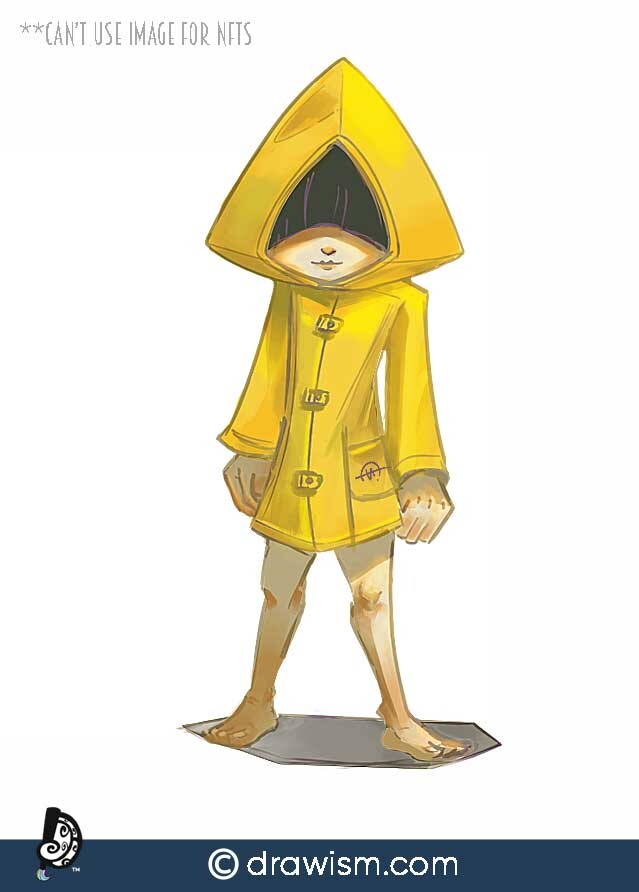
She is a lost girl at the age of 9 who has suddenly woken up in a spooky dungeon filled with child-sized cages on a floating water vessel named the Maw. Six is dressed only in a yellow raincoat with a unique triangle-shaped hood and her black hair obstructing her eyes.

Six tries to unravel the mysteries of the Maw and survive the many horrors that she encounters on her journey to escape it.

How to Draw Stylized Little Nightmares ‘Six’ Fanart

*All artwork posted is drawn by me. The characters & IP depicted are Copyrighted by and are Property of Bandai Namco. The original character design depicted was created by the concept art team at Tarsier Studios at the time of making Little Nightmares 1.

Little Nightmares Six Raincoat

1. Action Line

For this Little Nightmares Six fanart drawing, we’re going to start this super simple. First, draw a slightly curved line. It can be a continuous line unlike what you see below. This will be our action line which is the main line of movement for the body. This gives our character’s pose more fluidity and less stiffness, essential for successful character designs.

2. Draw a Slightly Tilted Half-Rectangle

Where the top of our action line begins, draw 1 straight or slightly curved horizontal line that goes past the action line on either side but don’t make it too long, otherwise, you won’t get that thin torso shape.


3. Draw Curved Lines

On the left side, draw a slight curve from the bottom of your rectangle so it fans out a bit at the bottom so it almost looks like a skirt.

On the right side, do the same thing but start a little before the right side of the rectangle line end. This implies a small fabric fold where the torso bends, giving the coat a dynamic look.

Make sure both lines end at the same length.

4. Draw Slightly Curved Lines From The Bottom Sides of the Coat to the Center

This will be our bottom hem of Six’s raincoat.

Add a slight outward curve to your lines as it will give the coat volume and dimension.

And you’re done with the main shape of Six’s raincoat!

Six’s Hood

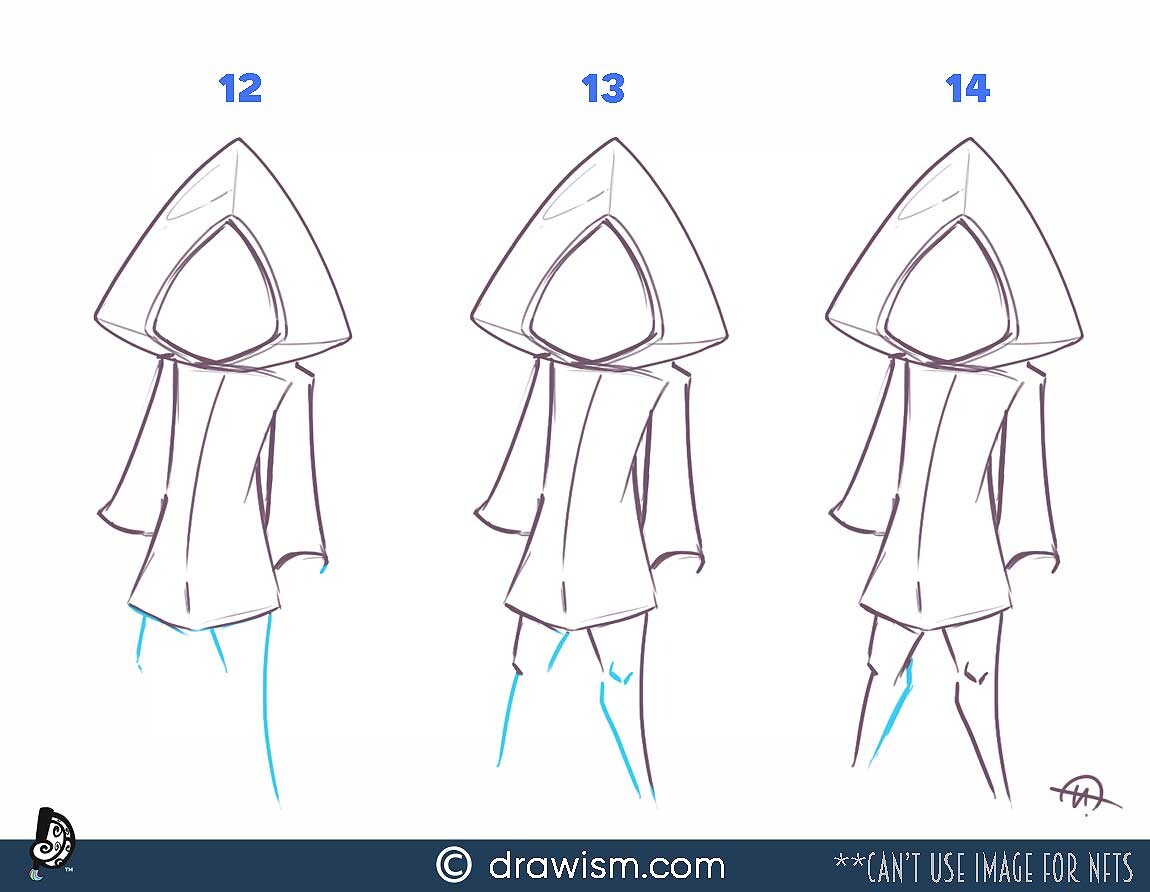
5. Draw A Curved Leafy Diamond Shape

This’ll be open part of the hood where we see Six’s face.

Make sure the bottom of this shape touches somewhere towards the middle on the top of the raincoat.

6. Draw 3 Lines From the Angles of the Hood

Now, we’re extending the hood outward and giving it more volume.

Draw a short slightly curved line that touches the bottom angle of the hood.

7. Connect the Tips of the Hood

A key point to drawing instantly recognizable Little Nightmares Six fanart is drawing a large hood. You should get a larger triangle shape as shown below, which is the rest of Six’s hood.

8. Draw a Seam Outside of the Hood Opening


You can make these lines thinner and follow the shape of the smaller curved diamond.

You can also draw a slight fold towards the top of the hood. Just draw a thin angled ‘C’ and you have a fold impression!

Six’s Raincoat Sleeves


9. Draw 2 Lines Coming from the Hood

On the left, draw a slightly curved line fanning out and stopping a little past the middle of the raincoat.

Then on the right starting from the middle of the right bottom hood line, just draw a short, slightly angled line or mark. This’ll be Six’s right shoulder.


10. Extend the Right Shoulder Down

Use a slightly curved inward line again and make it a bit longer than the left line. Then, draw a curved line or half circle starting from the right of the coat, make it touch the bottom of the right sleeve, and curve it inward.

11. Draw A Straight Line for Six’s Right Arm

Draw this line so that it starts and stops at the raincoat. It should look like the right sleeve is behind the raincoat.

Six’s Legs

12. Draw a Short Angled Line from the Bottom Left Side & A Curved Line from the Bottom Right of the Raincoat

The short angled line is Six’s left thigh and knee. Draw a small inward mark to show the knee.

Then draw a small sharp angled line to the right of the coat’s bottom. This’s Six’s right thigh. Last, draw a curved line starting close to the bottom right hem of the coat which’ll be the right leg.


13. Draw Straight Lines for the Rest of the Legs

For the left inner leg, draw a short straight angled line that stops a little above the knee mark. Then, starting from the bottom of the left knee, draw a straight line about 2x the length of the line above the knee, for the front of Six’s left leg.

On the right leg, draw 3 small straight lines for the right knee. For the right calf, draw a small straight line outward starting where the short inner leg line end and then draw a longer straight line inward to make the leg taper in towards the ankle.

14. Draw A Short Straight Line Outward, Then a Longer Straight Line Inward for Six’s Left Calf

Start a bit above where the left thigh ends, draw outward and end that short line below the knee. Then from that line, draw a longer line tapering inward and make it the same length as the front. of the left leg line.

Ankles and Feet 1

15. Draw 2 Small Lines for Ankles on Both Feet

A little above where each inner leg line ends, draw a quick small line going out then another small line immediately going inwards. The ankles should look small and angled.

16. Draw Outward Curved Lines Starting From the Outside Leg Lines

This will be the top of Six’s feet. You can draw a couple quick marks at the top of the feet to show creases.


17. Draw a Curved Line Going Inward Staring from the Outer Edge of Each Foot

These lines create the shape of Six’s toes. Don’t draw them too far inward otherwise they’ll make her feet look huge!

Feet 2 + Hands 1

18. Starting from the Ankles, Draw Short Outward Lines for the Heels

Heels are thicker at the base, so they fan out a bit from the ankles.

Then, curve the ends of the heels and then connect them to the open ends of the toes using a ‘wave’ shape to get the foot dips on the inner part of the feet.


19. Draw Straight Lines for the Top of the Toes, Then a Curved Line for the Toes’ Bottoms

So, the toes should look straight where the toenails will be but curved for the sides and bottom.

Let’s also take this chance to start the top of the hands. Just draw 1 straight (or barely curved) line at the bottom of the sleeves but draw them towards the center of the sleeve so the raincoat looks to cover the hands.

Hands 2 + Toenails

20. Draw Inward Lines From the Tops of the Hands

These lines are the fingers. Then draw 3-4 short lines on the right hand the same level where the angle meets for the knuckles.

And for thumbs, draw 1 inward line touching the raincoat for the right hand and an ‘L’ shape for the left thumb, touching the raincoat.

21. Draw Tiny Squares For the Toenails

They don’t have to be full squares, just angled markings that look like they could be toenails. One the nails below only has 3 sides to it.

Face + Hands 3

22. Draw Rectangles for the Fingers and Curved Lines for the Hair

On the left hand, draw tapering lines to show the fingers getting thinner.

Draw a smaller diamond where Six’s face is supposed to be. That will be the bottom of Six’s hair. To show hair texture, draw a few curved lines that touch the bottom of the hair. Curved hair lines imply that Six’s head is round and looks less flat than straight lines of hair.

23. Draw the Bottom of the Nose and Six’s Lips

This is pretty easy. Just draw a small angled shape in the center of the smaller, flatter diamond (aka the hood opening) for the nose. Nothing crazy here.

And for the mouth, draw a thin line below the nose and a small mark underneath that, for the chin. In the center of the lip line, just add 2 dots or marks to indicate the top of the lips.

24. What the Final Face Should Look Like

Six’s Raincoat Details

25. Use Curved Lines for the Cuff Hems and Straight Lines for the Side of the Raincoat

Follow the shapes of the sleeves for the cuff lines, making them curved and following the form of the sleeve opening.

Then follow the shape of the right side of Six’s raincoat for the coat lines. For the pocket, just draw 2 slightly curved lines from the coat lines to the raincoat’s edge. Make the bottom line curvier for that pocket look.

26. Draw 3 Straight Lines or Marks Off-Center of the Middle of Six’s Raincoat for the Coat Clasps

27. Fill in the Coat Clasps with Curved Lines at the Ends and Add Thin Hem Lines to the Bottom & Left of the Coat

These are the finishing touches to the Little Nightmares Six raincoat – gotta add those coat details! They really help make the drawing look complete.

Final Little Nightmares Six Fanart

28. (Optional) Draw a Shadow

To really finish off our Little NIghtmares ‘Six’ fanart, let’s add a shadow. It can be a flattened circle or what you see in #27 in the image below, an angular trapezoid-looking shape.

Drawing a shadow not only grounds Six so it doesn’t look like she’s floating but it also adds a professional finish to it.

Whenever I draw characters, adding a quick and simple shadow is always a must for me because it gives more dimension and a sense of space to the image and character.

Grab my free How to Draw Little Nightmares Six art drawing guide with all steps in this post packed into 1 printable sheet plus a Six phone wallpaper added as an extra bonus, below!


*Feel free to color in your shadow if you’d like! I always fill in my shadows because it adds contrast to the drawing and really helps make it stand out.


And there you have it, a finished Little Nightmares Six fanart drawing!

Feel free to color it in if you want!

Check Out More Exciting Video Game Art & Drawing Tutorials

For even more imaginative pop culture inspiration, art, and freebies, check out these other amazing and easy drawing tutorials + game related articles below!

This Little Nightmares ‘Six’ was quite fun! What other characters would you like me to make drawing tutorials of? Leave a comment below!

The article Little Nightmares Six Fanart: How to Draw an Awesome Stylized ‘Six’ was originally published on Drawism.com.

Report

How to Draw Hair Buns for Male & Female Character Designs & Portraits

Tutorial / 03 September 2023

In this post you will learn how to draw hair buns for both male and female subjects. You will also learn the differences between male and female hair buns, how to make each look a certain way, and when to use a particular style, as each can give off a different feel to your character or subject. Lastly, I’ll teach you how to draw them in both a simple vs. detailed style, depending on the look you’re trying to achieve or if you’re crunched for time. Let’s get started!

WHAT’S A HAIR BUN?

In order to draw a believable hair bun, we first need to understand what it is, how it works, and for what reason the subject has their hair tied.

This may seem trivial at first, but figuring these points out early on will not only help you understand how a hair bun forms a particular shape but will help you give more flow and movement to your subject’s hair.

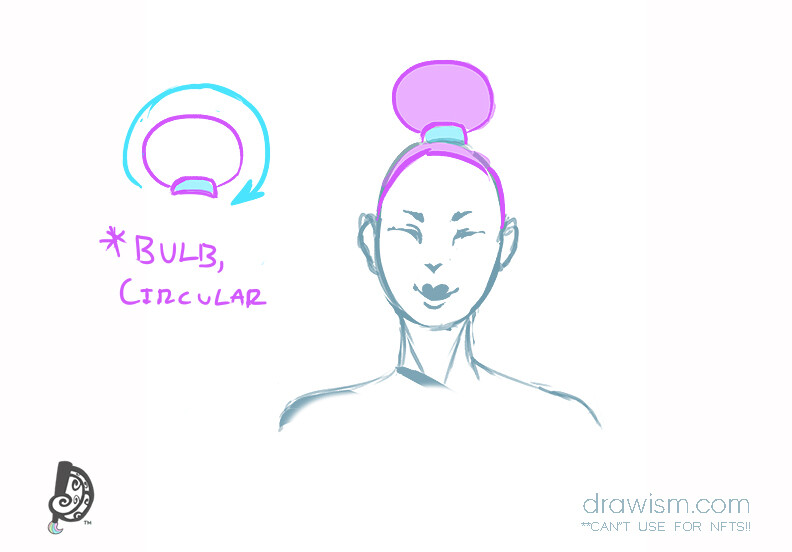
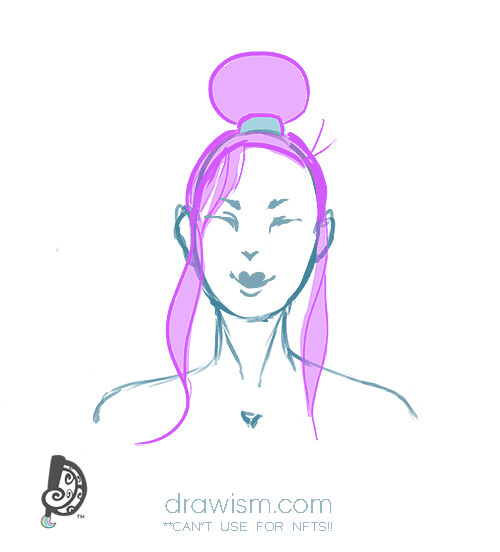
So, a hair bun is when someone ties their hair into a primarily rounded shape that usually sits on the upper half of their head with a band or hair tie.  When drawings hair buns, the hair strands meet or converge at the hair band because that’s where all the hair is tied. The individual hair strands n the bun then “balloon out” in the form of a bulb because the mass of hair expands outward as it’s “free” and not tied up. See the pic below.


The oval or egg shape is the most common form of hair buns.


The ends of the subject’s hair are usually hidden within the bun or right at the edge of the hair tie. So, this means there usually won’t be too many stray hairs sticking out of the bun or from the person’s head, depending on the hair style. This adds to a cleaner, neat look. But also less tedious detailing for you 😉

Hair Buns are usually used for longer hair but there are shorter hairstyles, such as those for men or women with chin-length hair. Hair buns are used to keep hair tidy & from obstructing the person’s vision when doing an activity.

*Remember this when designing your own characters! You don’t want your lady knight defeating a tri-headed dragon with her hair getting in her face .

Let’s get started with a simple hair bun tutorial below!

How to Draw Hair Buns

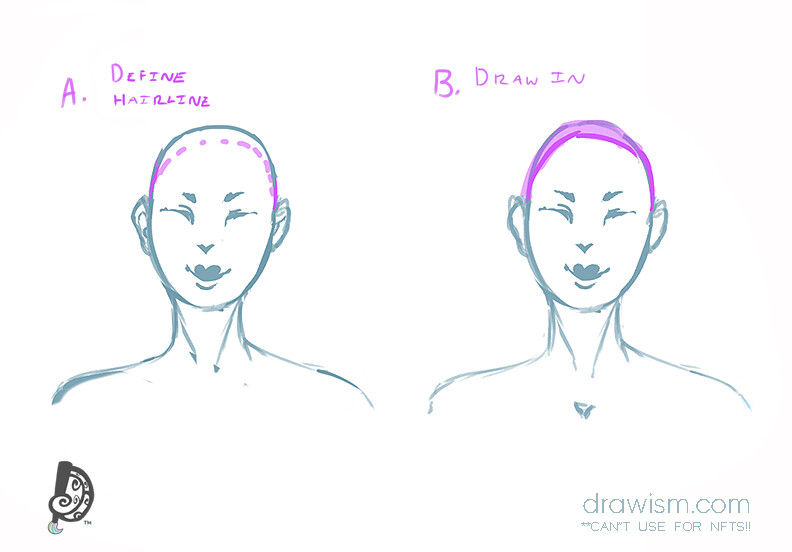
1. Define Your Hairline

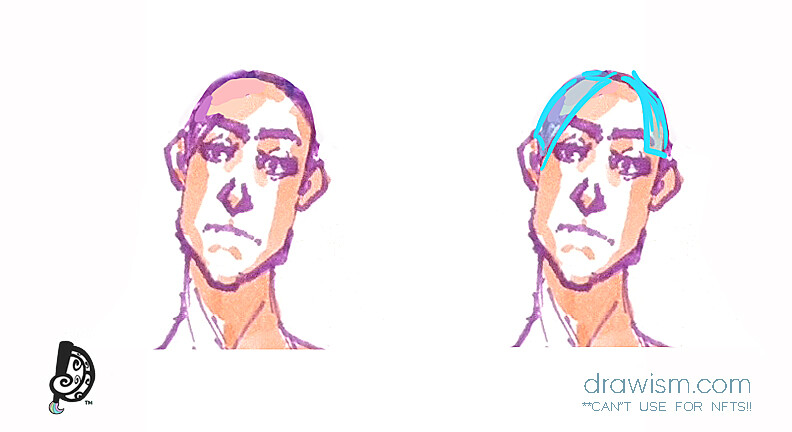
A. This is the point where the hair starts (or ends). Adding a hairline gives a natural look to your hair bun. If you were to just draw a bun on someone’s head without showing a hairline, it looks as if the bun is attached to a bald head. This doesn’t make sense because hair buns are made of hair, so how can you have a hair bun when someone doesn’t have hair? You can’t! So you need to draw in a hairline. Plus, it gives some more volume to your subject’s hair.

B. After we’ve figured out where the hairline is, you can color it in if you’d like.


2. Decide Where the Hair Bun Is

You can place a light mark with a pencil on the area you want the bun to be. I drew a little “X” to mark the location of the hair bun. This is where I’ll be drawing my hair tie or band.

This helps define how the bun sits on the head.


3. Add a Hair Tie or Band

It can be as small or big as you’d like. I drew a kinda thick bulbous band below because I want it to support and cushion the bun.

You can try experimenting with different shapes & sizes of hair bands for different looks!


It also helps pinpoint the direction of the bun and how gravity may affect  it. Buns in the center of the head are more likely to stick up because their center of gravity, is well, in the center. But if you draw a hair bun to the side, that bun’s center of gravity has now shifted to either the left or right side, causing your hair buns to droop a bit.

But don’t forget to draw one, otherwise how’s the subject supposed to have their hair all tidied up? 

4. Draw the Hair Bun as 1 Main Shape on top of the band. (Usually a bulb or sphere)

Just one main shape. Nothing fancy or detailed. You can do more complicated shapes later but I want you to start off with a bulb or sphere first, as it’s the most common bun shape.


When we draw 1 simple shape for the bun, we’re drawing the entire bun as 1 object. This helps us understand the overall look and feel of the bun without getting super caught up in details. It also keeps us from drawing something that doesn’t look like a hair bun.

Basically, your hair bun needs to look like a hair bun the moment you see it.

5. Add Some stray hairs Coming From the Hair Line if you’d like

This adds more realism as real hair buns aren’t always perfect and neat. Some hair styles have shorter hair in certain areas and these stray hairs help account for that. There’re usually a few stragglers hanging out. 

Feel free to color in your hair bun or hairstyle with a solid color.


And that’s how to draw a quick and simple hair bun!

To learn about the difference between male and female hair buns, continue reading below.

Male VS Female Hair Buns

Male

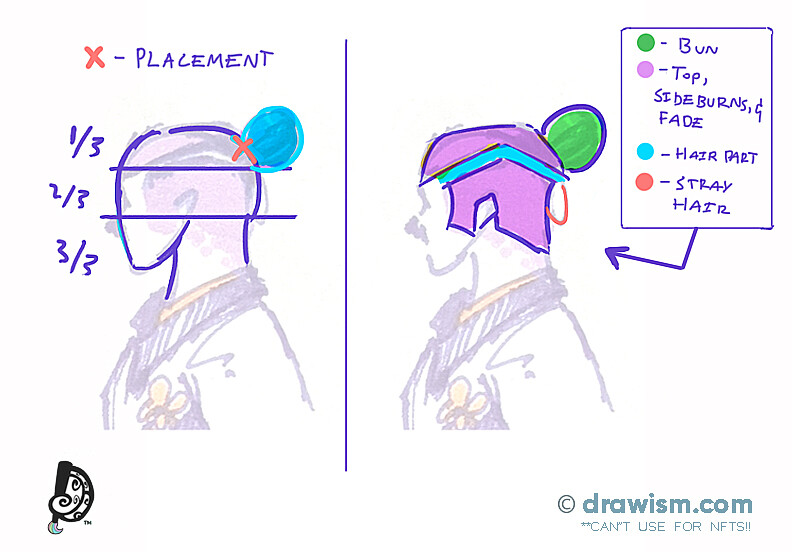
Men usually have shorter hair than females. For male hair buns, they’re often tied from the top third of their head. This is because in more modern hairstyles, men have longer hair growing from the top of their head, while they have either a shave or “fade” that is much shorter. The fade often starts from the back of the head and continues to the side burns and top half of the back of their neck.

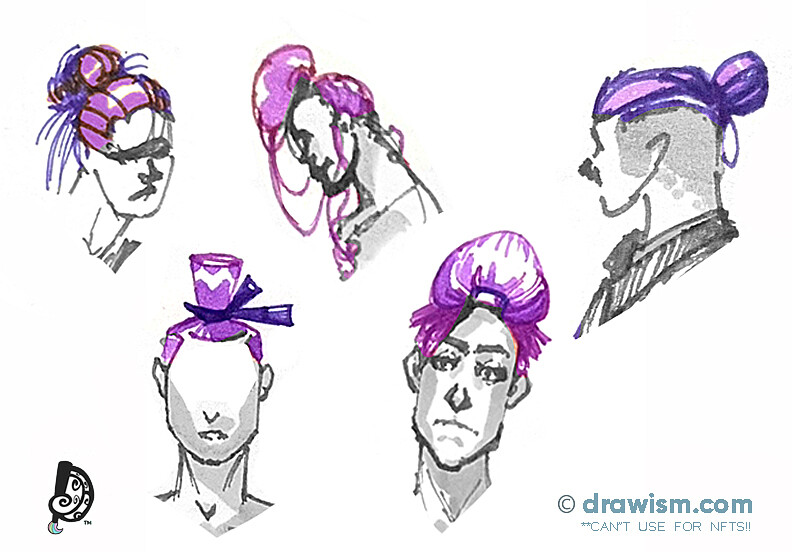
In the picture below, I drew some different styles of male hair buns.

Some look messy with stray hairs, while others look neat and tidy. It all depends on the look you want to achieve with your subject or character.

As you can see, these male hair buns have all different shapes and styles. Don’t feel you always have to stick to one particular style. Try experimenting with different shapes and hair combinations!


The pic below shows a male hair bun style where ⅔ of the hair is shaved.  You can see that in the drawing below.

On the right side, I sectioned off different areas of the male hair bun aesthetic. You can see the different parts of this hairstyle and how it might be a bit more complicated than drawing a female hair bun.


You can add a few stray hairs to show gravity if you’d like.

Here’s a quick tutorial on drawing ‘man buns’. It’s basically the same as drawing a female hair bun.

How to Draw Male Hair Buns or a ‘Man Bun’

1. Draw Your Hairline


2. Mark Where You Want Your Hair Bun to Be & Draw a Hair Tie


3. Draw Your Main Hair Bun Shape on Top of the Hair Band


4. Draw In Any Surrounding or Stray Hair Coming From the Bun


5. Color In The Hair Bun


6. And You’re Done!

Now you know how to draw man buns.


There’re a variety of shapes on how to draw male hair buns.

All you need to do is draw your main shape for how you want the bun to look. It can be anything from a sphere to a cylinder. Whatever you feel fits your subject or character the best.


Female

Unlike male hair buns, female hair buns usually have longer hair. What’s great about this is the infinite possibilities to style hair!

You can draw combinations of hair buns with long hair or hair buns with short hair.

Female hair buns can either look glamorous and tidy or you can opt for a messier look.

As female hair is generally more versatile in shape and style (due to its length), keep in mind the volume, texture, and form of the hair. Is the girl’s hair curly or straight? Is it light and fluffy or dense and rigid? All these details have an effect on hair buns so keep that in mind.

In the image below, I drew some different hair buns and styles from imagination. Some look a bit more traditional while other styles are more experimental, like drawing the bun to the side or drawing curly hair buns. I even experimented with different hair lines for a more unique look. And if you look closely, I played around with the hair tie/band which greatly influences the overall look and feel of the hair bun.

The main thing to keep in mind is that a hair bun is a 3-dimensional object that has volume! It is not flat.

Like in the picture above, you can design your hair bun in any shape you’d like and in any style. Many hair buns are not just all tied up on the head. Some styles have hair that’s partially tied with the rest just falling over on the side of the head. Some hair buns are tied to the side, or even lower on the head.

Heck, you can even draw multiple hair buns on one person or subject depending on what you’re going for.

There are a lot of female hair bun styles where long hair just falls to the side. It’s a popular look.

Keep reading to find out how to add detail to your hair buns!

How to Draw Detailed Hair Buns

The tutorials I showed above were how to draw a quick hair buns with little to no detail.

For detailed hair buns, they’re more involved but not by much. 

You can use the same hair bun you drew on the previous tutorial or draw another one.

Let’s get started!

1. Find the Bun’s Converging Point

* The converging point is where all the individual hair strands meet at a single point. Basically where the bun is tied.

2. Draw a Simple Highlight

A quick way for me to draw hair highlights, is to make circular arches like those shown in the picture below. In this case, my highlight is one big white arching shape.

You can draw the arches following the curvature and form of the bun. When you follow the form of the bun, you’re emphasizing its roundness and giving the appearance that your bun is in fact bulbous.

*The highlight shape needs to follow the form of the bun! Otherwise it’ll look like the highlight was pasted on and won’t be as believable.

3. Draw Lines from/to the Converging Point Following the Bun’s Shape.

Basically, draw individual hairs starting or ending at the hair tie while following the curvature of the bun.

You can draw the hairs through the highlight or draw them around it. For this tutorial I drew through the highlight to show more detail on the bun.

Keep drawing hair strands until you’ve gotten from one side to other, covering the bun.

*Note: I left a few spaces between some strands to further show the bun’s roundness. You can do that if you’d like.

Lastly, as shown in #2 in the pic below, color the hair bun (using a color of your choice) in the areas surrounding the highlight.

Don’t color in the highlight because that area is the shiniest and should be the lightest in your drawing.

You’re done!

And that’s how to draw a hair bun!

Other Helpful Art Tips and Drawing Tutorials:

Now that you have a general idea of how to draw hair buns for males and females, you can try drawing them for your own characters or portraits!

The article How to Draw Hair Buns for Male & Female Character Designs was originally published on Drawism.com.

Report

Art Anxiety : How to Be Confident with Your Art & Stay Motivated

Tutorial / 27 August 2023

Do you feel you’re art isn’t good enough? Does your art make you feel negatively about yourself? Or maybe you browse the internet and social media for all the latest and greatest art just to end up feeling negatively about your own work because you’re comparing yourself to other artists. For starters, I am guilty of the latter and found myself not enjoying my work. I felt mentally weighed down by the art and popularity of other artists when browsing online. Second, I found it extremely difficult to focus on my art projects thinking about why my work isn’t popular and how it feels like my work is a lost cause for me and my career. Low self-confidence in my artwork broke down my motivation for making more art. This thinking is extremely toxic not only to your mental health but your physical well-being and your interest in your creative projects. But how do you get more confident with your art?

Beat Art Anxiety: How to Be Confident with Your Art and Creative Projects


1. Know that you won’t make a perfect piece every time.

Every artist starts from the beginning, including myself. The beginning, as in making anatomically incorrect characters, perspective, and shading mistakes, to name a few (and I’ve made a bunch of them!). And that’s 100% okay! It just means some artists haven’t fully built up their skill set yet or haven’t learned enough about that subject yet. It doesn’t mean you’re bad at making art, by any mean. Of course, there are a few geniuses at art that whatever they make, it looks amazing, but those artists are extremely rare. That being said, not every piece you make will be perfect whatever your artistic experience. We’re all human, even artists. And like everyone else, we have our good days and our “I don’t like how this turned out” days!

“Know that you can control the amount of time and effort you put into your creative projects and that you’re skill set will keep changing and adapting to you until you feel it’s at the quality you want.”– Drawism.com

Some days we make great art or masterpieces, and some days we make “disasterpieces”.

Not making great art every time is completely normal, even among professional artists. When I make work for clients, there are sketches or drawings that look like crap, no joke! If it’s not a final piece, I will usually show my (extremely) rough art to them because they tend to find it quite interesting and may spark new ideas. If you feel like your art isn’t good, think again. Sometimes art directors, clients, or art teachers may find some of your “lesser work” quite interesting and unique, especially if you’re presenting your creative process or need to draw something in 2 seconds.

As long as the piece you’re making seems clear and readable to you, you’re doing great. If you’re working for a client or in art school, you’ll have to explain your art a bit as long as it gets your main idea across.

So don’t feel negative about yourself or your work if you’re not reaching perfection 100% of the time. Instead, know that having off days on your creative projects does happen and that you can make it better.

2. Failing is part of learning.

As artists, we all start from the beginning, including myself. I didn’t reach the technical and mental skill level I’m at today, if I didn’t fail hundreds of times at my work.

The key is to not give up and continue. Because reaching a proficient or professional level of art requires years of time, practice, and dedication, and won’t happen overnight. So don’t be afraid to continue your art from fear of failure. You can overcome art anxiety with enough artistic practice!

To make things easier on myself, I do simple art exercises that help me improve my technical skills without them being overwhelming for me. Knowing your limits of what you can and can’t do is a fantastic indicator of your current skill set and will help prepare you for more challenges along the way.

3. Art anxiety won’t last forever. Know that you will get better the more time you spend on your projects.

The more time you spend on your creative projects, the more accustomed you will be to producing the work you want while familiarizing yourself with the creative processes, both mentally and physically.

What you create in that moment is not the end all be all of your art. It’s just a step to improving your skills.

You will get better at your art! 

Getting better at your art is inevitable if you keep practicing, keep a positive mindset, and are mindful and conscious of your areas of improvement.

4. Don’t let the fear of failing prevent you from starting or continuing a project.

I’ve struggled with this for years. Every time I thought about drawing, I would freak out about it. I’d get into my head and stress about the entire art process. I’d think about starting the project and when it was nighttime, I didn’t accomplish anything. This wasted my precious time because I didn’t know how to properly address that fear of starting.

Art anxiety can manifest before you start working on a project.

Instead, I re-framed my thinking. I approached projects in much smaller parts. I started setting aside 15 min a day to work on my art because it was enough time for me to work on a piece without feeling overwhelmed.

Sometimes when we work on a project, we start thinking about all the steps and tasks we need to do before we start. This is when art anxiety can start to creep in. At times, this is extremely dangerous to our productivity because we set ourselves up for a result that we don’t know if we can achieve. This places intense emphasis on an imagined final product rather than fully understanding our own unique process of creativity.

Methods for being creative are not a one-size fits all but rather an individual identity of how we express our artistic sides.

To make this easier on yourself, identify your creative process and try writing it down. What methods works best for you in order to complete a project? Are these methods physically or mentally draining for you? If they are, that’s completely fine. But if so, how can you down-size the task to make it more manageable for you? For example, you can set a small, easily achievable time limit for one part of your creative process. I like to give myself 15 minutes to think about what I’m going to draw before I start a new artwork because it’ll make my workflow more manageable for me down the line.

5. Know that you’re doing something for yourself and focusing on self-improvement.

You’re improving yourself and becoming better at things you’re not good at.

It takes a lot of courage to realize something may not be working for you or that you might have feelings of art anxiety. Don’t be afraid to acknowledge that some things aren’t going the way you want in your creative endeavors. If you do, it will ultimately save you valuable time and get you closer to a path that will lead you to success. Use these moments of self-reflection as an opportunity to better yourself and your understanding of who you are in a creative space.

So take some time to treat yourself and give yourself a pat on the back for stepping out of your comfort zone to become a better version of yourself. You deserve it!

6. Your art is a representation of you, but that representation doesn’t last forever.

Your art will keep changing throughout your artistic journey. Don’t worry about those 5 bad portraits of your dog or how you didn’t ace your art class.

Your ‘bad’ art will soon be in the past if you continue to improve your artistic skill set. Soon, you’ll be making art that you’re more proud of that fits you at your current level. So don’t sweat the small stuff, you will overcome it! Keep in mind that just because you don’t like your art does not mean that it’s terrible or someone else will absolutely not like it. Art and the creative process is subjective, meaning it’s up to the viewer to decide how they feel about it. And that’s something you can’t control. So feel free to let that thought float out into the wind and keep on your path.

Instead, know that you can control the amount of time and effort you put into your creative projects and that you’re skill set will keep changing and adapting to you until you feel it’s at the quality you want.

7. Technical & mental artistic progress is inevitable if you keep at it.

As long as you’re focused on your creative projects, you’ll keep getting better at your work.

When we’re more familiar with something, the better we get. Not only will motor skills like your hand-eye coordination and precision get better but the way you think about and creatively approach your art will skyrocket as well.

Who knows? You might discover a new art style, process, or awesome idea on the way.

8. The process is just as important as the end result.

Don’t get too caught up in the end result of your art and projects.

The steps you take to get to the end matter just as much as your final piece because it’s the decisions you make while creating your art that help you achieve the results you want.

Take time to appreciate the thought process and steps. It helps you realize the little things you do that make you unique creatively.

“Methods for being creative are not a one-size fits all but rather an individual identity of how we express our artistic sides.”– Drawism.com

9. The more time you spend on your projects, the faster you’ll improve and reach your creative goals and overcome art anxiety.

You’ll keep improving on the skills you already have.

The sooner you keep practicing, the more fresh the skills in your mind are.

10. Don’t worry that you’re not achieving a huge following on social media. It’s okay to not be popular online or on social media.

Yes, it can be a huge help for your work. But it isn’t the only way to get noticed.

There are a lot of factors involved with your work being seen on social media. Social media is a lot different now than it was a few years ago. For starters, the algorithms on those sites are meant to keep you on those platforms for longer. Basically, you’ll need to give up a big chunk of your time to create substantial followings on those sites, which may or may not happen, depending on the quality and (even more so) popularity of your content.

Posting on social media constantly can be extremely toxic to your creative progress as well as your mental health. It’s a huge reason why art anxiety among artists has been increasing over the last few years. Not only that, social media sites require you to consistently post (usually on a daily basis). And not everyone has the time or resources to do that. I know I can’t keep up with it daily, which is why I stopped posting on social media a few years ago. And honestly, I’m so glad I did because it allowed me to focus more on myself and what I wanted to do with my art.

Social media engagement of your creative work is not a definitive nor completely accurate representation of your artistic work and abilities. So don’t take everything that happens on social media to heart. That’s not to say that it’s false when someone says they like your work because chances are they do.

I’ve worked with studios and a major company even though I only have 290 followers on Instagram, 26 on Twitter, & 73 on Tumblr. Oh yeah, and my Pinterest account was at 7 followers for the past 4 months before I reached my current grand total of, wait for it . . . . . 55, yup XD It can be disheartening knowing you have a small following but don’t let that stop you from achieving your artistic goals. You can achieve success and satisfaction without social media. So don’t worry that you’re not winning at Instagram, Facebook, or Twitter. It’s normal, even for pros.

“Don’t be afraid to acknowledge that some things aren’t going the way you want in your creative endeavors. If you do, it will ultimately save you valuable time and get you closer to a path that will lead you to success.”– Drawism.com

11. Prevent art anxiety by keeping a positive (or at least negative-free) mindset.

Staying positive while creating art is a huge aspect of being artistically confident. When we have a positive attitude towards our projects we’re more likely to engage with them and bring our best selves.

But when negative thoughts start to creep in, that’s when we start to lose confidence in ourselves. When this happens, our self-esteem is the first to be attacked. From there, we may get feelings of sadness, depression, and lack of motivation.

If you’re ever feeling this way, start associating your artistic projects and creativity with things that bring you joy. You’re more likely to have a favorable outcome if identify your habits with feelings of accomplishment, self-satisfaction, and happiness.

12. If you can, create things you enjoy.

This may seem pretty obvious. But it can be easily overlooked.

If you make things you enjoy, not only will it help you feel positive but you’ll feel more energized and motivated to continue with your projects. And the more you keep up with your creative passions, the more experience you will gain, helping you to become more confident in that particular activity.

13. Help get rid of art anxiety by making a ‘creative dump’.

When it comes to artistic activities that require hand-eye coordination (such as drawing, painting, or photography), take a minimum of 5 minutes to do that activity and just make a ‘whatever’ piece of art that you couldn’t care less about. This is a fantastic exercise because you don’t have to worry about the end result. You’re essentially exercising your creative muscles and warming them up for your more serious art and projects. Think of this exercise as if you’re dumping/taking out all the garbage (mistakes, un-coordination, so-so designs) that could potentially hinder the quality and creativity of your projects. Making a creative dump, either by drawing or getting my ideas on paper really helps me feel more confident in my art.

Art anxiety is just one of the many psychological obstacles that artists and creatives face. There are many more and they can be extremely intense both physically and mentally if not addressed. Some of these challenges include creative burnout and the mental effects of nft art theft and copyright protection.


Other Helpful Art Resources and Anxiety Relief for Artists:

With these tips and tricks, you’ll be able to tackle art anxiety easily!

The article Art Anxiety : How to Be Confident with Your Art & Stay Motivated was originally published on Drawism.com.

Report