Creative burnout or burnout syndrome, has been popping up more recently but do you know what it is or what it feels like? Have you ever been so motivated & excited to work on a creative project or idea, only to find that you don’t feel like working on it later on? It’s not the best feeling when it comes to otherwise fun & artistic projects. Sometimes our creative passions don’t feel as fun or as exciting as when we first started working on them. Feeling unmotivated, exhausted, and mentally drained, are just a few of the alarming signs that you may have or experienced creative burnout. Feeling burnt out can be quite overwhelming but with a few simple changes in how you approach your creative projects along with a bit of self-care, you can overcome burnout and prevent it from creeping into your daily life. In this article, I will show you why burnout is dangerous to your well-being and how to beat and prevent creative burnout, helping you to stay more focused and creatively active with your passions.
What is Creative Burnout?
Creative burnout is when we overly invest our time and energy into a creative project. It’s when we feel extremely motivated, but as time goes on, we start losing interest and feel overwhelmed. We start to lack both the physical and emotional energy to continue working on these passions. Sometimes we spend too much time or are continuously forced to create something, where we may feel we’d never want to touch that project or activity again.
Why does Burnout Happen?
Burnout happens when our projects and creative activities start to feel like too much work and even too overwhelming, where we just don’t have the energy or interest in doing them.
When we invest too much time and energy into something, especially at the start, we subconsciously set a standard for ourselves for that particular activity. So, every time we do that task or activity, we sometimes feel the need to put in the same effort & quality into it. When we do this, we’re boxing ourselves in and not taking time to enjoy that activity. I get this way when I make finished art pieces. When this happens, I try to recreate that same quality every time I start a new artwork. So after a while, I start to feel burned out because I place a lot of energy and emphasis on the final result and all its steps which overwhelms me. It’s important to remember that taking tasks and projects slowly sometimes, can really leverage out the feeling of being swamped by your creative passions.
Sometimes, we get too focused on the end result. But we don’t take the time to focus & enjoy the process to get there. It’s the process to our goals that develops our habits and the way we approach challenges that help us overcome and understand our own personal responses to dealing with burnout.
How Does Burnout Happen?
Burnout can happen for various reasons. It can be when we don’t time manage ourselves with our activities, passions, or work. It can be when we don’t spend time to take care of our personal well-being, both physical or mental. Or even when we’re not motivated or interested in the activities we do.
Let’s say one day we spend an hour drawing. Turns out we like it and want to draw the next day. We want to draw so much and get so excited that we clear some of our priorities out to make time for art. Then, we spend more time than usual on it, maybe 1- 2 more hours than we usually do. We end up prioritizing something we haven’t properly planned for or planned into our schedule. Basically, we go from 0 to 60 mph into that activity. Although incredibly fun, doing this puts a hold on some of the more important things that may be going on in your life.
Burnout happens when you spend too much time on something to the point where you feel mentally and physically exhausted. You can be emotionally drained if you overwork yourself. Or worse, burnout can suck out your energy or interest in that activity.
The Dangers Of Creative Burnout
Burnout may not seem like a big deal because most of its negative effects are usually invisible. But the effects can be long-lasting and even physically damaging.
Creative Burnout can affect your productivity and creativity, maybe prompting you to change your focus altogether. That’s not to say that burnout can’t cause physical damage. It definitely can.
When burnout manifests, it usually attacks your mind & focus, first. But burning out consistently can gradually progress into a physical health hazard.
One time, I was burned out from keeping up with my Inktober drawings that I stayed up very late working on them. I went to place my sketchbook on the shelf and wasn’t paying attention to where I was walking. All of a sudden, I felt a sharp pain in my leg. Turns out I ran straight into my bedpost & somehow ripped my pants This happened because I was burned out from catching up with my drawings. I was so focused on trying to get my other work finished the next day, that I didn’t pay attention to what was literally right in front of me. This lack of focus and energy can be quite dangerous in certain situations. So please be careful!
“Suddenly putting yourself into a schedule you’re not mentally used to can heavily disrupt your focus, concentration, and rest periods, possibly even leading you to fail or not finish a project!”
– Drawism.com
Make sure you stay focused with whatever it is that you’re doing, until you’re done with that task!!
Below, I share some obstacles burnout can create:
Symptoms and Challenges of Experiencing Burnout
● It can cause you to completely lose interest in an activity or effort, to the point where you’d never want to do it again. Be careful when you start feeling this way, as it can cause you to completely abandon a project, task, or hobby!
● Burnout makes it difficult to concentrate on easy tasks, especially important ones.
● You have less focus and lower performance on your tasks than usual. This leaves more room to falter and might cause a big mistake on a job. Yikes!!
● You might lose your interest or passion in that activity. A side effect is that you don’t feel as excited about that activity compared to when you first started it.
● The activity feels like it’s too hard to complete. Over time it can feel more like a bother than a hobby or something you enjoy.
● Not completing projects or not being able to complete your tasks.
● As an artist, creative burnout can lead to physical overexertion in muscles and arms, esp. when drawing. And in extreme cases, Tendinitis & Carpal Tunnel may happen. Either of these can lead to permanent physical damage.
● It becomes harder to do more difficult tasks.
● It can cause you to procrastinate.
● You may start associating creative work with negative emotions & stress.
● Creative activities don’t feel as fun anymore or make you as happy.
● Stressing about not completing work to the level you want.
Recovering From Burnout
Art Burnout can be immensely draining mentally and physically. In some cases, it can even be a goal destroyer.
But beyond the struggle and mental drain, there is passion, positivity, and creativity. And that exists in the activities and things that bring you joy, curiosity, and inspiration. Finding those positive emotional triggers will help you recover from burnout more quickly. They will also help you to better focus on the activity that was associated with burnout in the first place.
Create a better tomorrow for yourself with positivity and the people and things you enjoy.
My Experience
I’ve struggled with burnout & it can be mentally frustrating.
Not feeling up to do something I enjoy or disinterested in my favorite activities.
Sometimes I felt so drained that I couldn’t finish urgent tasks. When this happens, I feel like I’m being lazy or extremely unproductive. It then leads to a mental rabbit hole where I feel unfit for the activity or think I’m not good enough to do it.
This way of thinking drastically lowered my motivation & confidence.
When this happens, I start getting in my head. I start telling myself I can’t accomplish my work and projects the way I want.
Ultimately, burnout can cause me to give up. But in reality, I’m doing the best I can in that moment.
*Don’t feel that you’re not accomplishing anything or that you’re wasting time when you don’t complete your tasks exactly as you want. Things come up all the time and it’s okay if we’re not 100% prepared when they happen. Every little bit of work and progress helps, no matter if you spend 1 minute on something vs. 10 hours on something else. Even if you pick back up on your project later down the line, progress is still progress. You got this!
To help better prepare for burnout, here are some tips that helped me recover from burnout more quickly, while keeping me excited about art & my other responsibilities.
Tips to Help Manage Burnout
-
Take time to rest.
- Your health comes first! It’s incredibly difficult and mentally taxing to do anything if you’re not feeling your best. Without proper sleep and self-care, your focus, motivation, and physical well-being will almost certainly take an instant nose dive. So make sure to get your needed sleep.
- A healthy diet that includes fruits & vegetables is ideal as their vitamins help strengthen your immune system and give you more energy. Not only that, vitamins such as B-complex vitamins (B6 & B12), and Vitamin C, help increase your focus while Magnesium decreases stress and anxiety.
- Don’t stress yourself out if you can’t finish your art all at once. Try to relax and know it will be fine. You can pick things up another time.
-
* Keep in mind: It will take time to adjust to your new schedule and might not be easy at the beginning. It will get better with time as you feel the benefits.
- Do what you can without pushing yourself too hard both physically & mentally.
2. Tailor creative tasks to fit into your schedule, not the other way around.
-
You control your time.
- Decide how much of your time is worth putting into your creative projects and hobbies. Is drawing worth 5 min of your time, or 50 min?
- Setting a specific amount of time is important because it gives you a restricted time slot for completion without bleeding into the rest of your schedule. You’re more likely to finish your other important tasks for that day.
- Prevent burnout by making a time restriction! When you do this, you’re not spending too much time on one task and you’re not over-exerting yourself. This is especially important when doing endurance style month-long creative projects, such as those for classes, clients, and work. You’ll have the mental and physical stamina for those long-term projects. You’re also more likely to complete them and feel less overwhelmed. This is a great feeling to have because you’ll feel more motivated to continue and have a more positive attitude towards your projects. Positive attitudes lead to success & accomplishment!
3. Do set aside a specific amount of time for your projects but feel free to move your time slot around, depending on your schedule that day. Vary your creative project schedule!
“The perfect time to work on your projects is when you feel comfortable and have the time to do them.”
– Nicole A, Drawism.com
- For example, I give myself 45 min. for a drawing at 11:OO AM right before lunch time. But sometimes I draw at 5:00 PM because I have more important work that needs to be finished during the day. Drawing later at night also helps me feel more free with my work. It helps me rid the feeling of being boxed into trying to find “the perfect time” to make art. There is no specific perfect time for your creative passion. The perfect time to work on your projects is when you feel comfortable & have the time to do them.
- Varying your creative schedule a few times a week helps break up repetition. This can help your creative process feel more natural to you. When things feel natural, we are more likely to continue doing them. And even better, we can do them without negative emotions! Don’t feel you have to stick to one schedule. Feel free to switch it up!
Suddenly putting yourself into a schedule you’re not mentally used to can heavily disrupt your focus, concentration, and rest periods, possibly even leading you to fail or not finish a project!
4. Have fun!
- Don’t always treat art projects & creativity as work. Take a few minutes to think about why you enjoy being creative. Think about the positive emotions it gives you. How does your creative passion make you feel? Does it help relieve your anxiety and stress? Do you get excited about it? When you associate your creativity with happiness, you instantly put yourself in a better mood.
- Enjoy yourself!
- Know that you’re bettering yourself when taking on artistic projects. Sometimes, you may not feel you’re improving your technical skills. But you’re using your brain to think about what actions you need to take to get your project completed. You’re using your cognitive skills creatively while learning to use them efficiently for your art. If art makes you feel positive, you’re nourishing your mental health. If you’re drawing or painting, you’re learning hand-eye coordination. Even if you draw lines or an anatomically incorrect person, you’re still building that skill set so remember that! You’re improving in many ways that may not be visible but they are highly beneficial to you :).
5. Time is not necessarily wasted because you’re learning something new everyday.
- Every creative task is another day of getting better at your craft. Improvement & consistency takes time. But by putting in a bit of effort when you can, you’re becoming better than yesterday.
-
* Remember: You’ll be picking up new skills, like problem-solving, time management, & speed. These skills are essential if you have a project due. If it’s for a client, you’ll be much better prepared to complete a project on time that will meet your client’s expectations & even surpass them!
- If you’d like to add more variety to your work, try adding a new color or medium to your projects, something you didn’t do on the first day. This is a great time to experiment with your work. Not only are you improving your current skill set but you’re expanding on it a little bit at a time where you’re not feeling too overwhelmed.
6. Plan ahead.
- Set an amount of time (preferably 5-30 min. max) to think about what you want to create. This will speed your projects up immensely and save precious time on deciding what you need to add or not.
- Once you’ve made up your mind on the subject, write down notes for your project. Write what you want to add to it, what you want to do with it, and what you’d like the final product to be. Having a clear final goal makes it much easier to get started & complete.
-
Don’t do everything at once!: Making a finished project all at once will wear you down extremely fast. It’s especially true if you’re not used to producing art at a fast pace. It drains you physically & mentally without leaving you much time to recover. After a short while, this can feel like work and no longer feels fun. When I did Inktober in 2017, I sketched, drew, inked, & colored my drawings all at once. This took me a very long time. I ended up not completing Inktober that year. I was extremely burned out, so much that I didn’t feel like participating in 2018. It took me a while to feel comfortable with Inktober again. But by following the steps I’ve previously mentioned, I succeeded in completing Inktober in 2019.
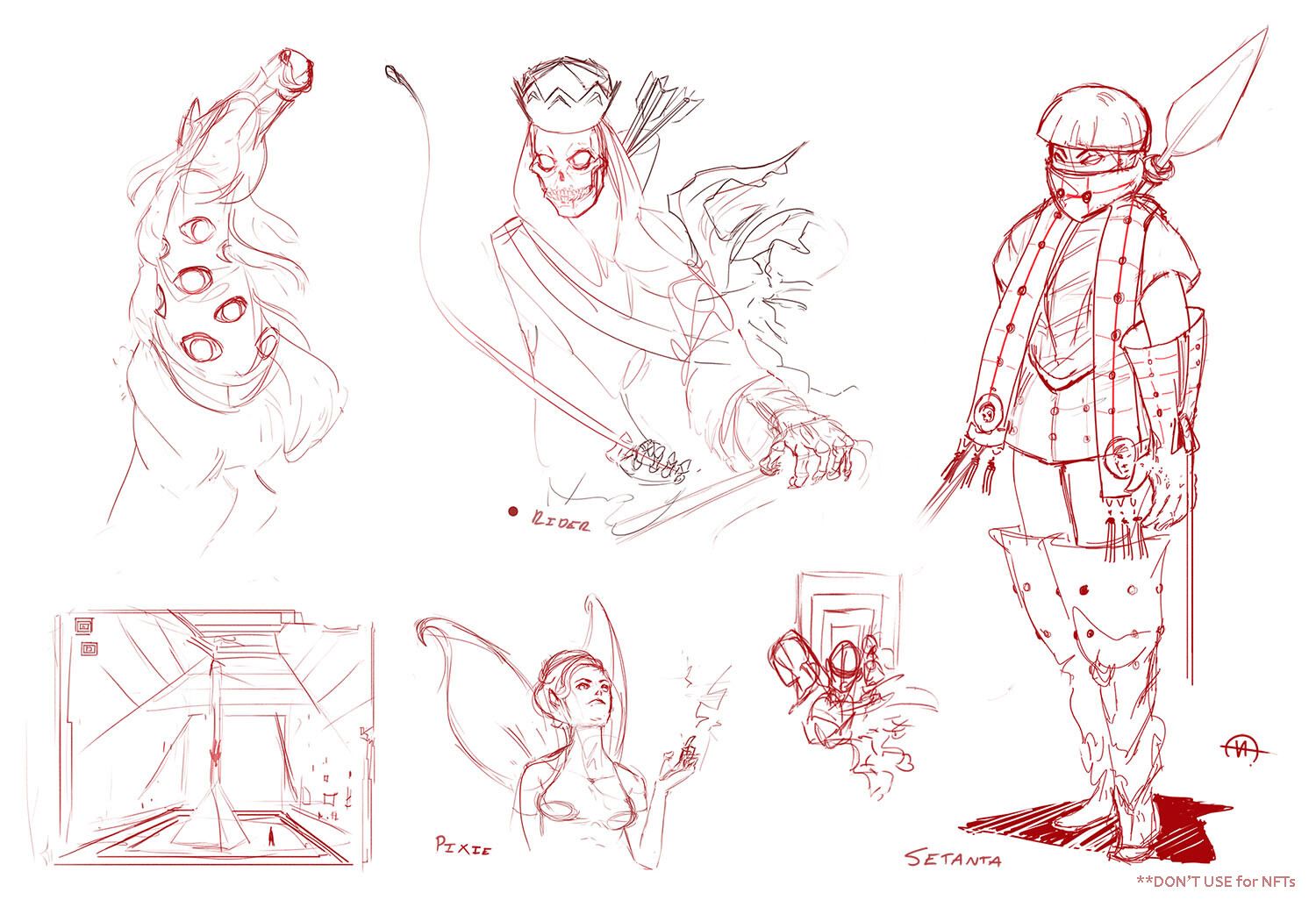
- Make a very quick sketch. They can be as messy as you want, as long as they help you get your main idea down. No one’s judging you. Heck, you should see some of mine, below!
Below, is a watercolor piece I created. In the first image, I took 15 min to draw quick, simple, & yes, crappy, sketches before I drew the final. I also wrote down notes next to my sketches. They helped me organize my ideas and make the final painting easier and faster to complete. I don’t like wasting time thinking about what I need to add to it or what it’s missing because it slows me down and wastes valuable time.
This sketch is nothing fancy or detailed. It’s just something that helps get my ideas down fast and easily without pressure.
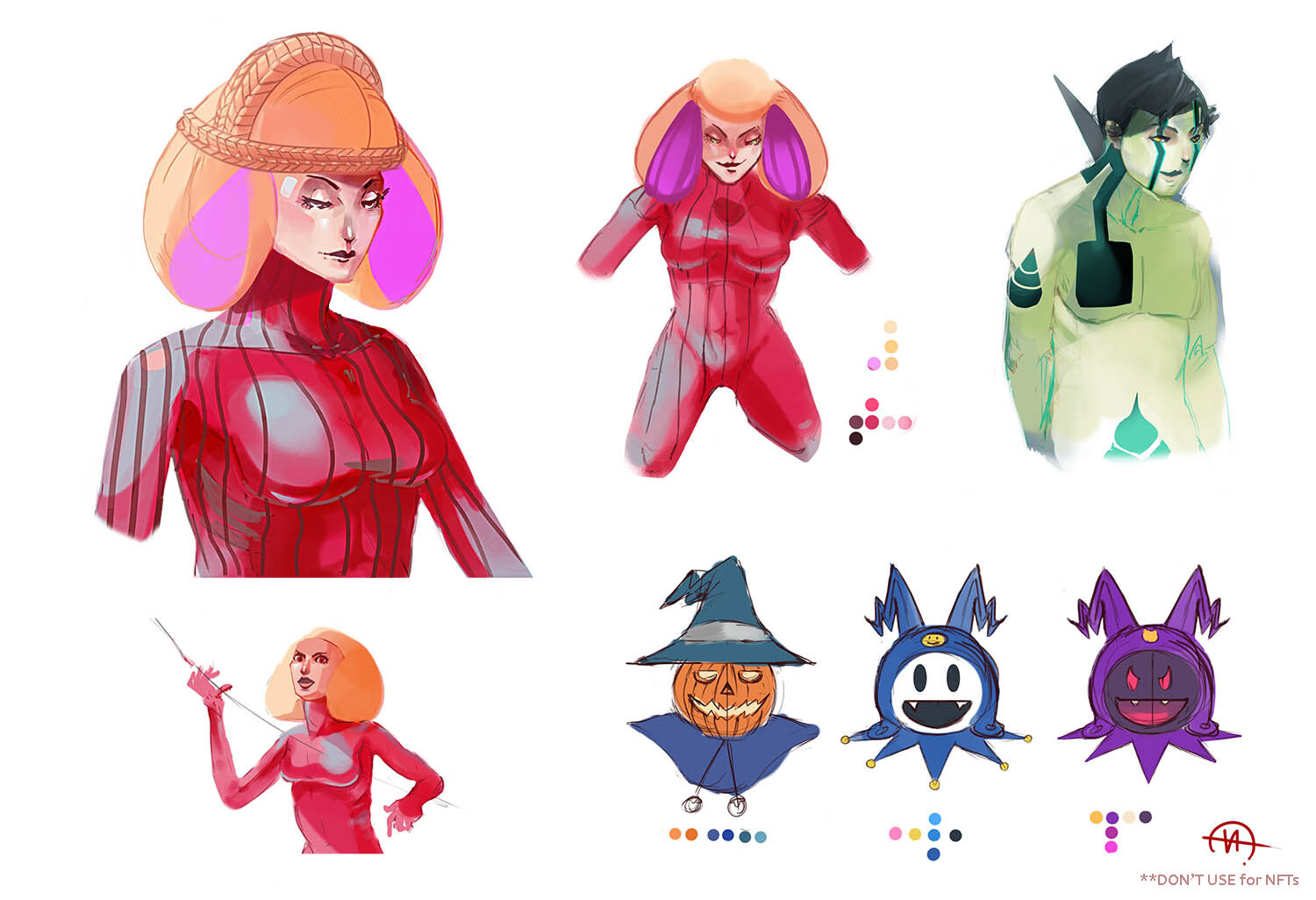
Below, is the final watercolor of the above sketches. It’s more finished & has lots of detail. If I went straight into painting without sketching and writing down my notes, I would have burnt out super fast. I know I wouldn’t be able to finish my paintings, let alone do them quickly.
7. Do a practice run.
- This helps ease you into your schedule.
- It gives your brain a chance to get used to your new habits & schedules. You will more likely complete your projects when you’re in a mental space of familiarity, calmness, and easily attainable goals.
- Start slowly at first. Try starting with a 3 day run to see how you hold up to the tasks. Take a break if you need it for a couple days or so, then do another 3-day run. If you’re feeling motivated, increase the days you spend on your projects if you’re feeling positive and healthy.
- If you start to feel anxious, stressed, or unhealthy, take a break immediately! Only get back into the project if you feel comfortable continuing. If you feel you’re forcing yourself to complete a task, take a break. That’s when burnout can start to manifest. When we’re stressed or boxed into something, we feel pressured and this can create negative emotions. We start wanting to distance ourselves from the activity that pressured us. Instead, relax, let it go, and know that you did your best at that time. You can come back to your project later. This leaves you feeling refreshed and energized to work on it again.
If you feel you’re forcing yourself to complete a task, take a break! That’s when burnout can start to manifest. When we’re stressed or boxed into something, we feel pressured and this can create negative emotions.
– Nicole A., Drawism.com
- Do these little runs throughout the year. Slowly getting yourself used to this makes the process feel natural to you. It builds up your confidence, & readily prepares you for more strenuous tasks later on. Think of it as building up your creative foundation mentally.
- Whenever I start a new project I always take the time to ease into it. I don’t rush into it because I know I’ll burnout and lose interest quickly. Instead, I plan 1 hour per day (if I can) to work on my new art. It’s a multi-month project. Instead of telling myself I need to do it everyday, I schedule 1 Hr per week day for 2 weeks. If I don’t finish my work, I take a break for a week and come back to it when I feel mentally prepared to get back in. This is great for not overwhelming yourself but still keeping you motivated and interested in your projects.
8. Don’t try anything too challenging in the beginning.
- With low expectations, you’re not expecting anything from yourself that you can’t consistently deliver on.
- Rather, you’re making the process easier on yourself & more complete-able by allowing yourself to focus on where you’re at now. To make things easier on myself, I do simple art exercises that help me improve my technical skills without them being overwhelming for me. Knowing your limits of what you can and can’t do is a fantastic indicator of your current skill set and will help prepare you for more challenges along the way. Doing simple tasks like this takes off the stress of thinking “I need to be as good as other artists and compete with them, I need to be amazing right now”.
- *Remember: Some projects are all about having the stamina and being consistent throughout months or longer.
9. Be consistent.
- Consistency is key.
- Whatever you set your mind to, be sure you have the means to complete them first! These can be materials, time, focus, and money. Without the proper basic assets in order, it will be challenging to continue or complete your projects without feeling stressed, like you’re wasting time, or completely lost. Instead, write a short list of all the important things you need to keep track of and need for your project. This will keep you aware of important tasks & resources, plus save you time. It will also help you plan where your resources should go.
- Being consistent forces you to time manage and meet your goals easier, increasing your success rate.
- Start or continue your projects by putting in a little bit of work at a time. With smaller manageable tasks you will slowly build up your consistency. To start, try writing down very simple tasks that you’re confident you can complete. This takes off the stressful burden of thinking too far ahead in your work. It allows you to focus on the present while preventing you from engaging with racing thought.
Some work days are very heavy for me and my mind wanders everywhere. I can’t focus on my work. When this starts to happen, I make a list on my phone of little tasks I need to complete that day. Making simple lists keeps me very consistent with my work. It helps me stay mentally organized and focused. I also end up completing them faster than I anticipated!
Here are some pics of how I use a scheduling app to organize my day.
I use the Google Calendar app to schedule my work days & projects.
10. Get in the mindset of engaging in the activity daily.
- You don’t have to physically work on your projects all the time. Sometimes they involve research or thinking about a purpose. These aspects can be extremely important depending on what you work on. If you start to feel a bit overwhelmed physically but still want to work on your projects, thinking about how you can best complete them or even just thinking about them, is still progress. It’s because you’re actively putting your project in your mind and thinking about it. You’re getting into an active head space where you’re using energy to analyze your next steps and better prepare yourself for the physical process. Thinking about your project on a daily/often basis helps motivate you for the physical part of it. If you think about it often, you’re more likely to take action on it because it’s an active part of your mind. You can continue with just a thought!
- If you feel physically capable, try drawing something everyday.
- It doesn’t matter if it’s a 30 second scribble or thought, as long as you’re participating in your project in some way.
- When you build up consistency, that builds up competency which builds up confidence, leading to success, accomplishment, and a more positive feeling.
PRO TIP: CONSISTENCY > COMPETENCE > CONFIDENCE > SUCCESS
 Here’s another example of my rough sketches with notes to help me remember my ideas and get them out onto paper.
These burnout recovery tips can be applied to all situations that involve burnout.
But what about situations you can’t get out of, such as creative projects for urgent long-term design work, such as those for work, online programs, or school classes that need to be completed by a certain time?
Here are some extra burnout recovery tips for those of you in any of the previously mentioned situations.
Easy Burnout Recovery Tips for Working Artists and Creatives, Professionals, & Students
You may find yourself in situations where you’re forced to work constantly on creative art projects that may last from weeks to even years. But how do you cope with burnout if you’re in a situation you can’t leave? Your reason to not leave your situation could be anything from financial stability, to A-cing your next art final. But how do you keep it together along with all your other important tasks?
I, along with my friends, have experienced creative burnout either while we were at school/college, work, or both, but managed to keep emotionally and physically stable. It wasn’t easy to get through but we managed to conquer & prevent the long-term negative effects of burnout. I have some tips that will help you manage and recover from burnout.
Keep reading for quick tips that can help you through situations where burnout is a constant danger.
1. Rest when you can.
- Rest, specifically sleep, rejuvenates both your mind & body. Rest keeps you prepared and likely calm for unplanned and maybe stressful situations.
2. Think about why you’re in your particular situation and why you do what you do.
- This mentally grounds you. It also helps you associate your work and projects with positive emotions. It’s much easier to be creative at work when you feel positive & confident, not just with what you do or create but when you feel this way about yourself.
3. Remind yourself of what you’re gaining.
- Think about the progress you’re making in both your personal and professional lives and how it can be very beneficial to you.
- Think about the positives.
“When you celebrate your successes no matter how big or small they may be, you’re acknowledging your skills & abilities while creating a positive mindset for your passion & work to thrive.“
– Drawism.com
4. Always remember there’s an end point.
- Even if it’s a long project, it will eventually be finished. So you don’t have to think about it ever again, if you don’t want to.
- Think about the project ending as a positive. Bonus points if it looks great on your resume and helps you reach some of your goals!
- You can come up with a plan to get there, which might be easier for you.
5. Do something different on your time off that doesn’t relate to work but interests you.
- For work, I used to draw in an unrealistic cartoony style. I didn’t like drawing it as much game art. So, in my off-time I would work on my own projects. Doing this allowed me to take my mind off my regular work and give me a mental refresher. Think of it like a taking a shower but for your brain.
- Focusing on your hobbies is a great way to start.
- Or, it can be anything from learning a new language, new program, or playing video games. Whatever makes you feel calm, relaxed, & positive.
6. Take time or even a day to pamper and take care of yourself.
- Doing something to relax, releases tension in your mind and body, especially if your body is physically inactive.
- Try taking a long warm bath or shower. Doing this with facial masks and aromatherapy can also make you feel more refreshed.
- If pampering yourself includes treating yourself to food, try take-out from your favorite restaurants or a nice sweet treat with some of your favorite ingredients. I like grabbing myself a milk tea or some ice cream after I’ve published a long post!
- *Remember, this is about you, so doing the things you enjoy and that make you feel positive will help you feel more refreshed, motivated, and in a better mood to continue forward. Reward yourself when you’ve accomplished something that you spent a lot of time on or a new task you haven’t done before. When you celebrate your successes no matter how big or small they may be, you’re acknowledging your skills and abilities while creating a positive mindset for your passion and work to thrive. So if you want to treat yourself to a fancy dinner, a new video game, or even just a bath, remember that you deserve it
7. Try not to put yourself in stressful situations in your personal life.
- If you know you’ll need to get through a project and have to focus, don’t take on too many responsibilities outside work or school that may cause undue stress, if possible.
-
* The more stress in your life, the easier you can fall into feeling burnout.
- If you need to, try clearing out activities/events that make you feel negatively about yourself. When I feel this way, I stop doing that activity. Instead, I focus on how I’m feeling and take a few minutes to gather my thoughts on paper. It’s helped me overcome those anxious feelings. For me, I get a lot of anxiety from posting on social media. It lingers in my thoughts. Sometimes, it takes away my focus on work and then I start stressing about it. I know that posting online doesn’t benefit me work-wise, so I’ve gotten off of social media. It’s saved me time and let me focus on more important things. These types of negative feelings are more dangerous than productive. So, try eliminating those activities from your schedule. This will give you more time and focus on your projects.
8. Don’t think about work or work-related tasks on your time off.
- Give your brain a break from work when you’re off the clock.
- If you’re always thinking about work, burnout can start to set in and it can start to feel overwhelming.
- Instead, turn your attention to the positive things and activities in your life. This will make you feel happier, energized, and less stressed.
9. Respect your time and yourself.
- Make sure you know your limits and schedule your work accordingly. Don’t stretch yourself too thin and know when to scale things back to a manageable level. In other words, make tasks, your projects, and your life, easier for you.
- Don’t push yourself to do something or try to impress someone else, if it’s at the cost of your emotional and/or physical well being!
Don’t push yourself to do something or try to impress someone else, if it’s at the cost of your emotional or physical well being!
– Drawism.com
10. Think about how your job or project will help you in multiple aspects of your life, IE. social life, scheduling, learning new techniques.
- If you are feeling a little burnt out on your current project, try to focus on what you are gaining by working on it. Try asking yourself some questions. What are you getting better at? What new skills are you learning that could be used elsewhere? Are you getting better at balancing your work and life?
- Find the benefits that make you look forward to finishing your current project.
11. If the project is feeling overwhelming, try breaking it up into smaller parts that feel easier for you to accomplish.
- A good way to start, is by identifying where you’re at in your project and its end point. From there, find the halfway point of the project and make a task list that will help you get to that point. If it’s still to much work for you, try breaking that list up in halves, until you find tasks easier for you to complete.
- With smaller workloads, you’re more likely to focus on your current work instead of worrying about the entire project.
- You’re making things much easier for yourself. Even better, sectioning tasks into smaller parts and completing those tasks will give you a greater sense of accomplishment. From this, you’re more likely to stay motivated throughout the project and have a more positive attitude towards it.
If you’re still confused on what burnout or creative burnout is and for more tips to identify and recover from it, check out these helpful articles below!
**UPDATE MARCH 2022: If you're feeling a little burnt out or stressed, grab this Free Drawable Artist Stress Relief Cheat Sheet here on Art Station.
Other Related Articles & Art Tips :
The post Creative Burnout: How to Beat and Prevent It From Coming Back appeared first on Drawism.com.